Van Briggle at the Met
The Metropolitan Museum of Art has 22 Van Briggle pottery objects in its collection, spanning 1900 to 1907. That covers the entire period from Artus Van Briggle's earliest work in Colorado Springs through the first few years of production after his death in 1904.
Of those 22 pieces, 17 are public domain with high-resolution photographs. They come from two major donations: the Martin Eidelberg collection (focused on Artus's personal work with great photographs of the designs) and the Robert A. Ellison Jr. collection (which is a goldmine for collectors because every piece includes dedicated photos of the maker's marks on the bottom).
All images courtesy of The Metropolitan Museum of Art, public domain (CC0). Tap any image to zoom in for detail.
The Eidelberg Collection
Martin Eidelberg donated these pieces in 2015 and 2020. They're attributed directly to Artus Van Briggle and include some of his best-known designs: flowers, leaves, feathers, and the human figure that made the Despondency vase famous.
Despondency Vase
Designed 1902, produced 1905 · Earthenware · 12 3/4 in.
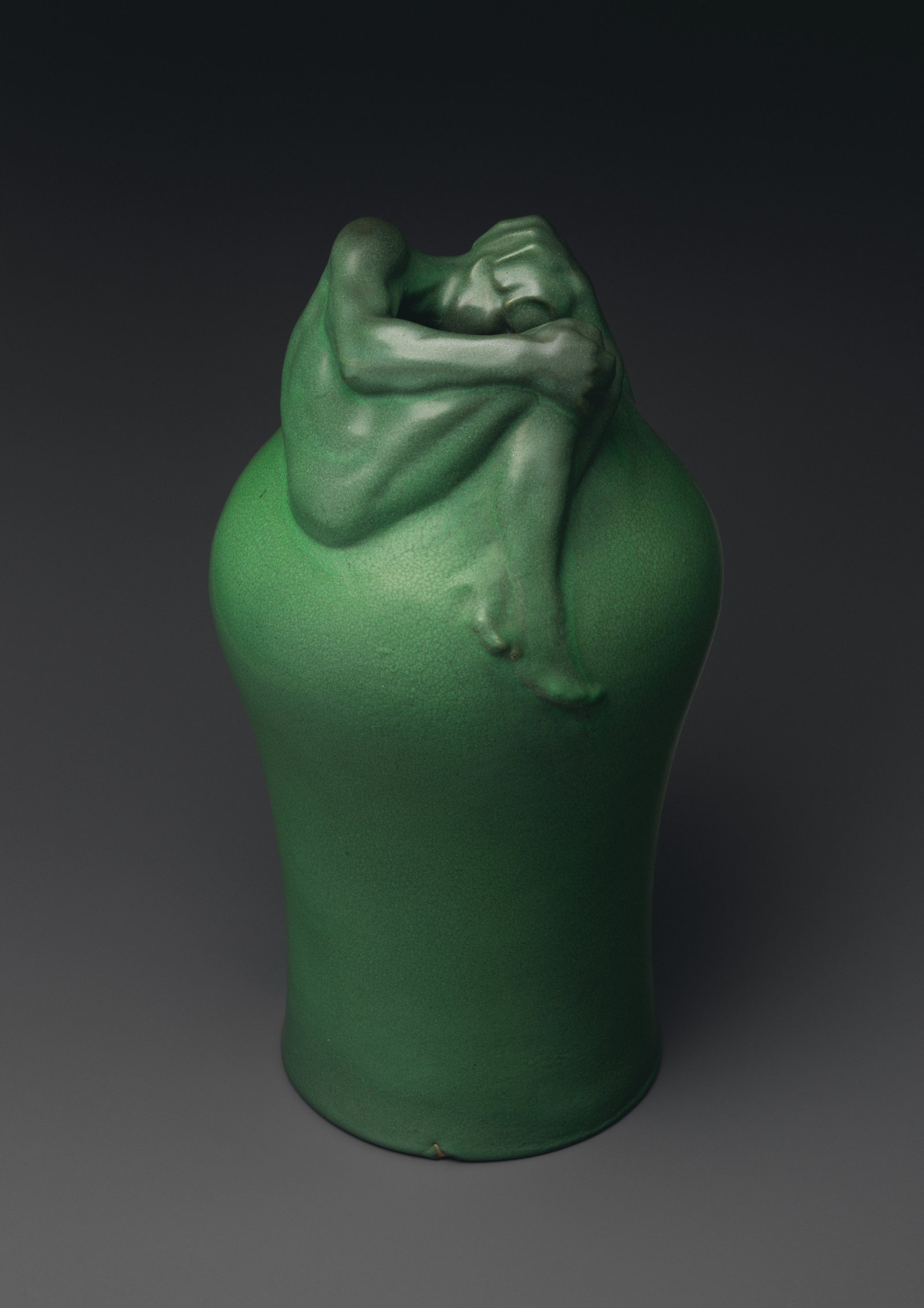
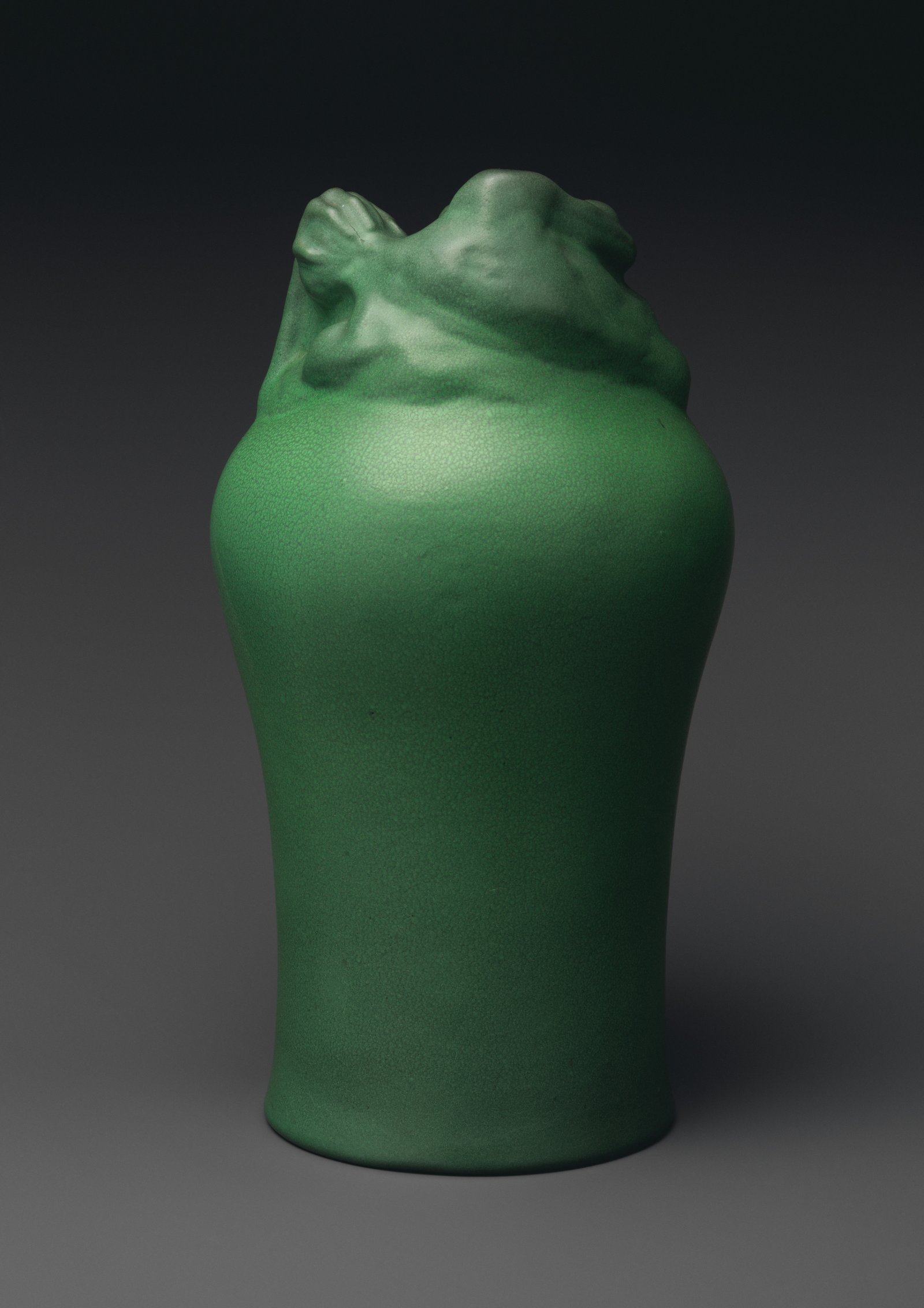
If you've spent any time looking at Van Briggle, you've seen this one. A draped human figure wraps around the vessel in a pose of despair. Artus designed it in 1902, though this particular example was produced in 1905, a year after his death. It's the piece most people think of when they hear "Van Briggle," and seeing it in person at the Met, you understand why.
Vase with Geese
Designed 1900, produced 1902 · Stoneware · 6 1/2 in.
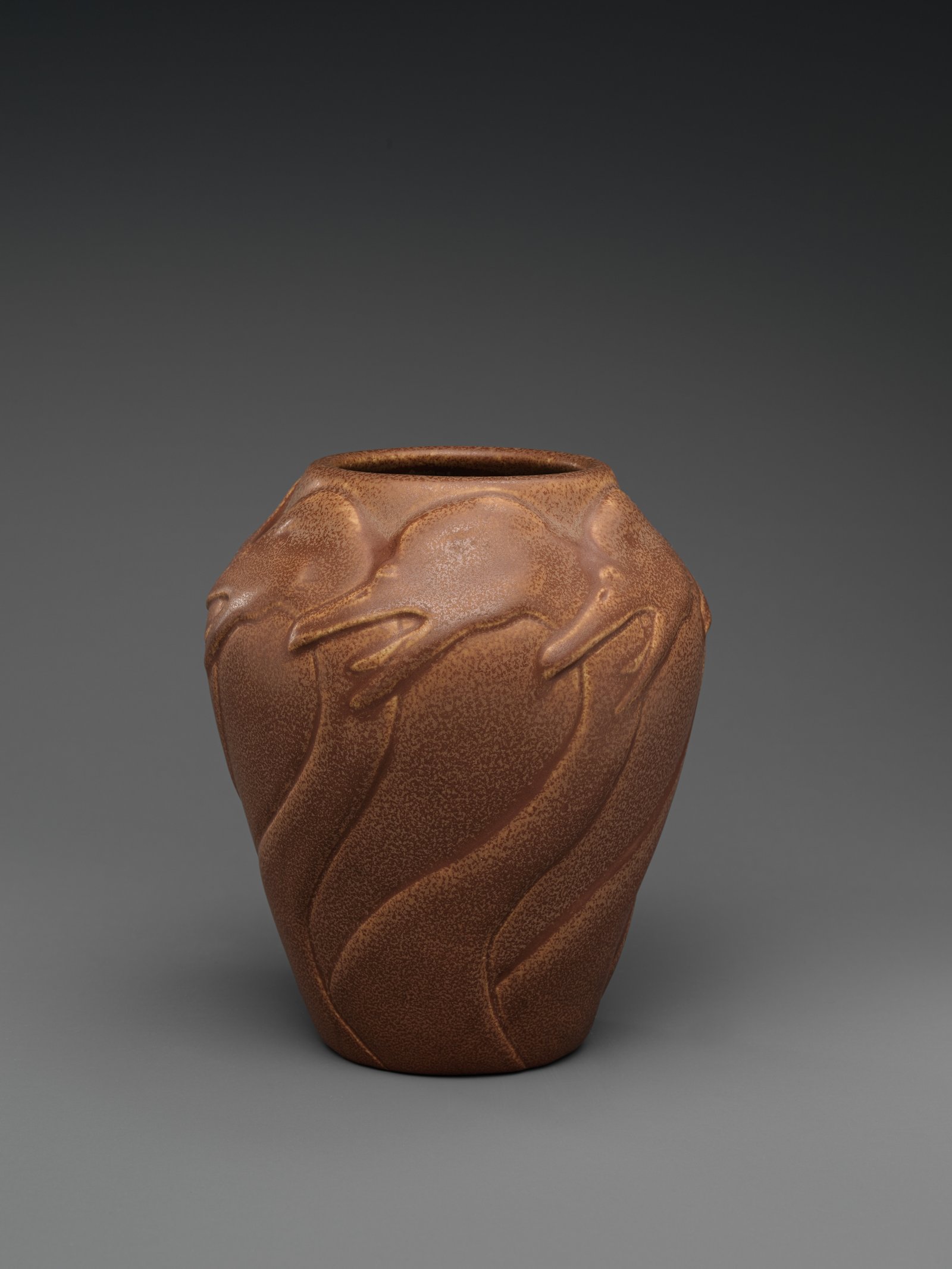
Artus designed this one in 1900, just after arriving in Colorado Springs from Rookwood. The geese are in low relief around the body. At 6 1/2 inches it's on the smaller side, but the detail work is sharp. You can still see the Rookwood influence here, though Artus was clearly moving toward something all his own.
Vase with Daffodils
1902 · Stoneware · 10 3/4 in.
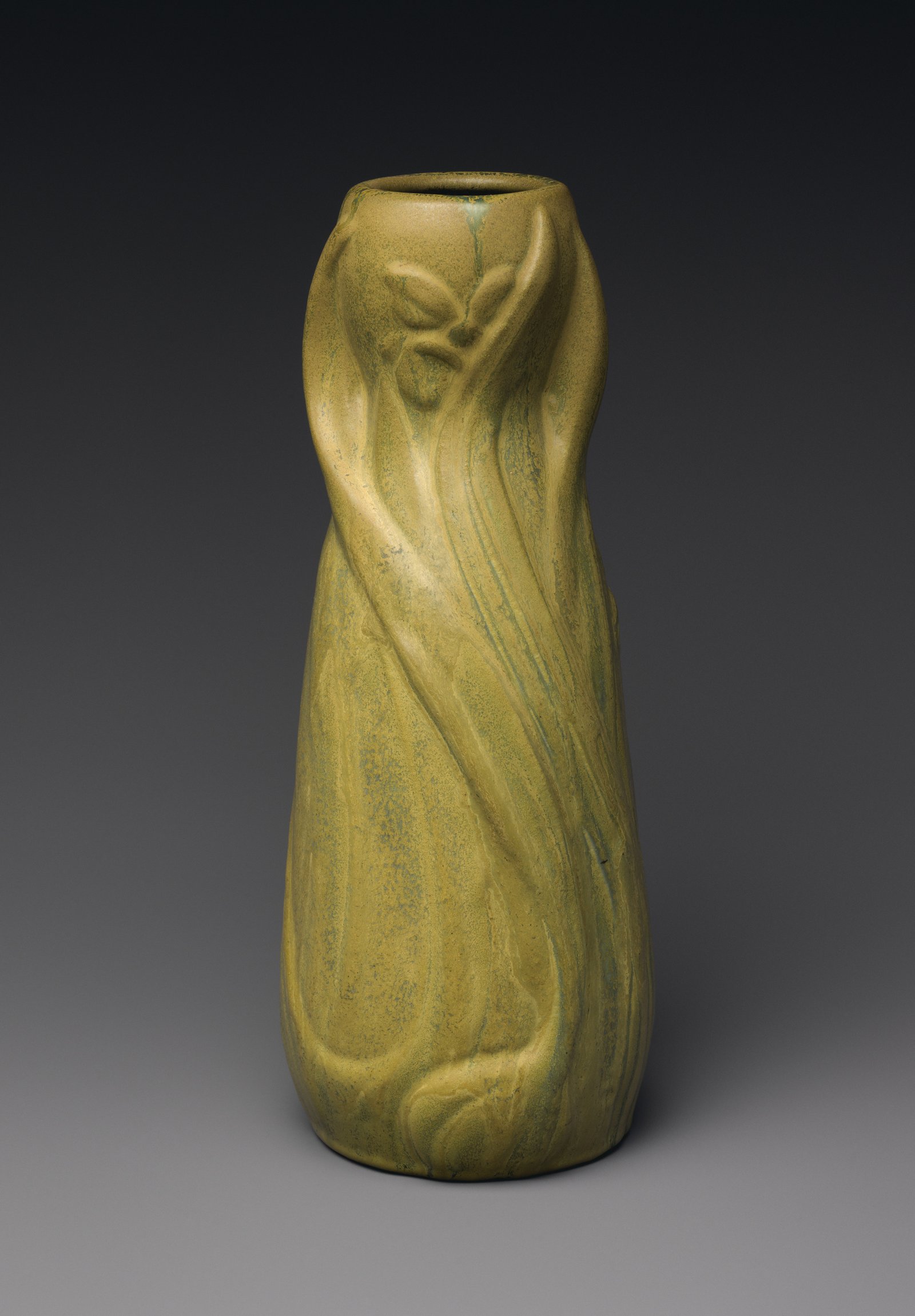
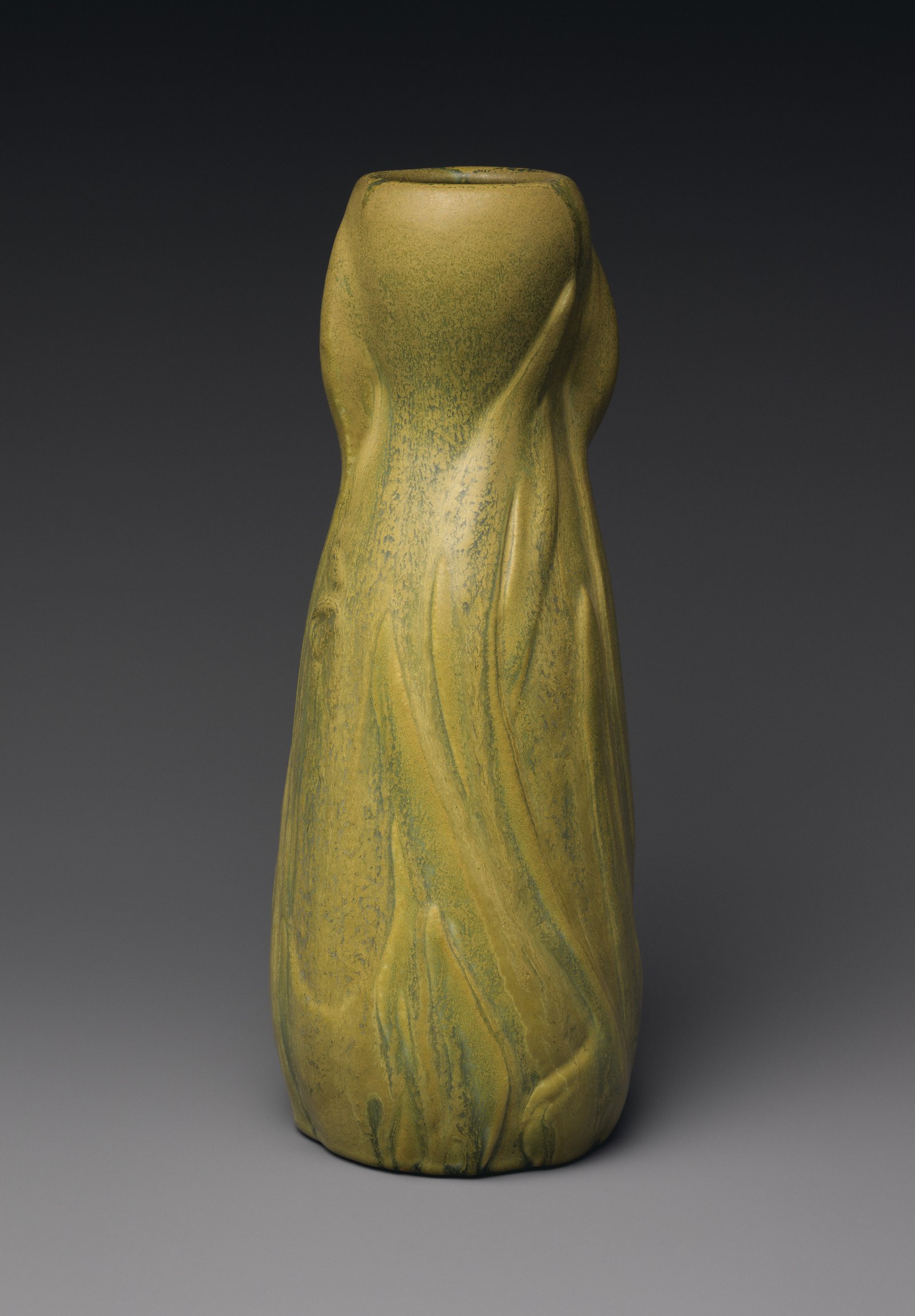
Daffodils in low relief under that matte glaze. This is a good-sized piece at nearly 11 inches. The flower motifs are what most collectors associate with early Van Briggle, and the Met's photography here really lets you appreciate the depth of the relief work.
Vase with Crocuses
1902 · Stoneware · 5 7/8 in.
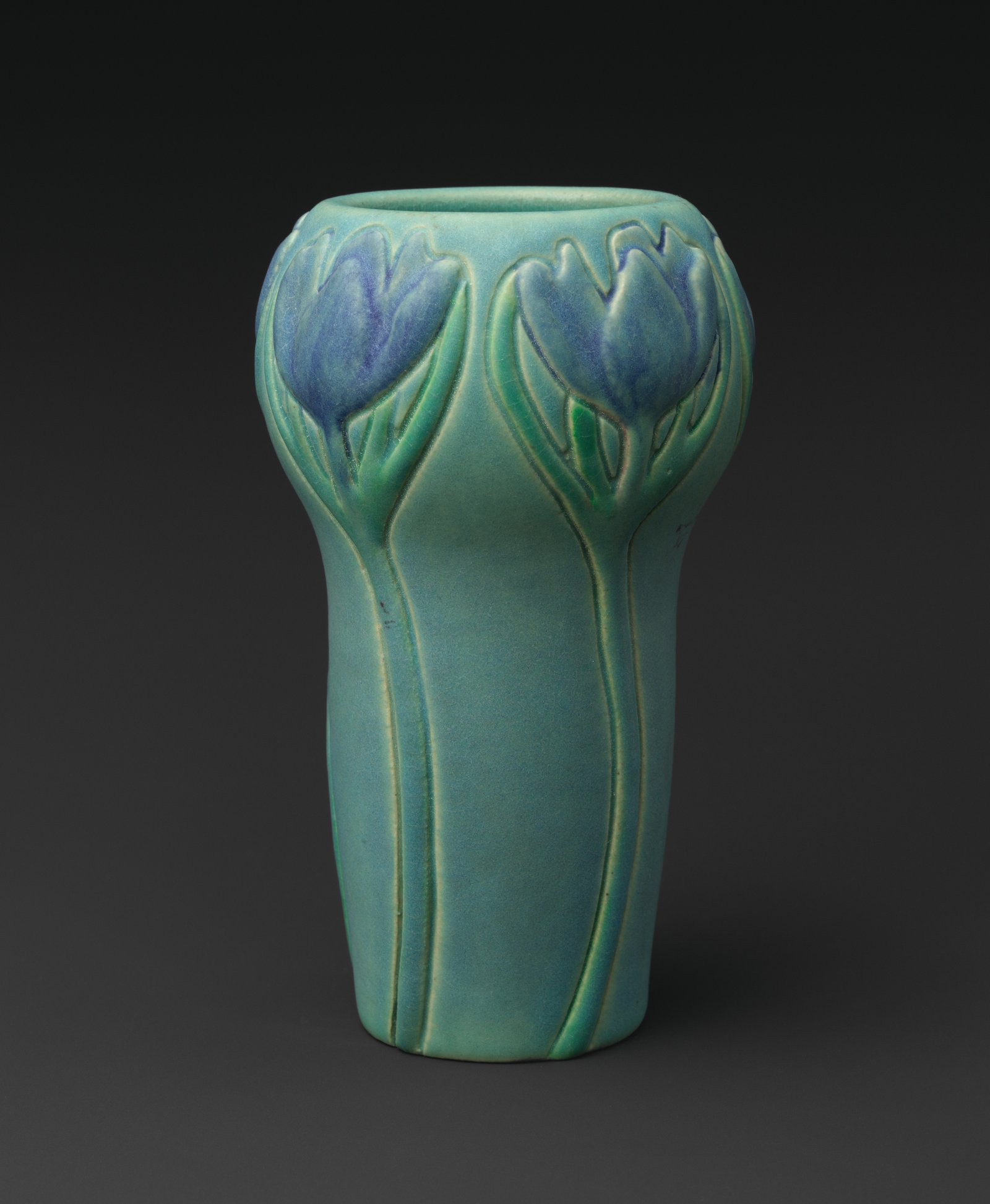
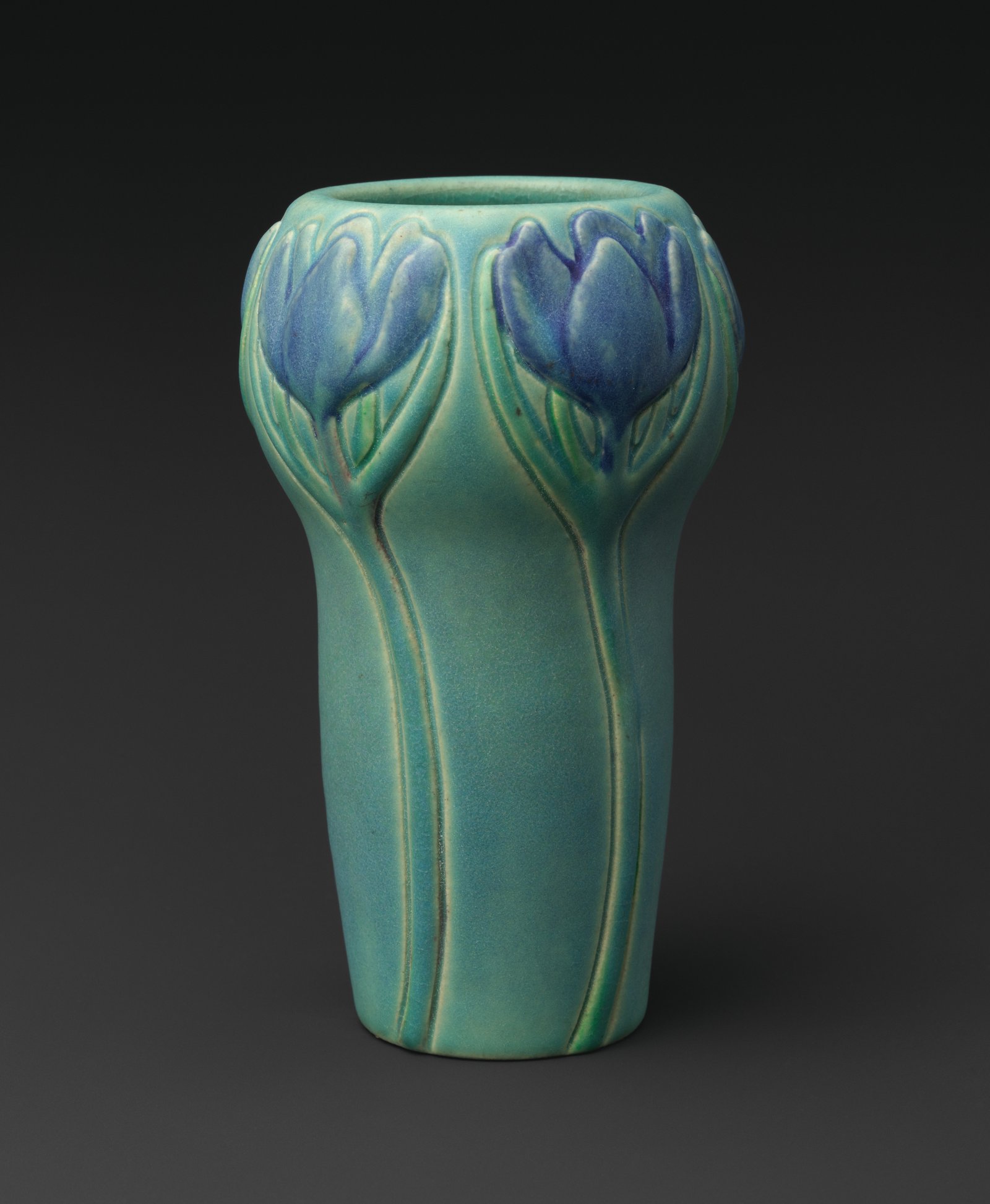
A smaller piece at under 6 inches with crocuses around the body. The glaze on this one settled beautifully into the relief. Artus had an entire vocabulary of flower and plant motifs that he kept coming back to, and the crocus was one of his better ones.
Vase with Leaves
1903 · Stoneware · 15 1/2 in.
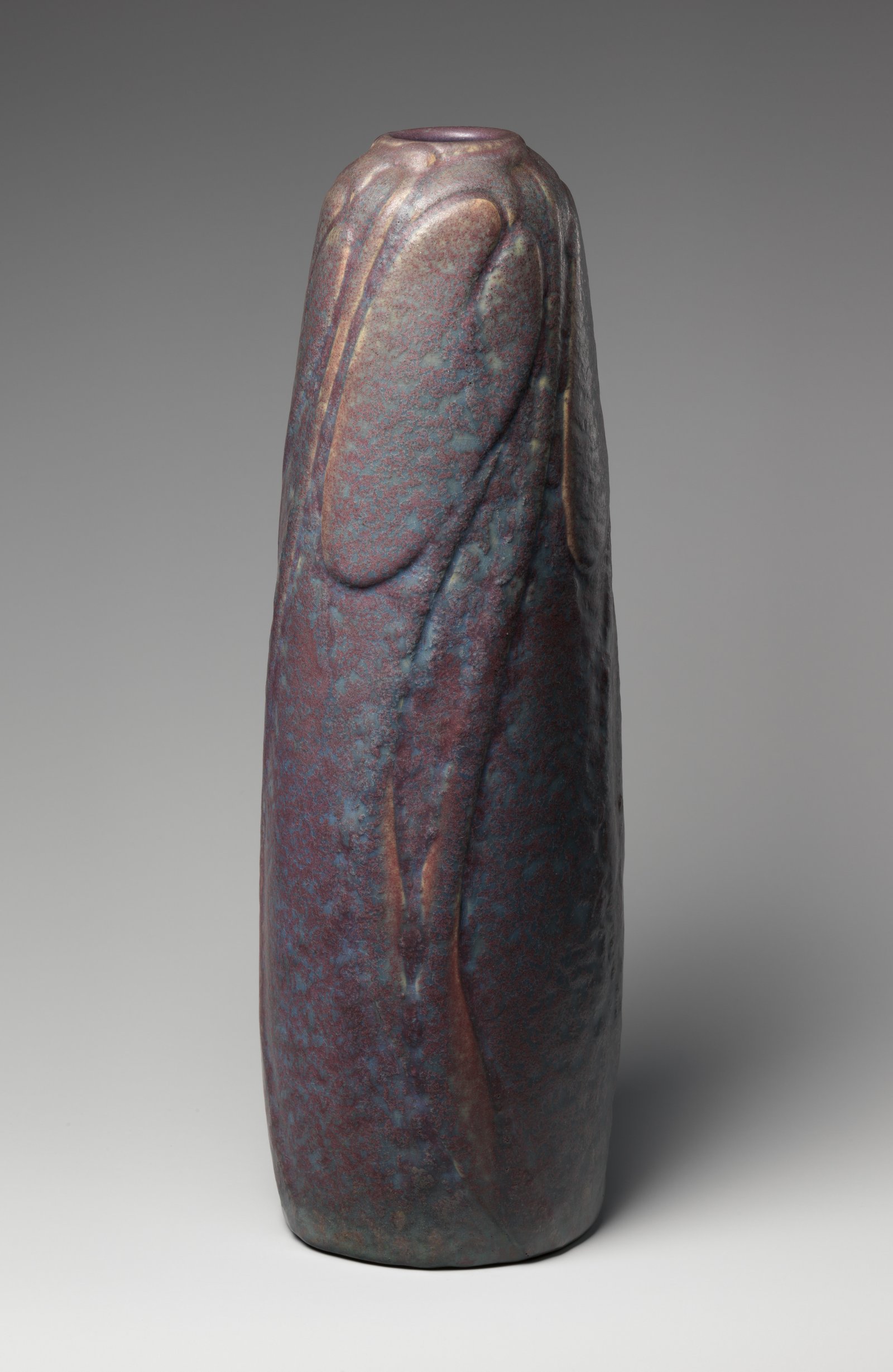
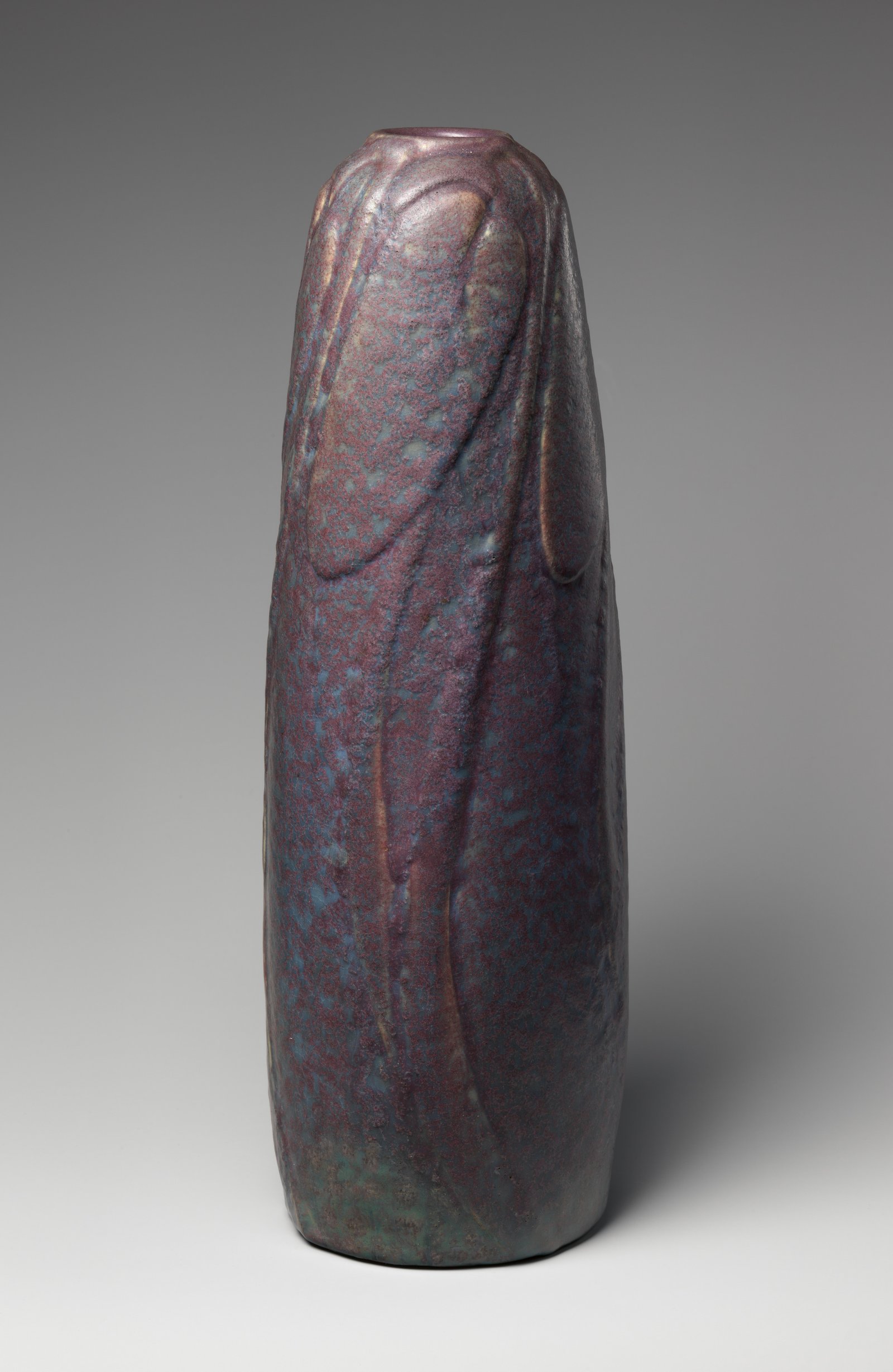
This one is big. At 15 1/2 inches, it's one of the larger early Van Briggle pieces you'll find in a museum collection. The leaves wrap up and around the form. Pulling off this kind of sculptural decoration at this scale, in stoneware, without it cracking or warping in the kiln, is no small thing.
Vase with Peacock Feathers
1904 · Stoneware · 17 1/2 in.
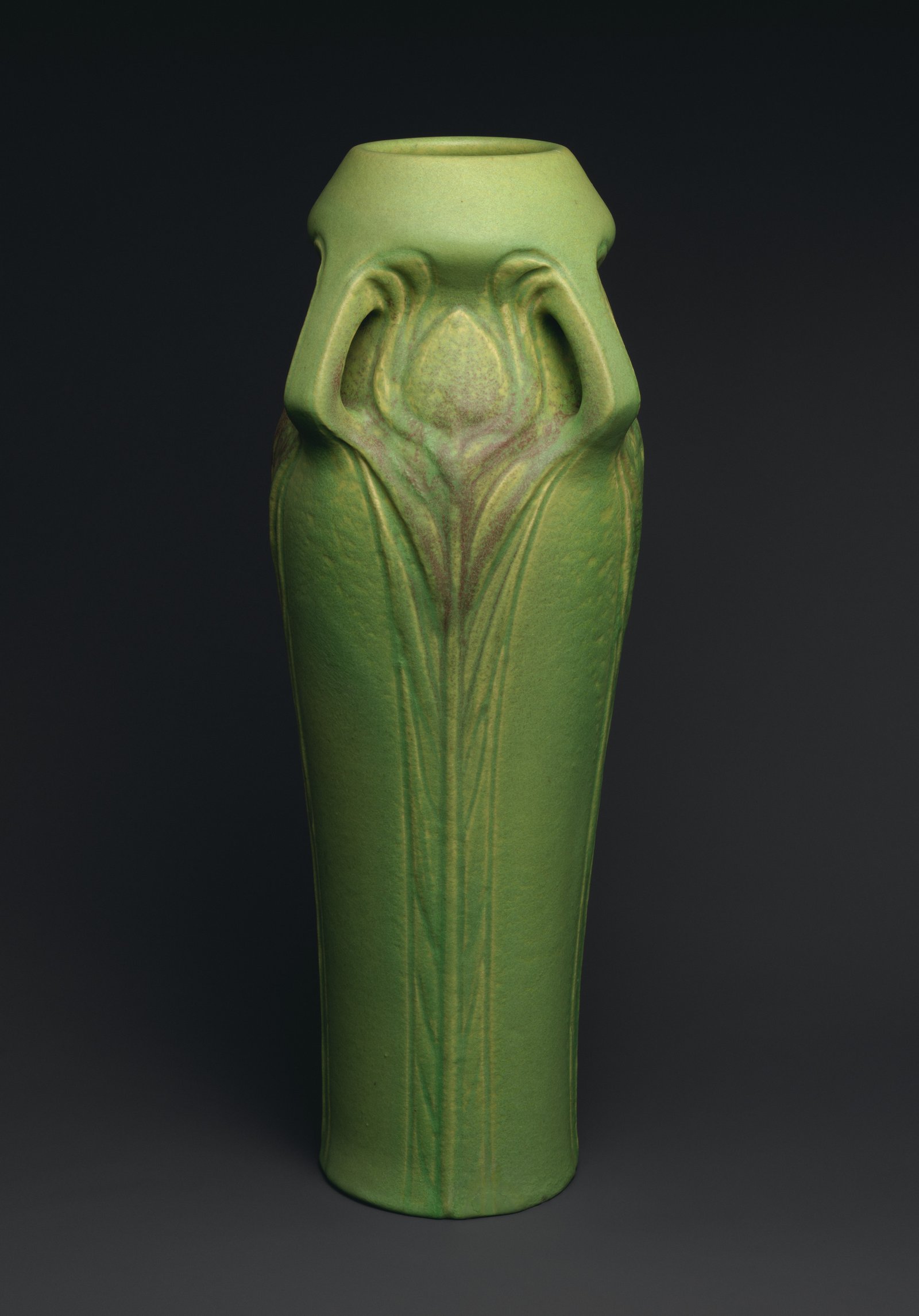
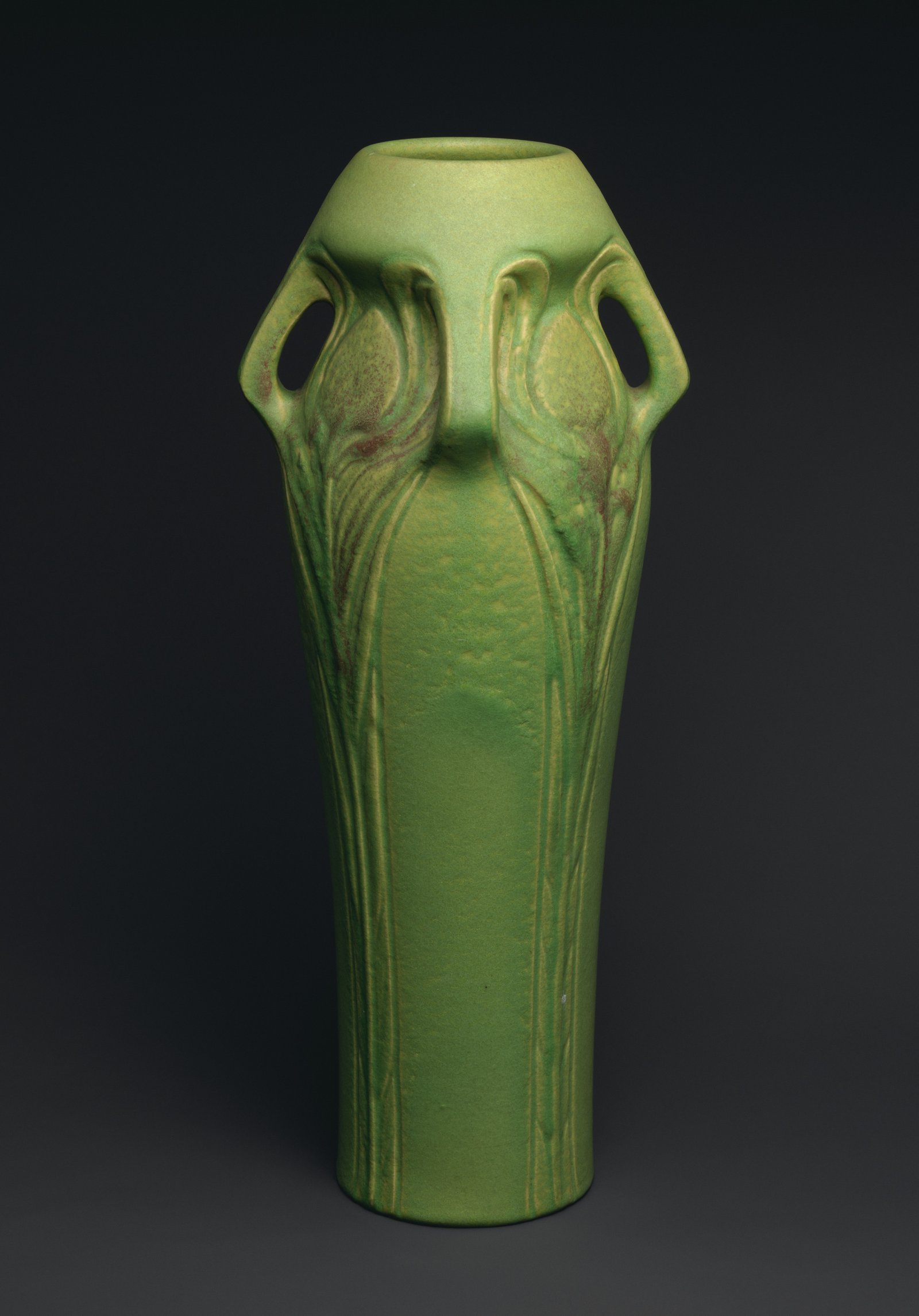
The tallest piece in the Met's Van Briggle collection at 17 1/2 inches. Peacock feathers in relief. Made in 1904, the year Artus died. The scale alone makes this one special, but the feather pattern at this size is really something. Hard to photograph. You need to see it from multiple angles to appreciate the full design.
Vase with Poppy Seed Pods (1903)
1903 · Stoneware · 6 7/8 in.
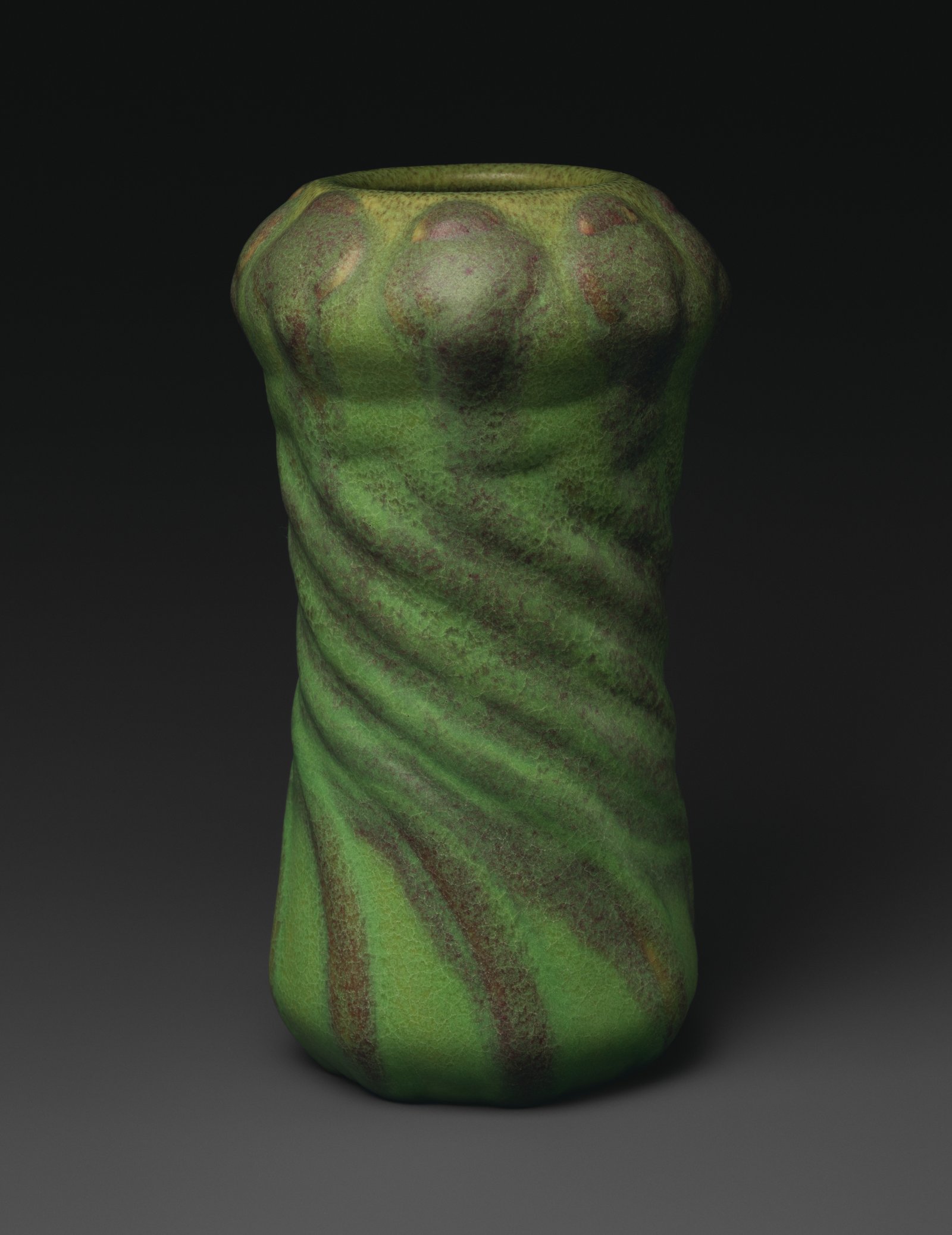
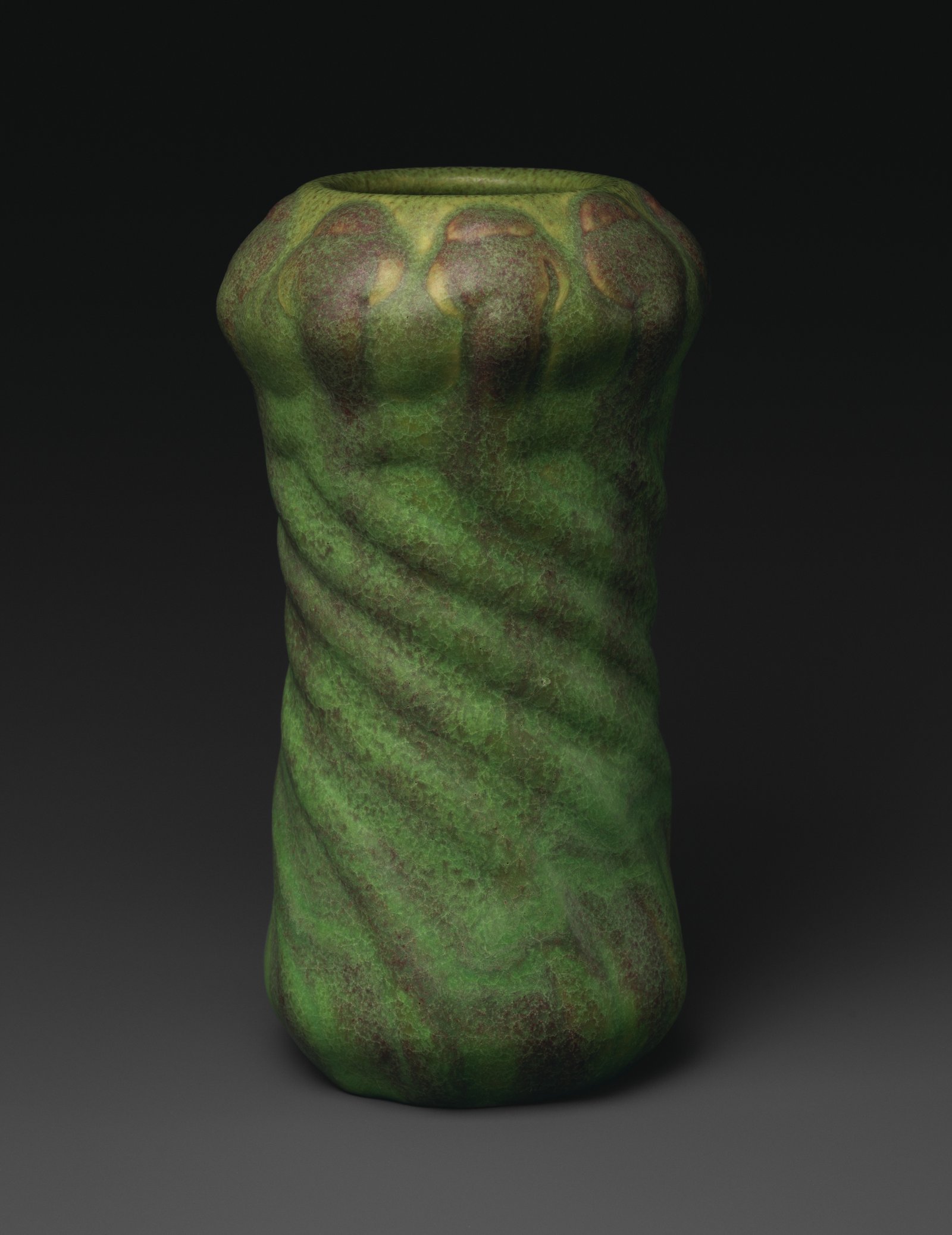
The poppy seed pod motif was one Artus returned to more than once. This 1903 version was made during his lifetime. The pods rise up from the surface in that characteristic low relief. Compare this to the later version below to see how the same design changed in posthumous production.
Vase with Poppy Seed Pods (c. 1905-07)
c. 1905-07 · Stoneware · 5 1/16 in.
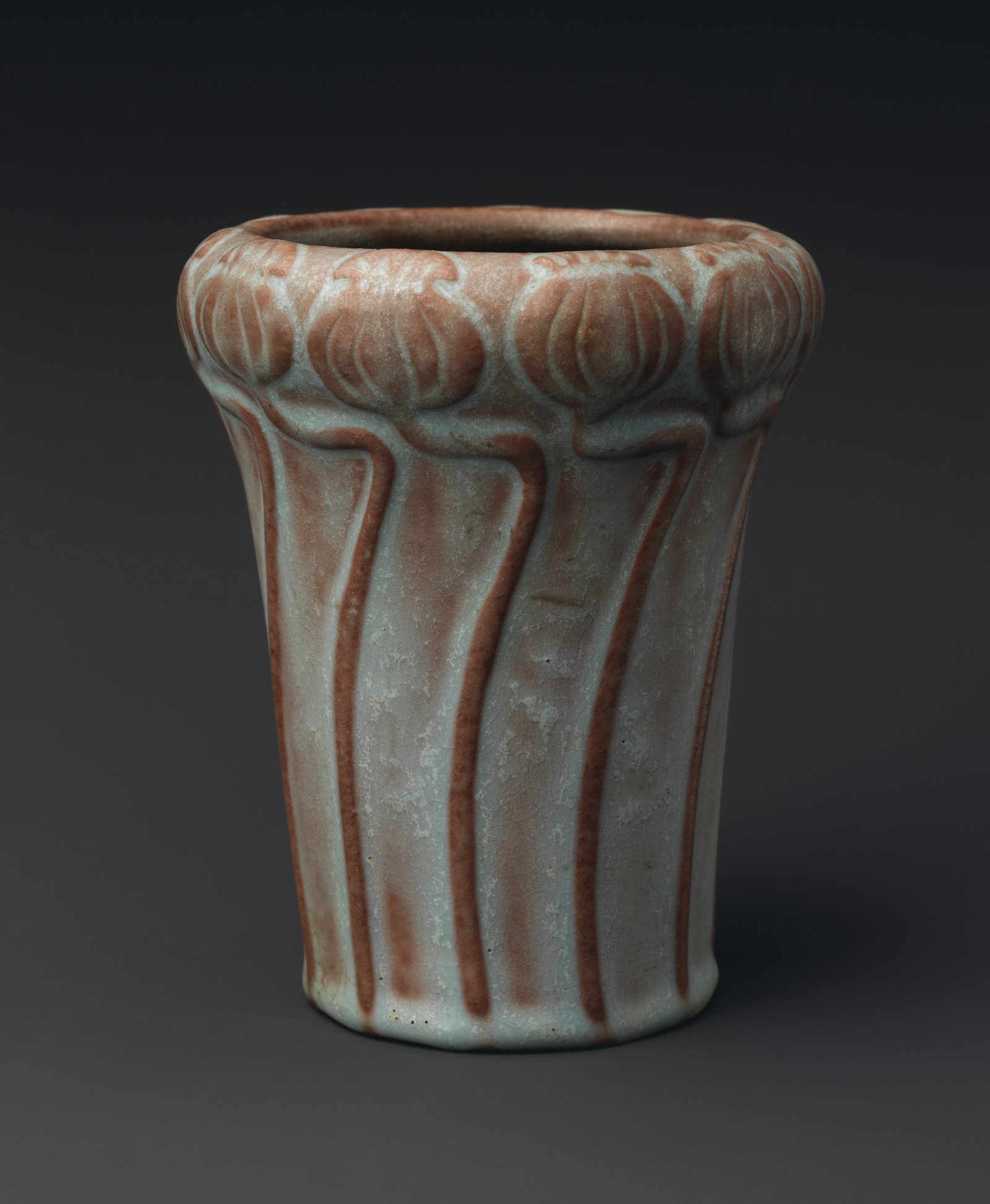
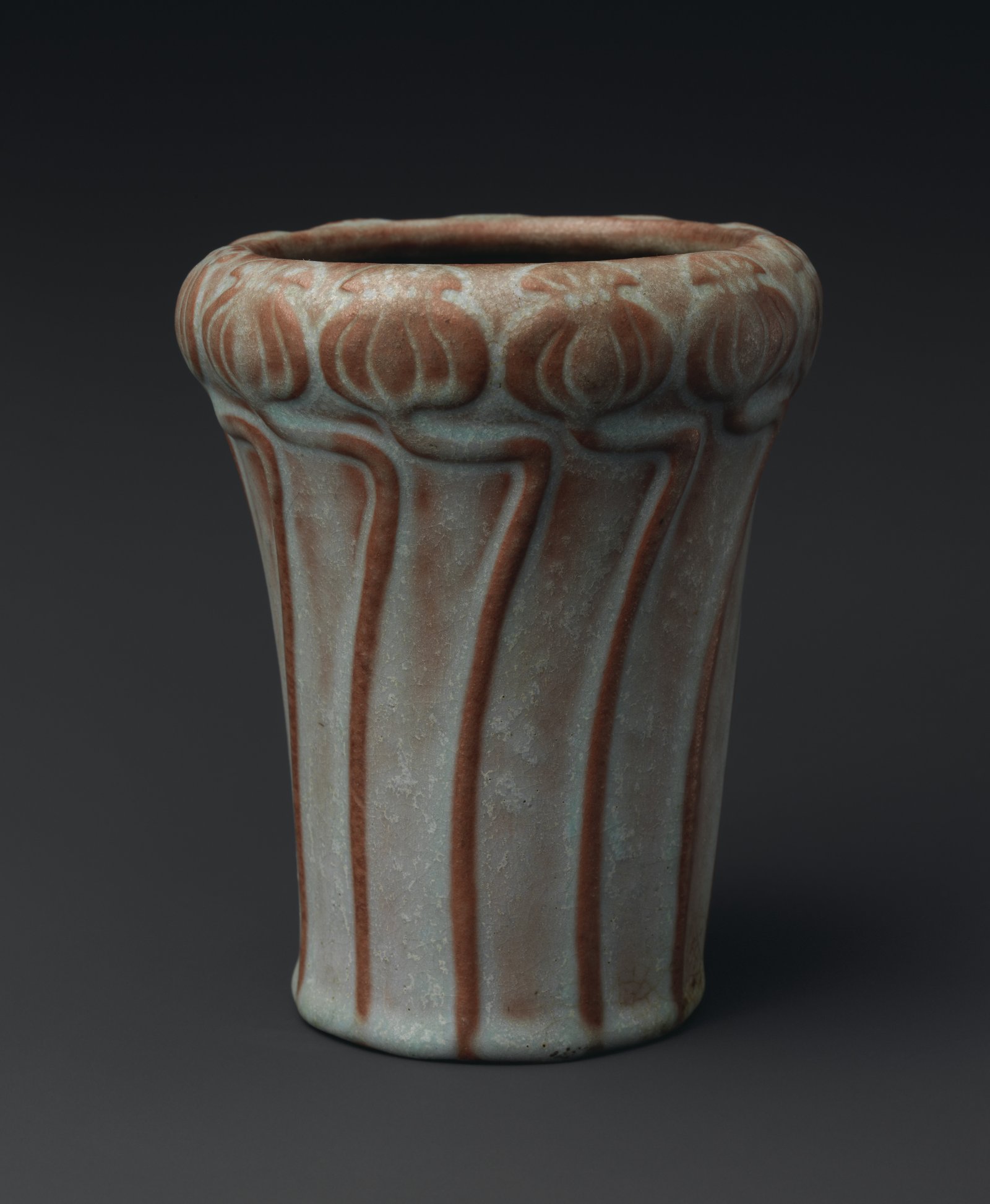
Here's the later version of the poppy seed pod design, produced after Artus's death using his original molds. It's noticeably smaller than the 1903 piece at just 5 inches. Having both versions side by side like this is exactly the kind of comparison that makes a museum collection useful for collectors trying to date their own pieces.
Vase (1902)
1902 · Stoneware · 4 1/2 in.
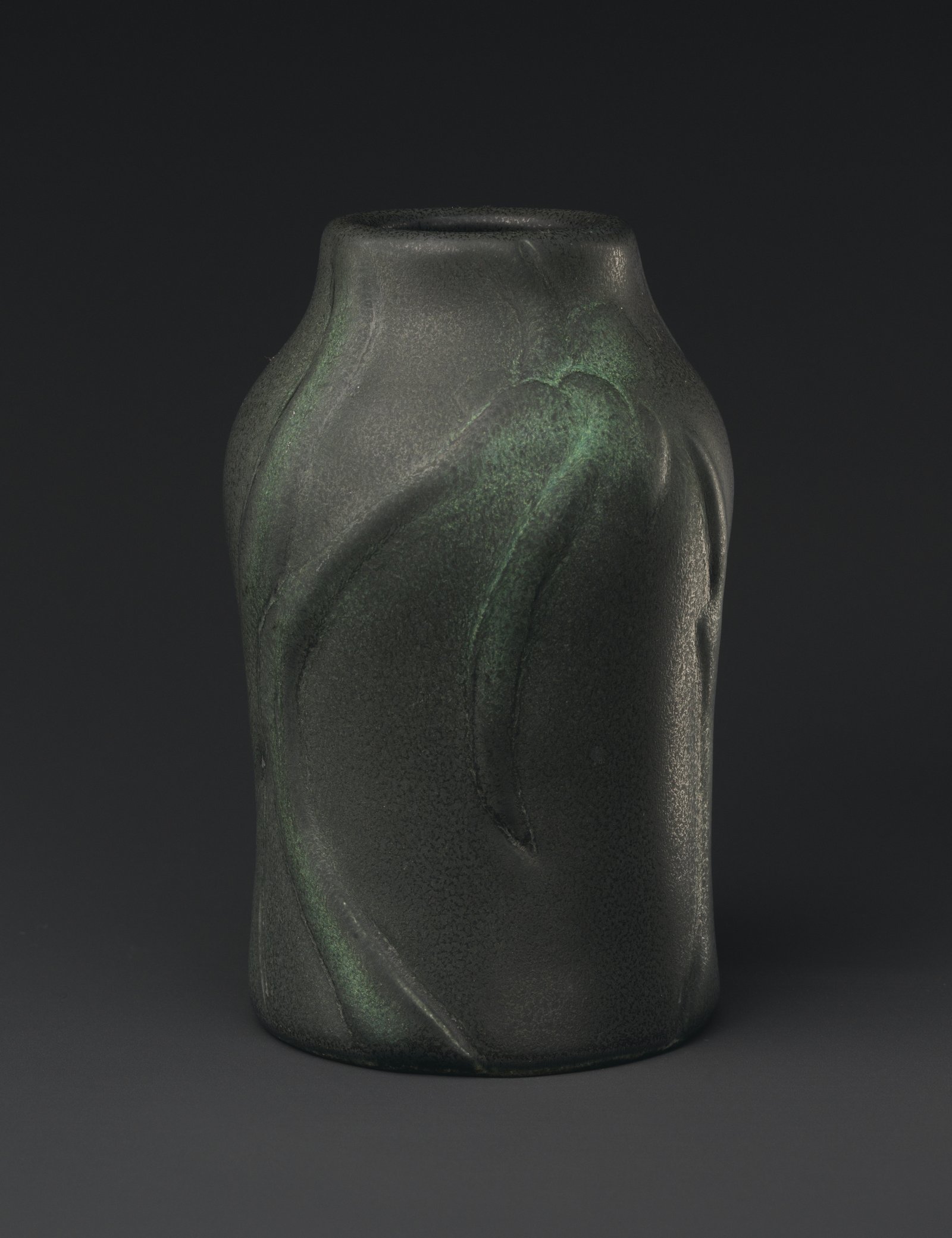
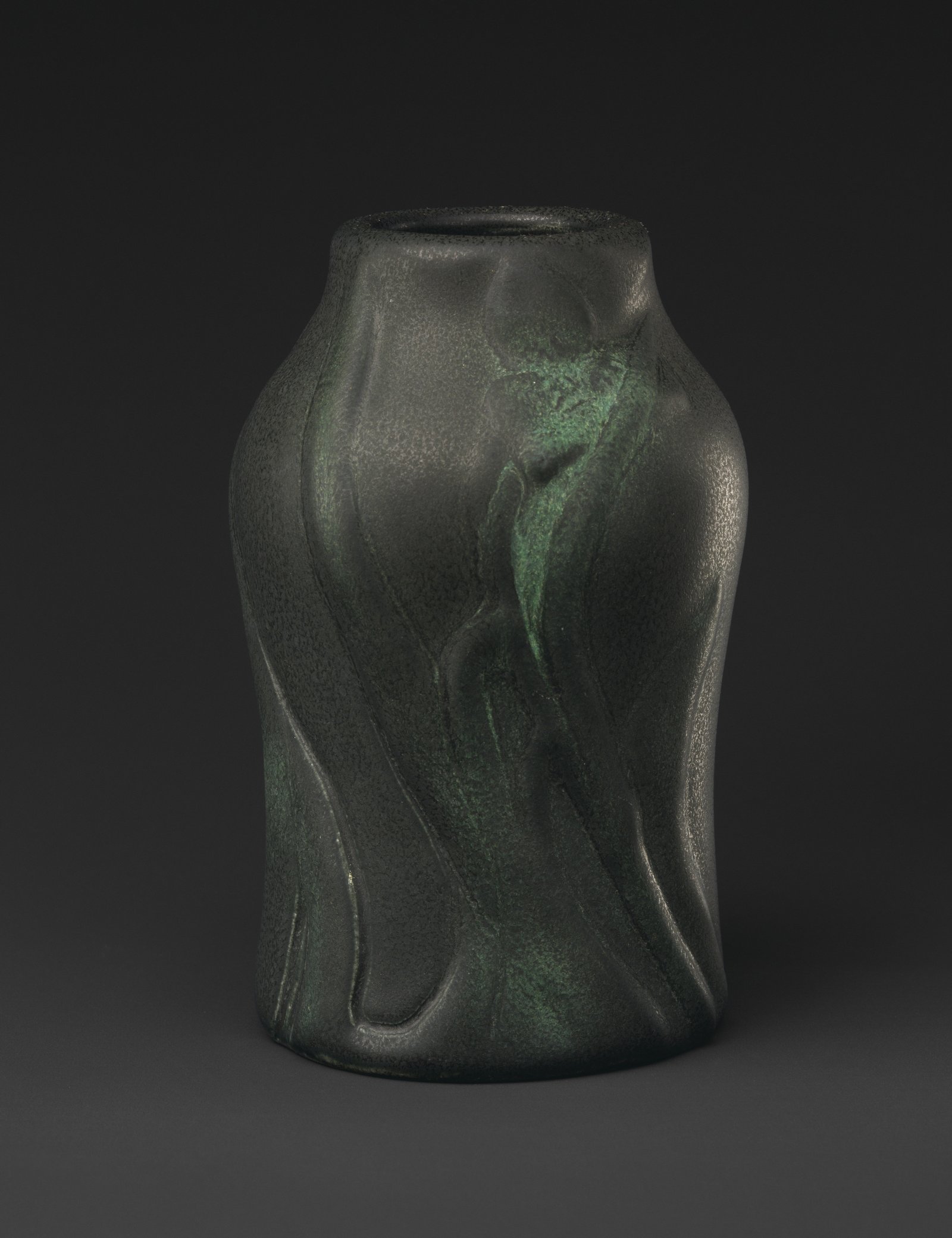
A compact 4 1/2-inch piece from 1902 with that matte glaze Artus spent years perfecting. Not every Van Briggle piece has a named motif. Some are just beautiful forms with glaze, and that's enough.
Vase (1903)
1903 · Stoneware
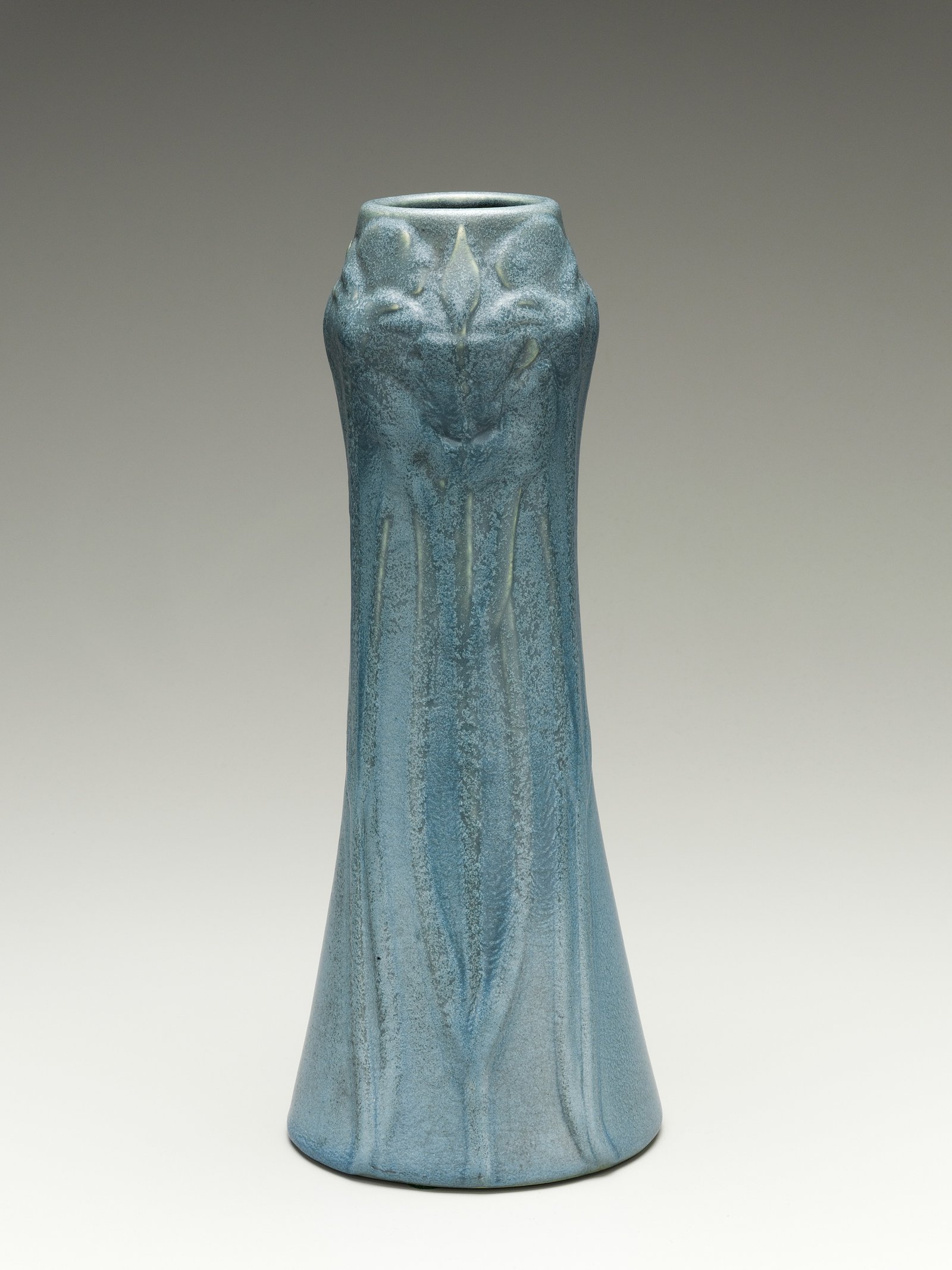
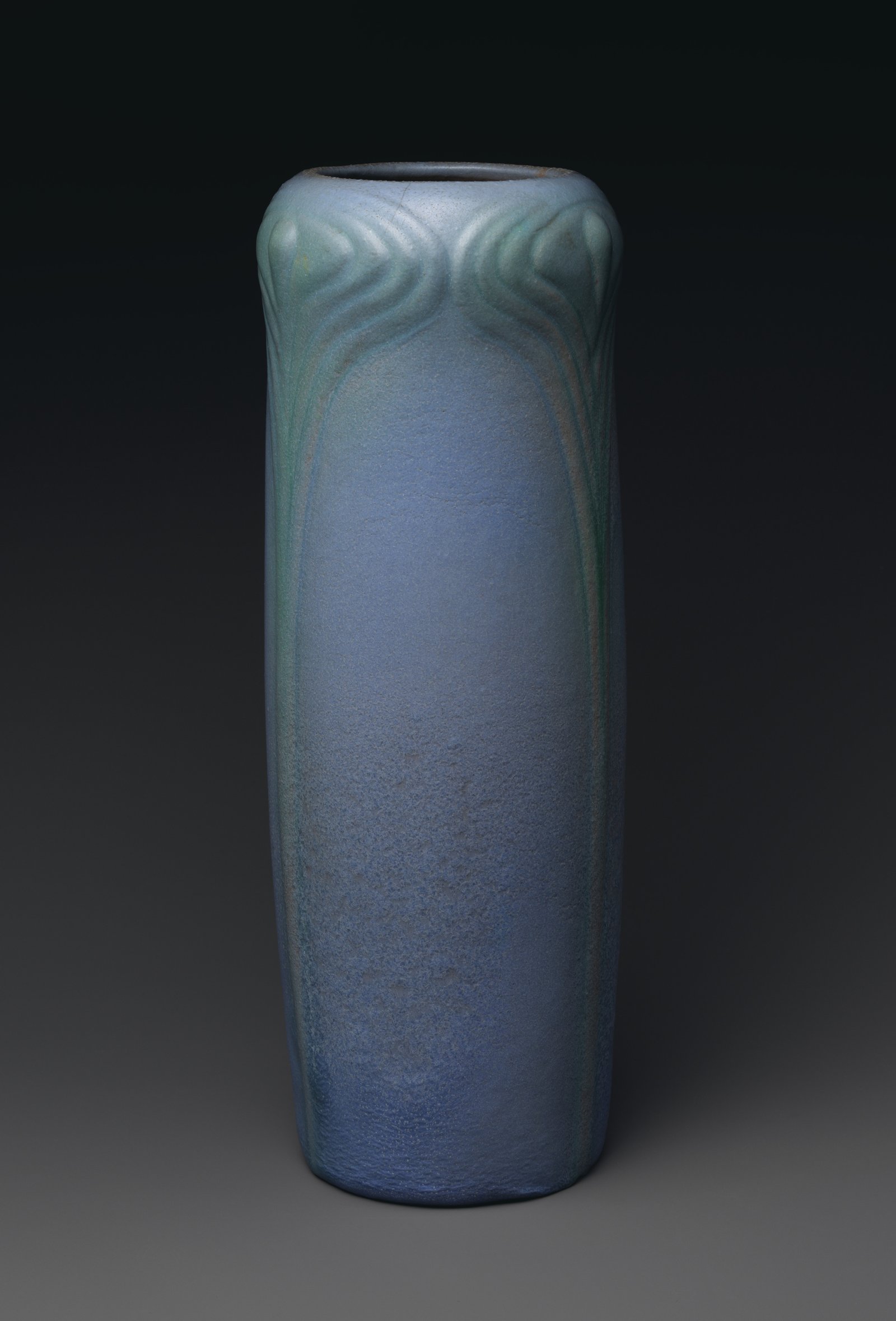
Another stoneware vase from 1903, the year before Artus's death. The glazes from this period are consistently excellent. Artus had figured out what he wanted and was producing it reliably.
The Ellison Collection
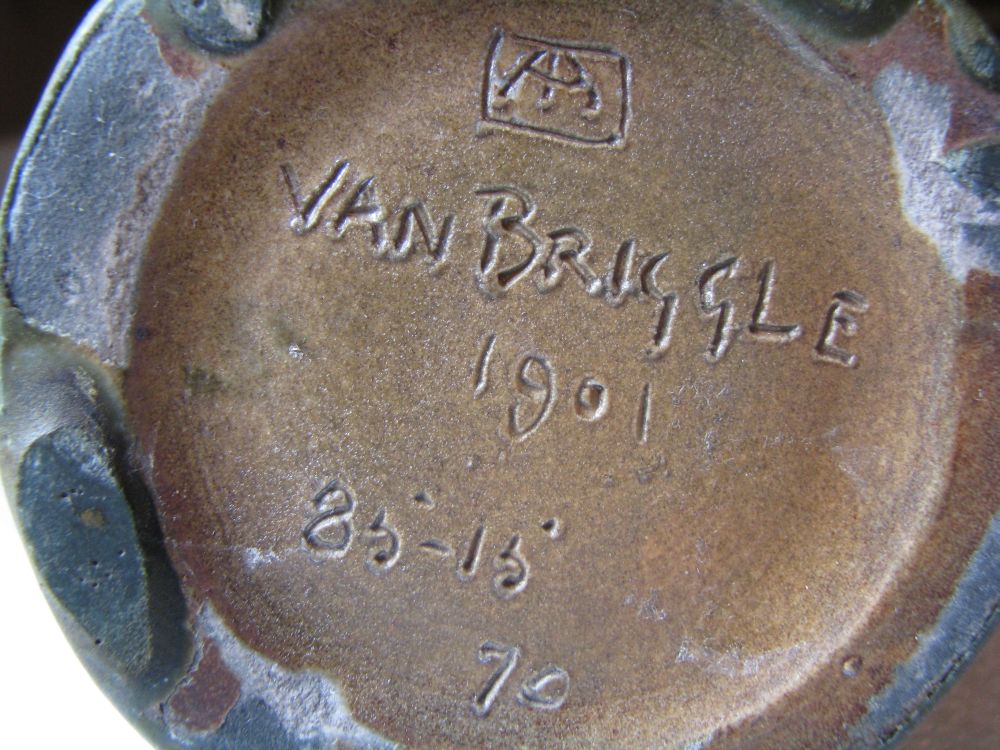
Robert A. Ellison Jr. donated these pieces in 2018. What makes the Ellison collection particularly useful for collectors is the documentation. Every single piece has a dedicated photograph of its maker's marks. If you're trying to identify or date your own Van Briggle pottery, this is exactly the kind of reference material you need.
See our Markings & Identification Guide for more on reading Van Briggle marks.
Vase (1901)
1901 · Earthenware · 7 3/4 in.
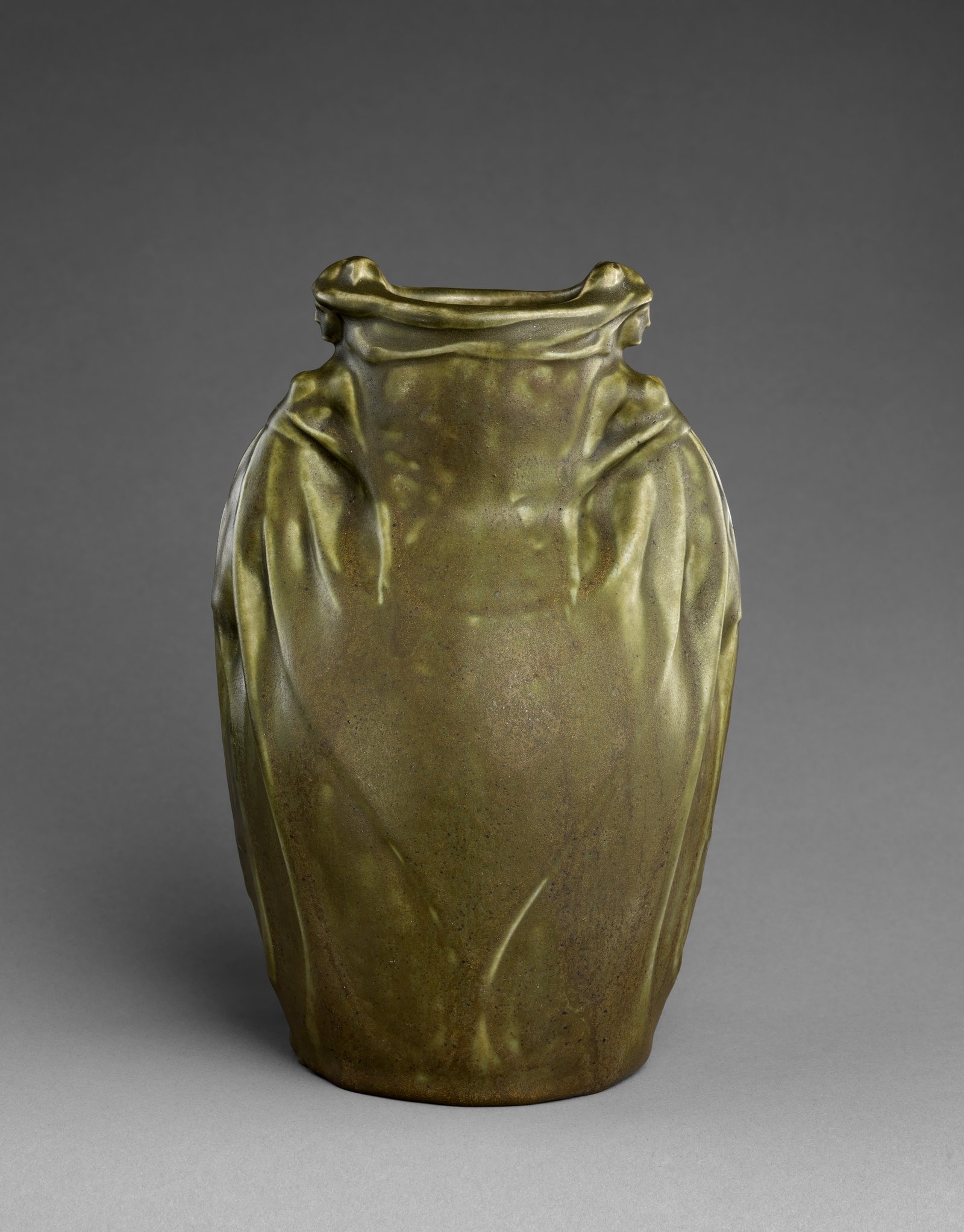
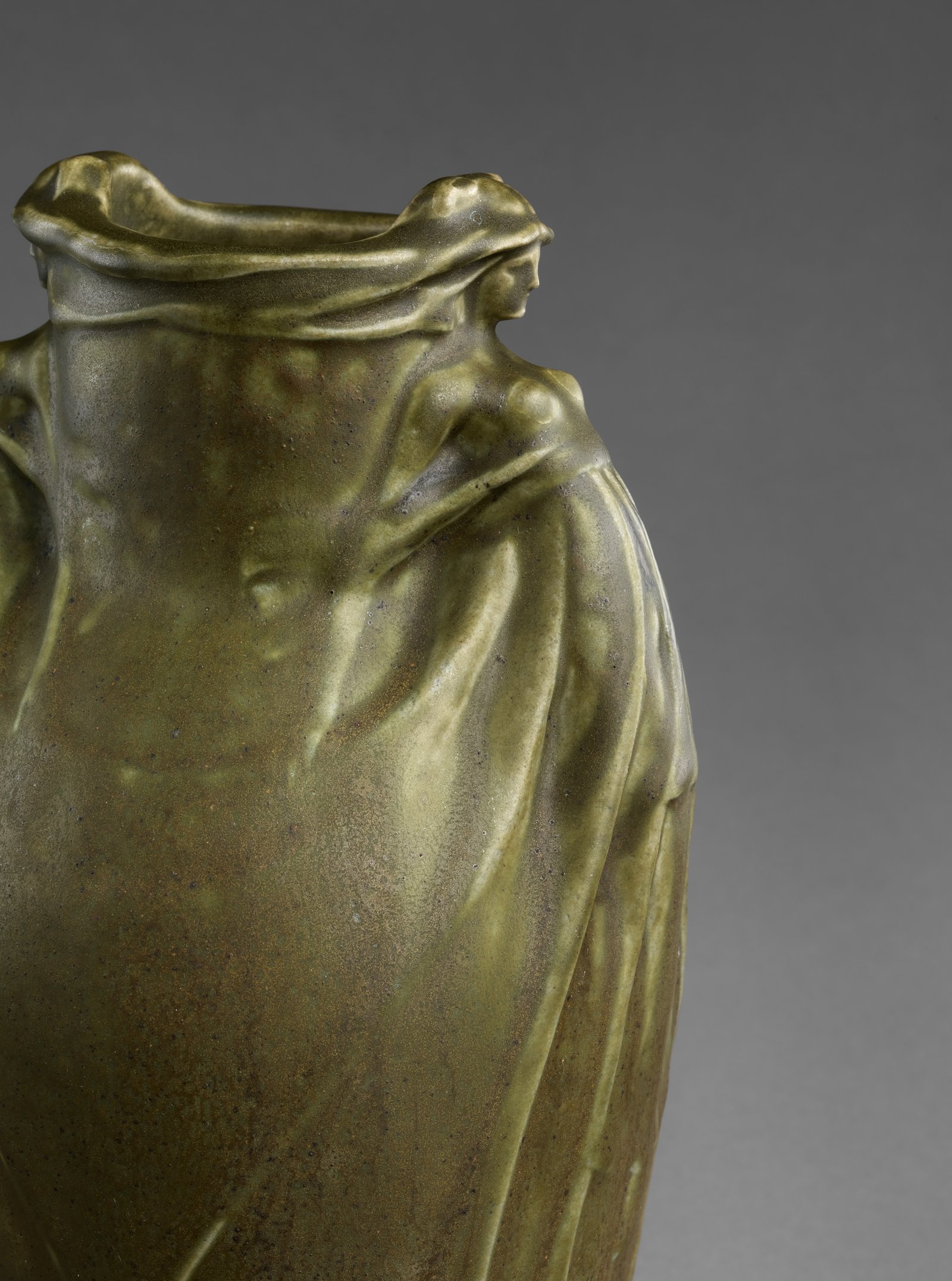
From Van Briggle's very first year of production. 1901. This is as early as it gets. The Met has four different photographic views of this piece, making it one of the most thoroughly documented Van Briggle pieces anywhere.
Maker's marks
Vase (1902, miniature)
1902 · Earthenware · 3 5/8 in.
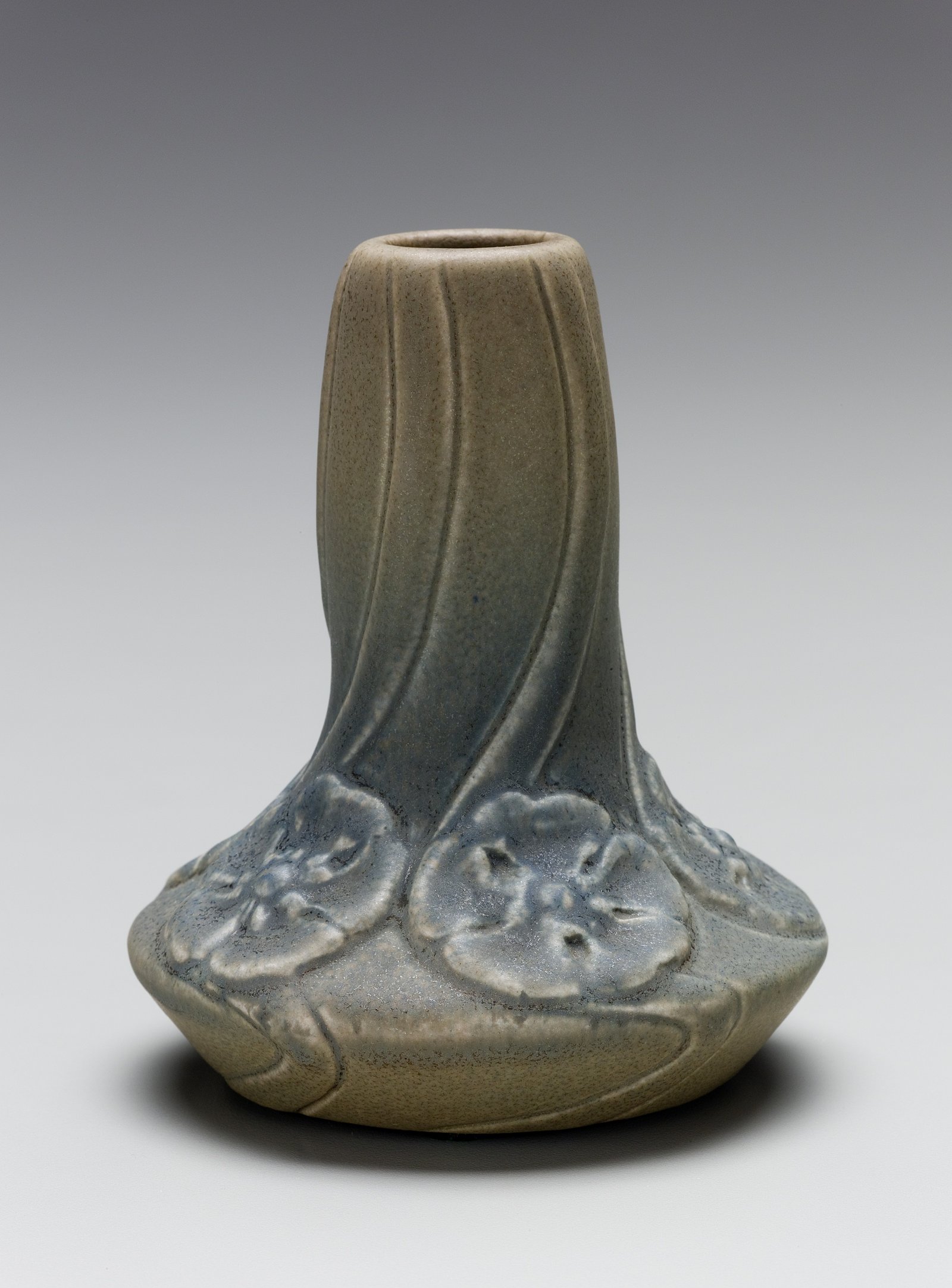
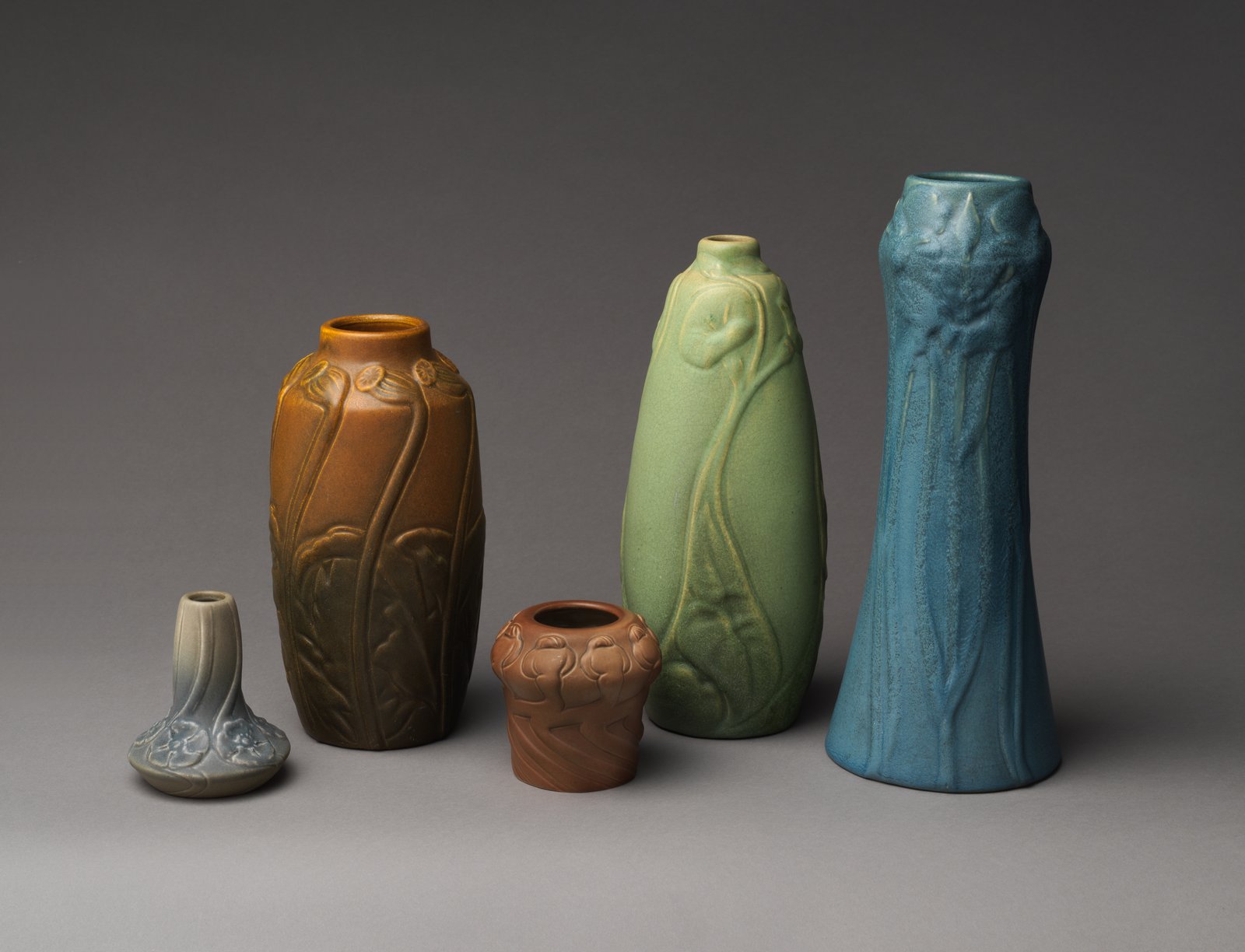
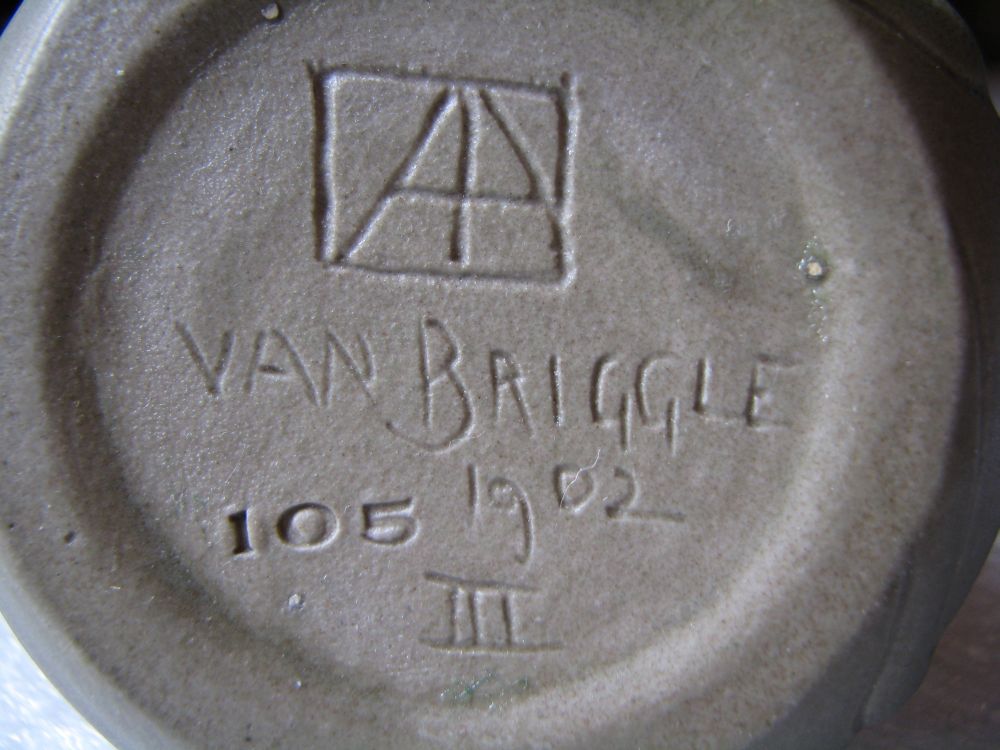
Just 3 5/8 inches tall. A miniature. Van Briggle made these small forms alongside the larger pieces, and the matte glazes work just as well at this scale. The marks photo below is especially useful since studying marks on miniatures can tell you a lot about how the pottery handled smaller production.
Maker's marks
Vase (1902, companion)
1902 · Earthenware · 3 11/16 in.
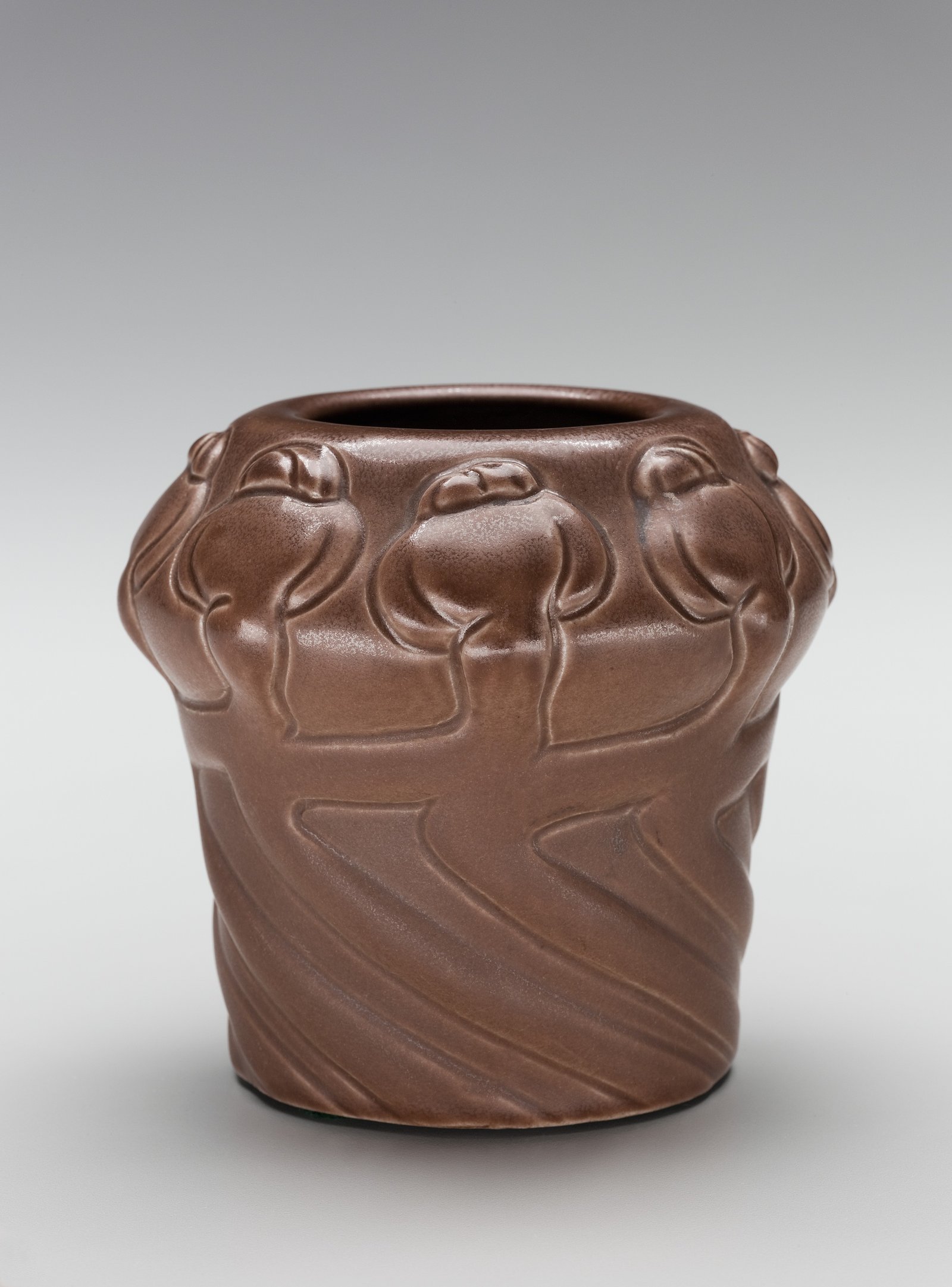
Almost the same size as its companion. Compare the marks on this one with the other 1902 miniature and you can start to see the subtle variations in how different potters applied the marks, even within the same production year.
Maker's marks
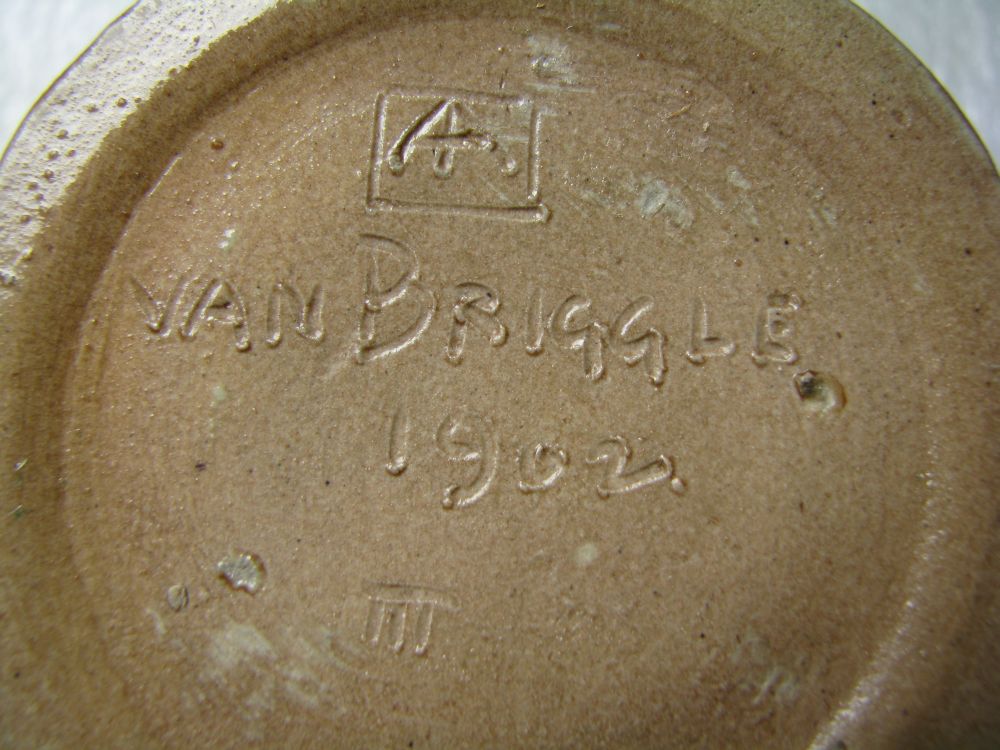
Vase (1902, medium)
1902 · Earthenware · 9 7/8 in.
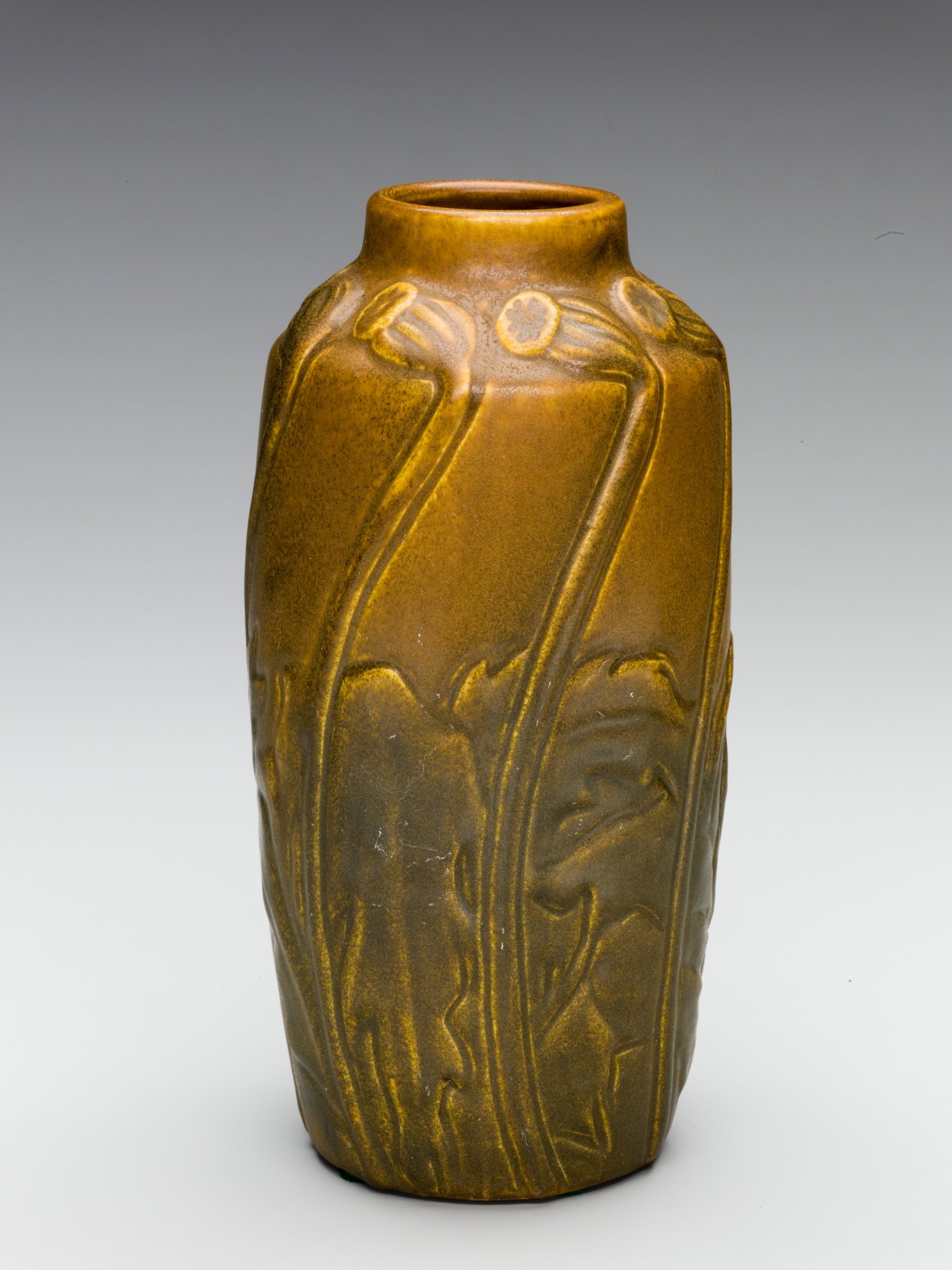
At nearly 10 inches, this rounds out a trio of 1902 pieces in the Ellison collection. You go from the two miniatures under 4 inches to this medium-sized piece. That range gives you a real sense of what Van Briggle was producing in a single year.
Maker's marks
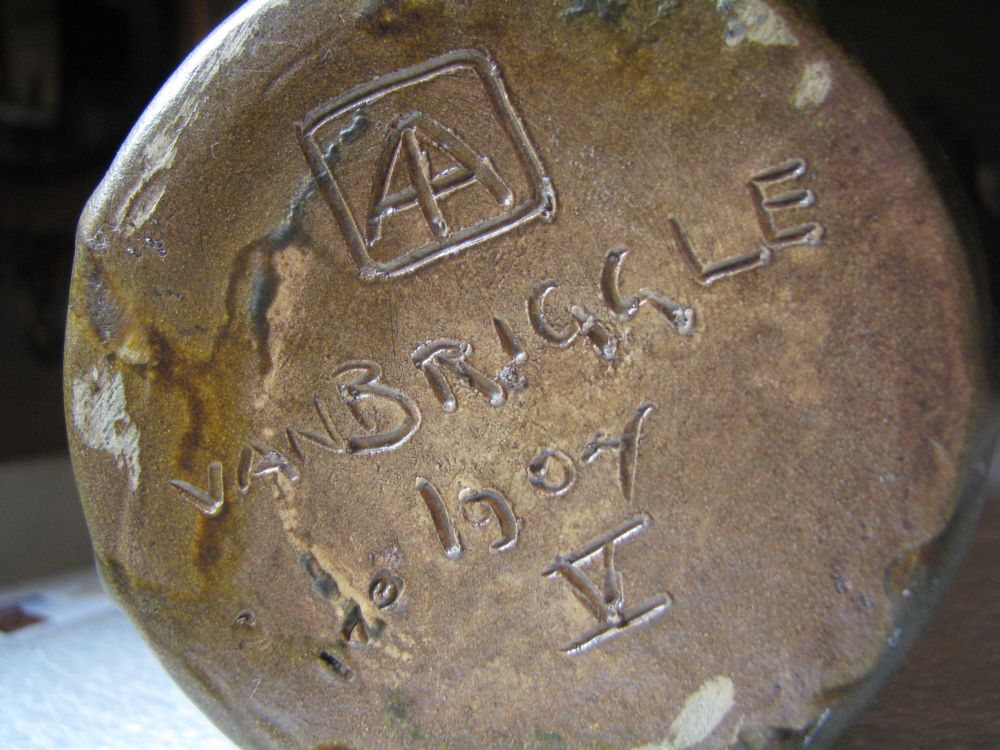
Vase (1903)
1903 · Earthenware
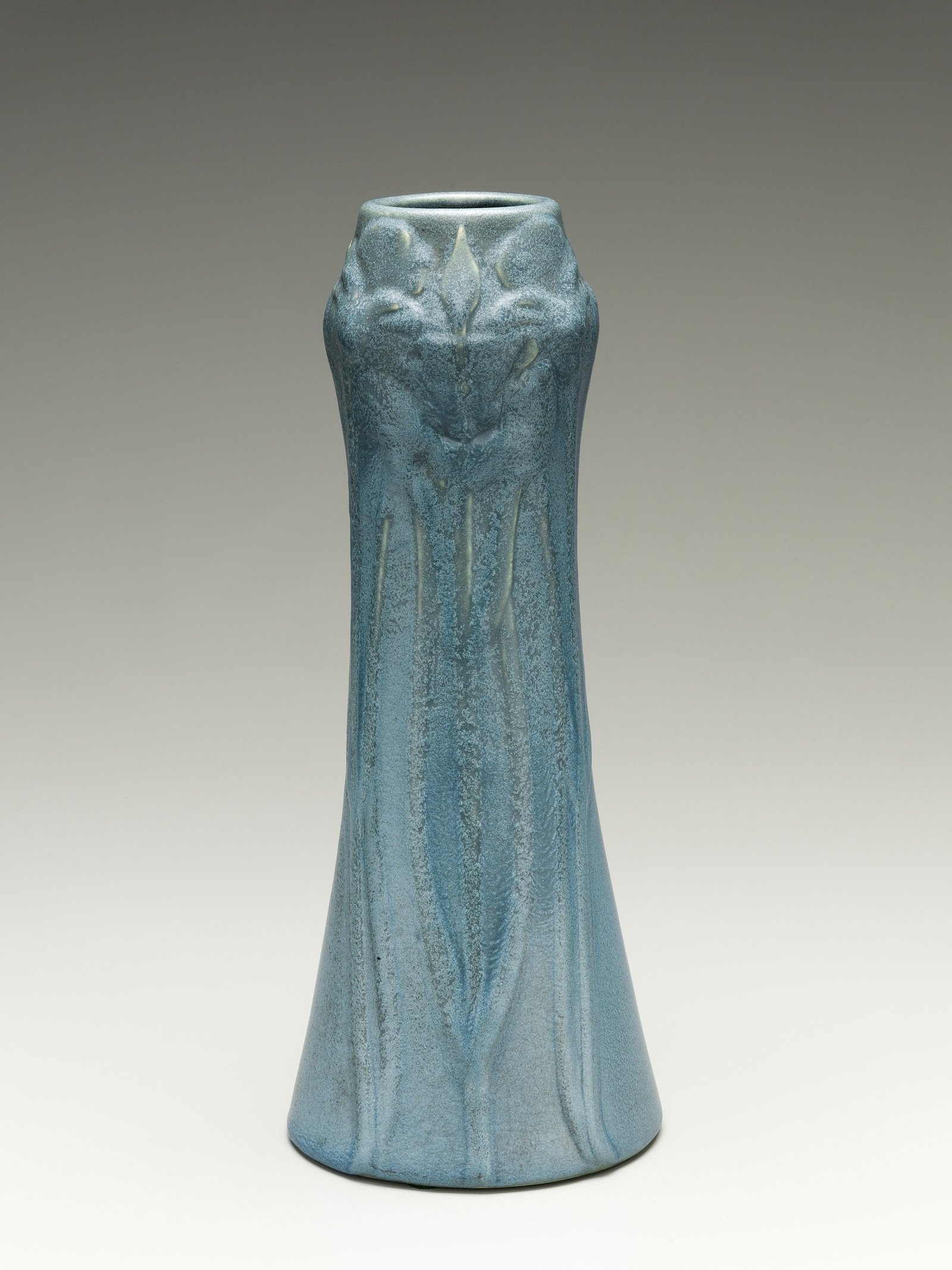
An 1903 earthenware piece. Artus was still alive and directly overseeing production this year. The marks photo on this one is worth a close look if you're trying to pin down your own 1903 pieces.
Maker's marks
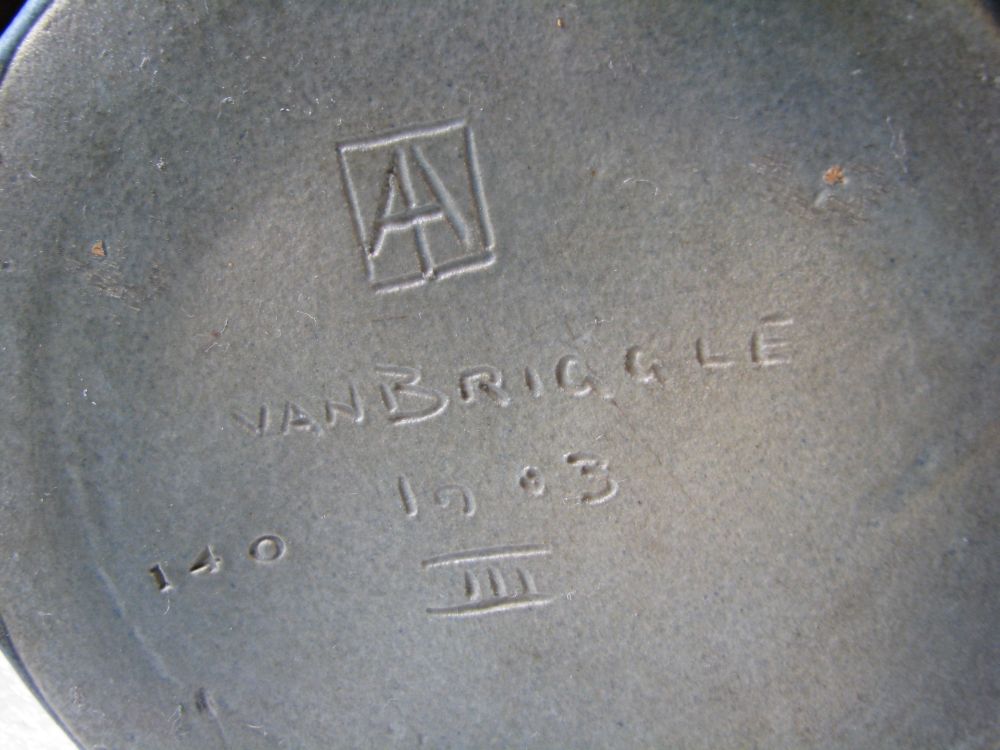
Vase (1904, large)
1904 · Earthenware · 11 7/8 in.
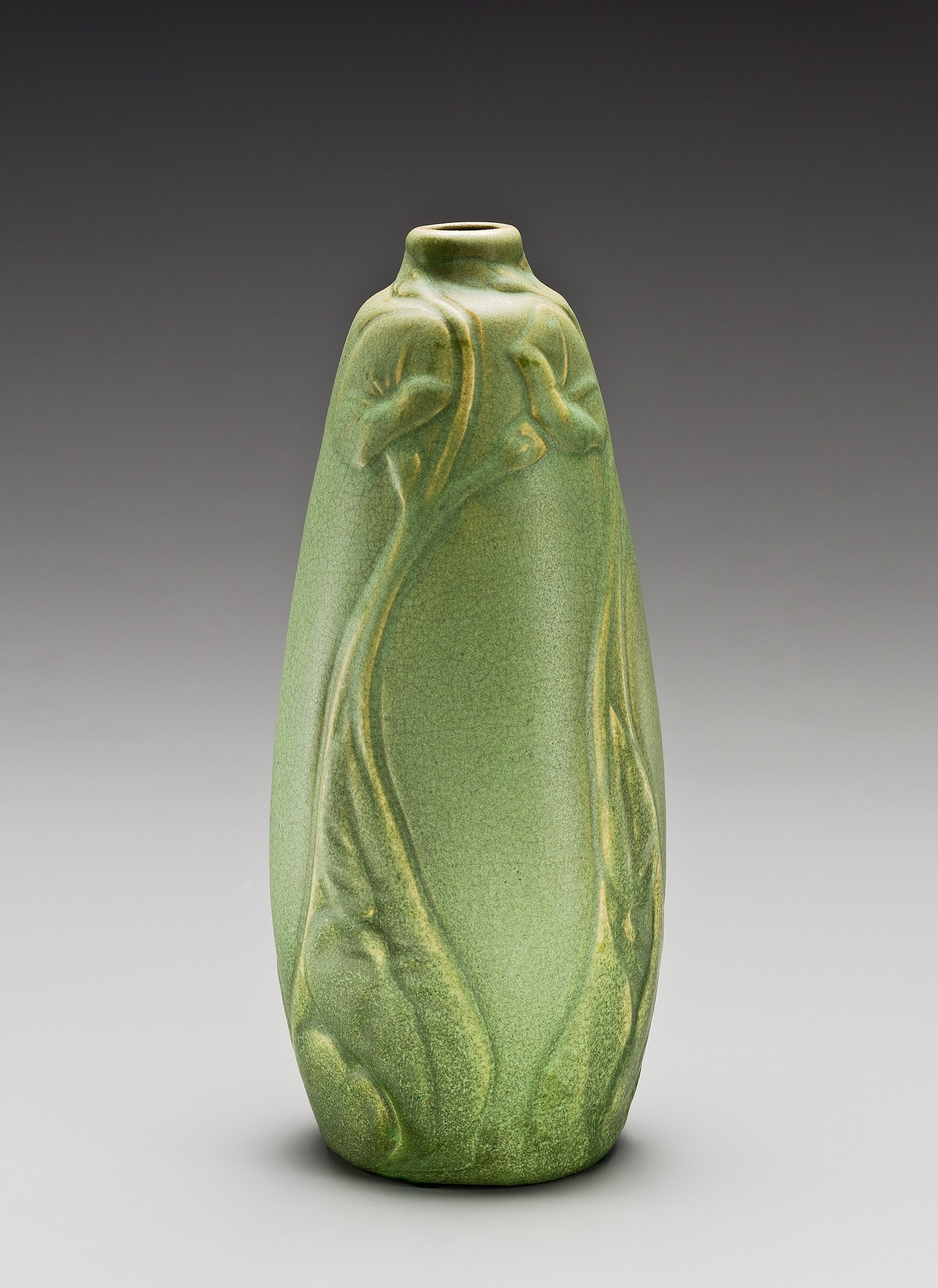
A substantial piece at nearly 12 inches, from 1904. This was the year Artus died, so this vase may have been among the last produced under his direct eye. The marks from this transitional period are particularly interesting for collectors.
Maker's marks
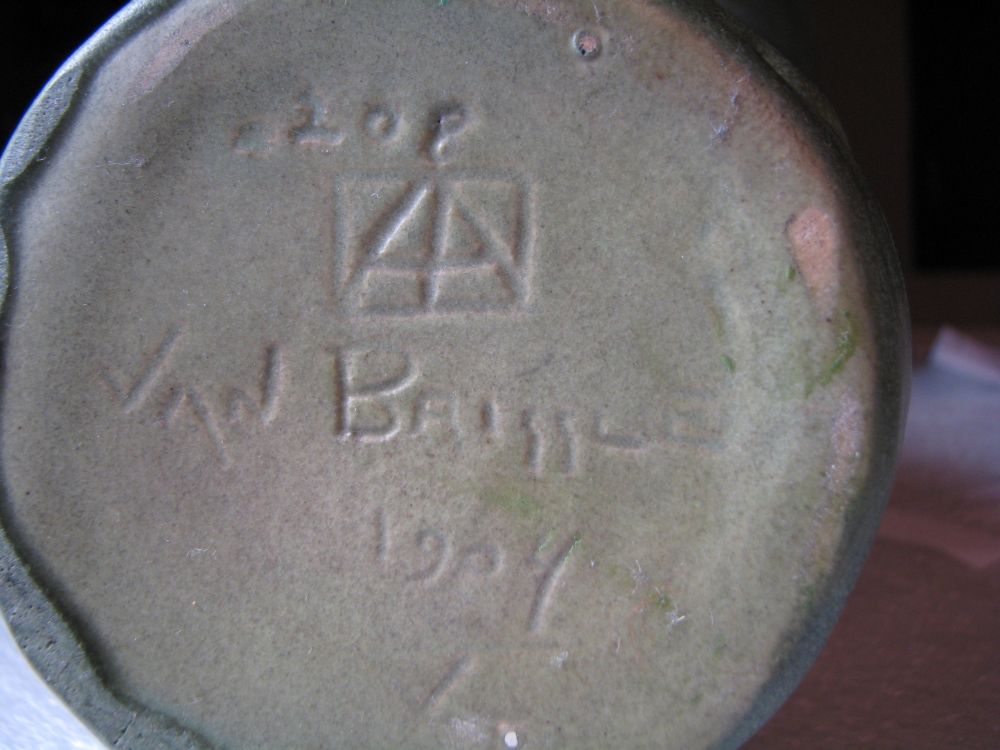
Vase (1904, small)
1904 · Earthenware · 7 1/2 in.
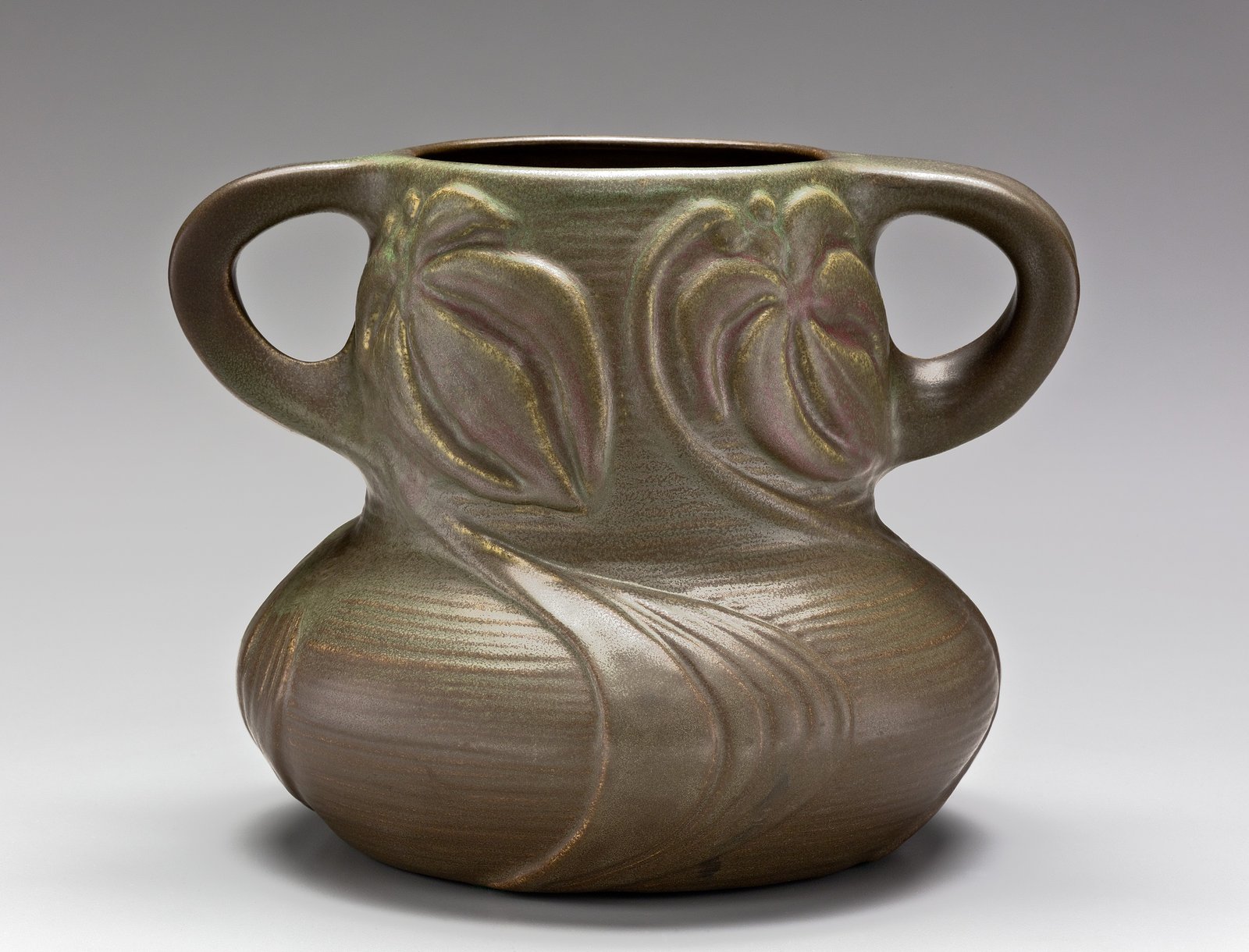
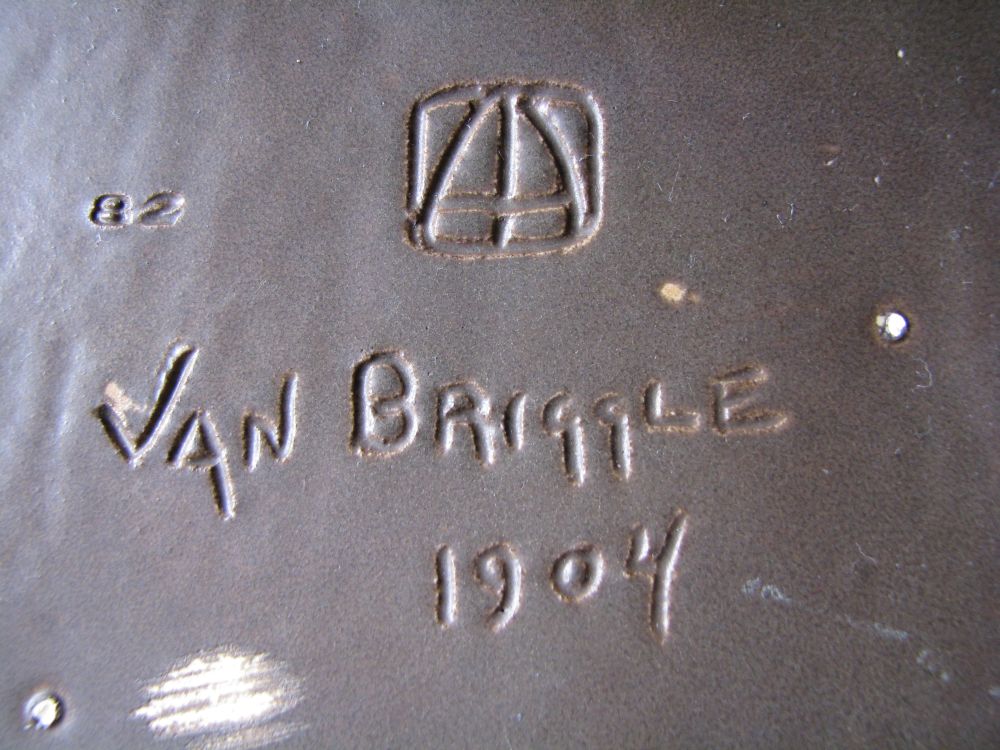
A second 1904 piece, smaller at 7 1/2 inches. Having two pieces from the same year lets you compare marks and glazes side by side. That's the real value of a collection like Ellison's.
Maker's marks
All images and metadata from The Metropolitan Museum of Art Open Access Collection. Public domain under Creative Commons Zero (CC0).