Van Briggle Pottery Gallery
Historic pieces from the Metropolitan Museum of Art, Cleveland Museum of Art, Art Institute of Chicago, and De Young Museum. All images are in the public domain. Tap any image to zoom in. To learn about the artist behind these works, visit our About page.
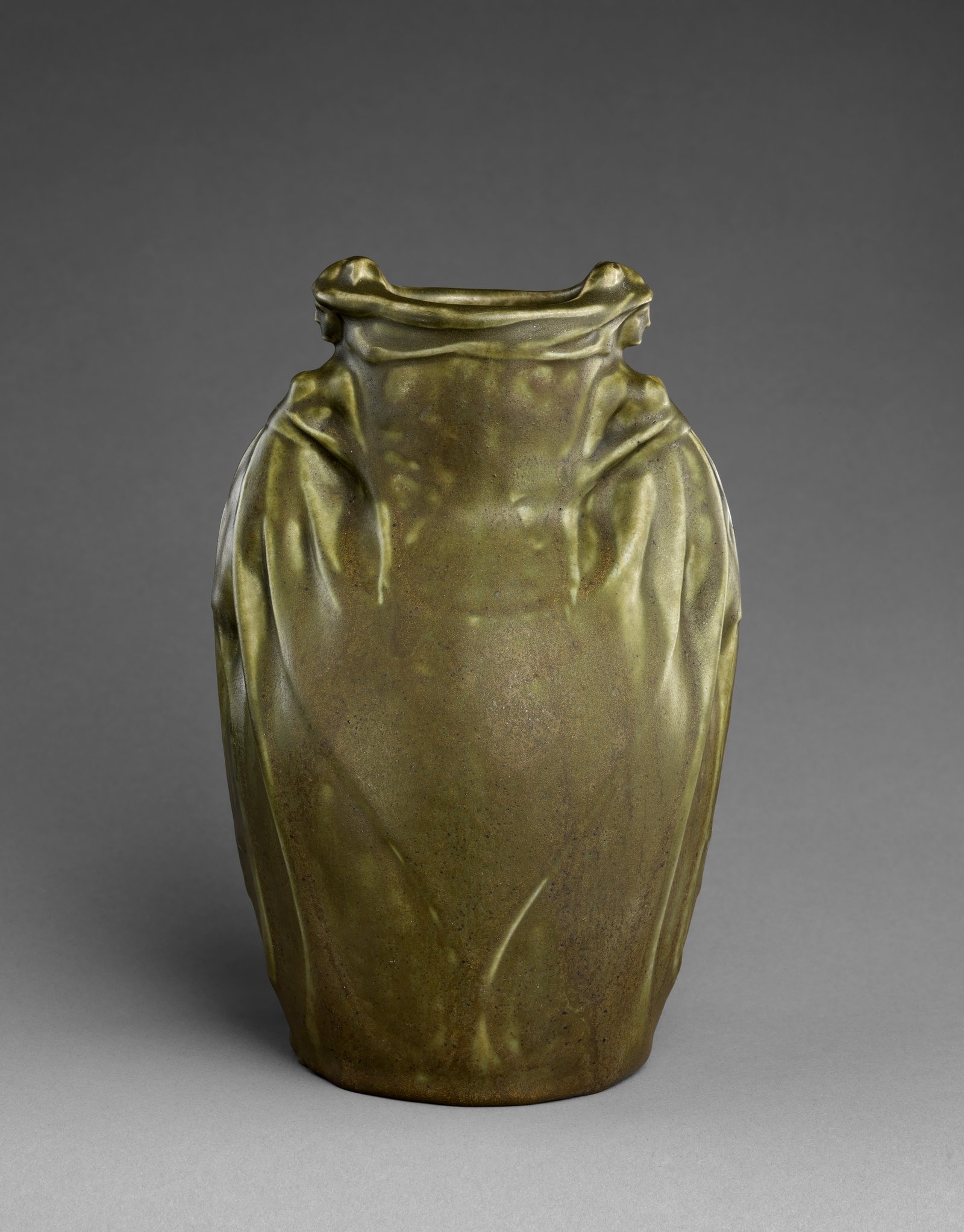
Vase
1901
One of the earliest known Van Briggle pieces, made during the pottery's first year of production in Colorado Springs. The olive-green matte glaze and sculptural relief of draped forms show the Art Nouveau influences Artus absorbed during his Paris studies. Earthenware, 7 3/4 inches tall. From the Ellison Collection.
Metropolitan Museum of Art
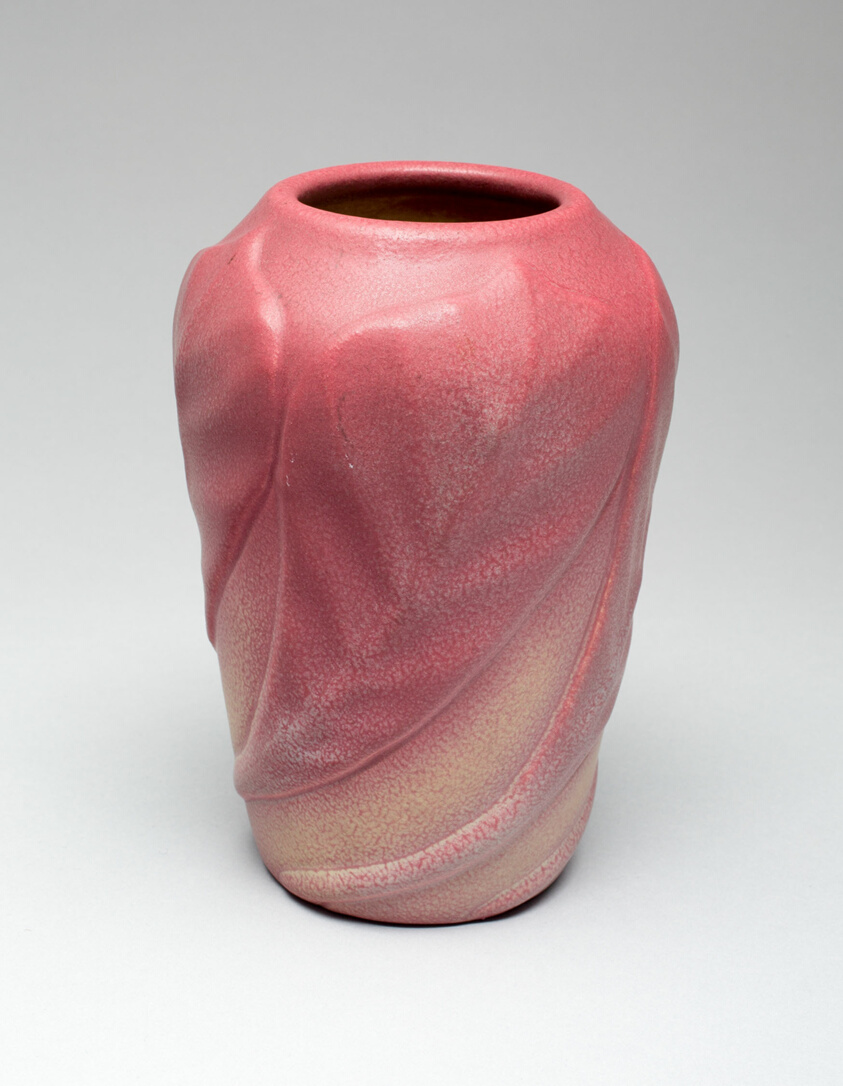
Vase
1902
A rare example finished in Van Briggle's rose-pink matte glaze, with broad leaf forms wrapped around the body in high relief. The soft coloring and flowing organic shapes are quintessential Art Nouveau. Earthenware, 6 inches tall.
Art Institute of Chicago
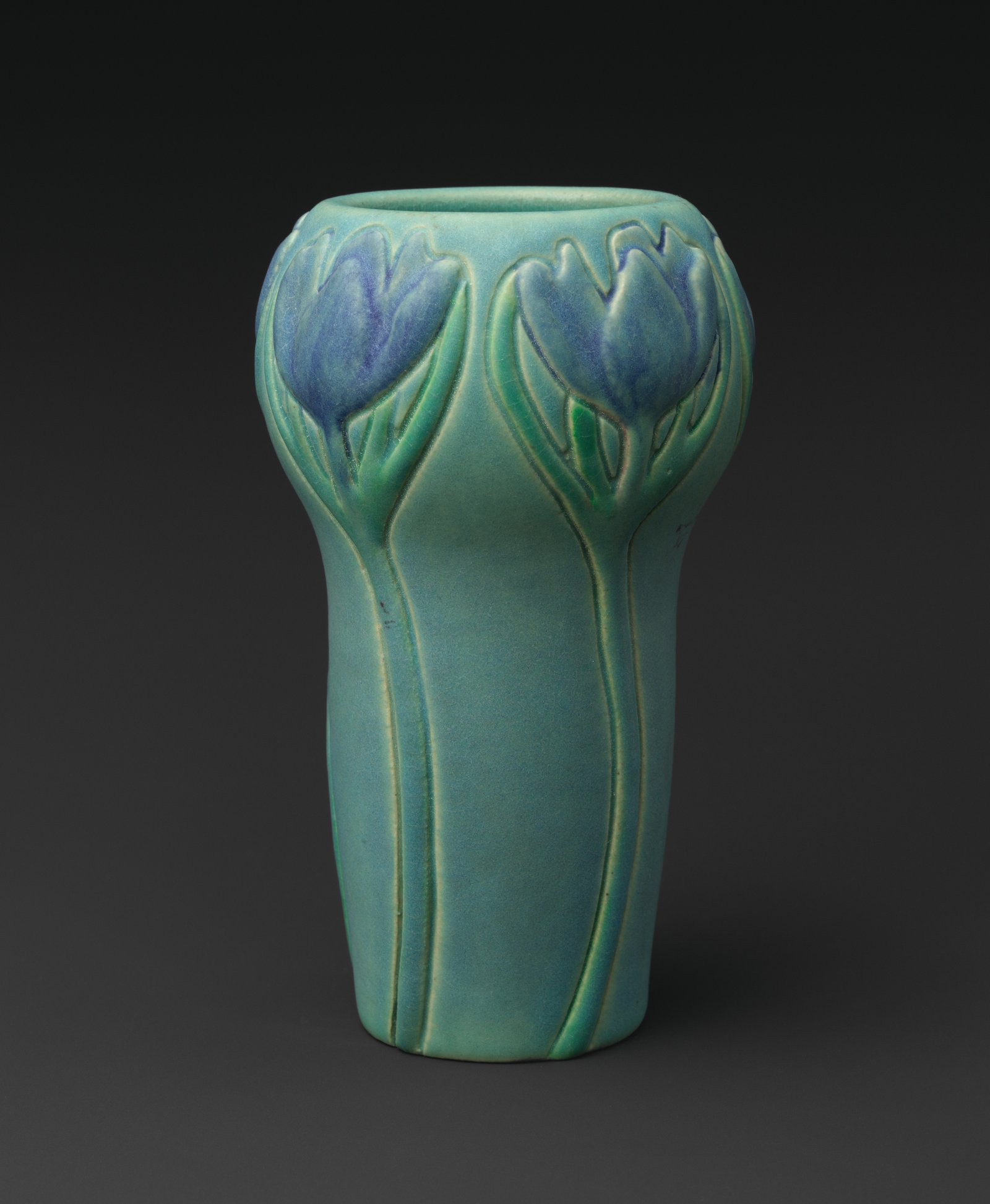
Crocuses Vase
1902
Delicate crocus stems wind around this small vase in sinuous curves, demonstrating Van Briggle's gift for integrating botanical forms into the vessel's shape. Stoneware, 5 7/8 inches tall.
Metropolitan Museum of Art
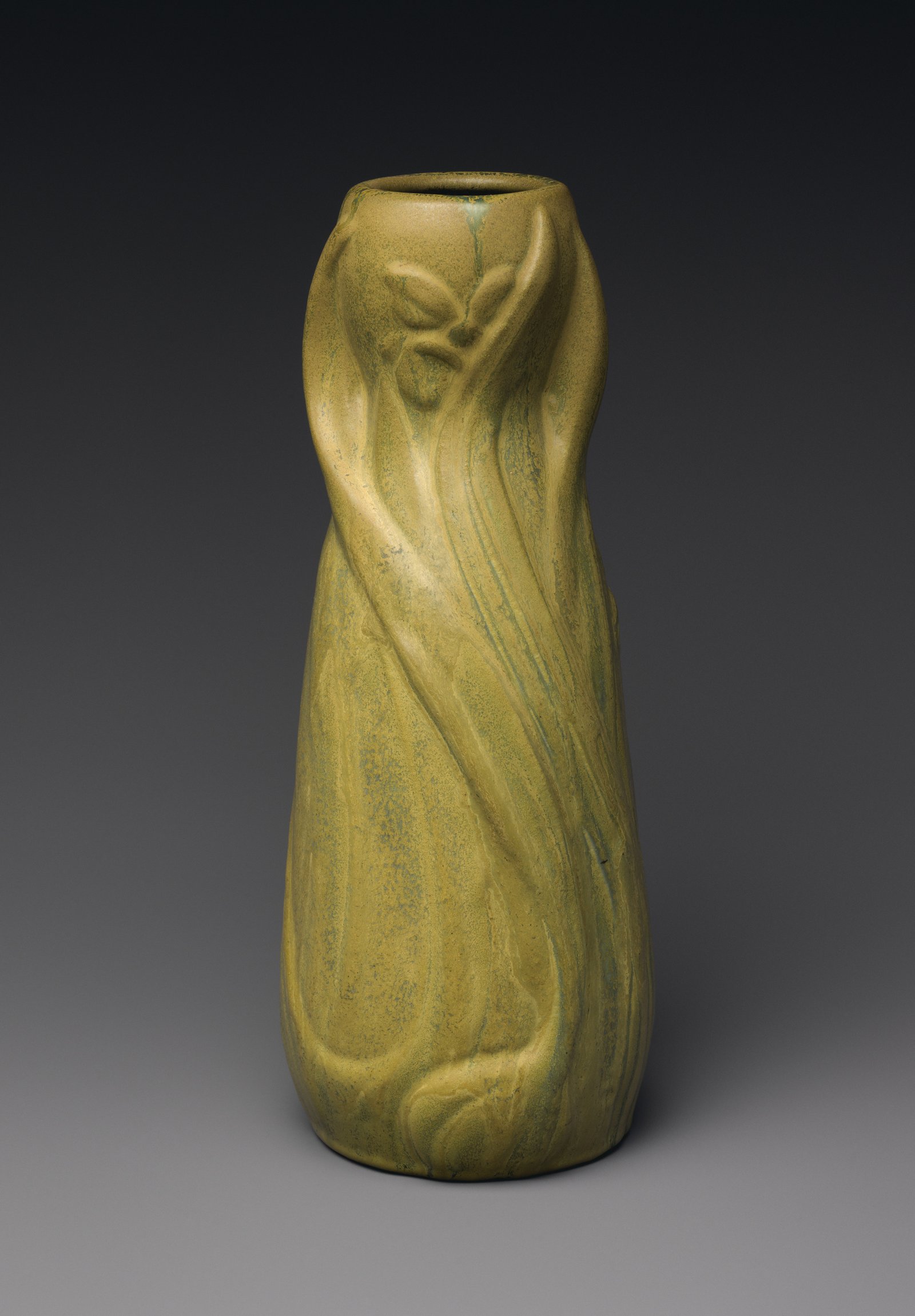
Daffodils Vase
1902
The daffodil's botanical identity is preserved while the whiplash curves of the stems emphasize organic vitality — a hallmark of Art Nouveau. Stoneware with matte glaze, 10 3/4 inches tall.
Metropolitan Museum of Art
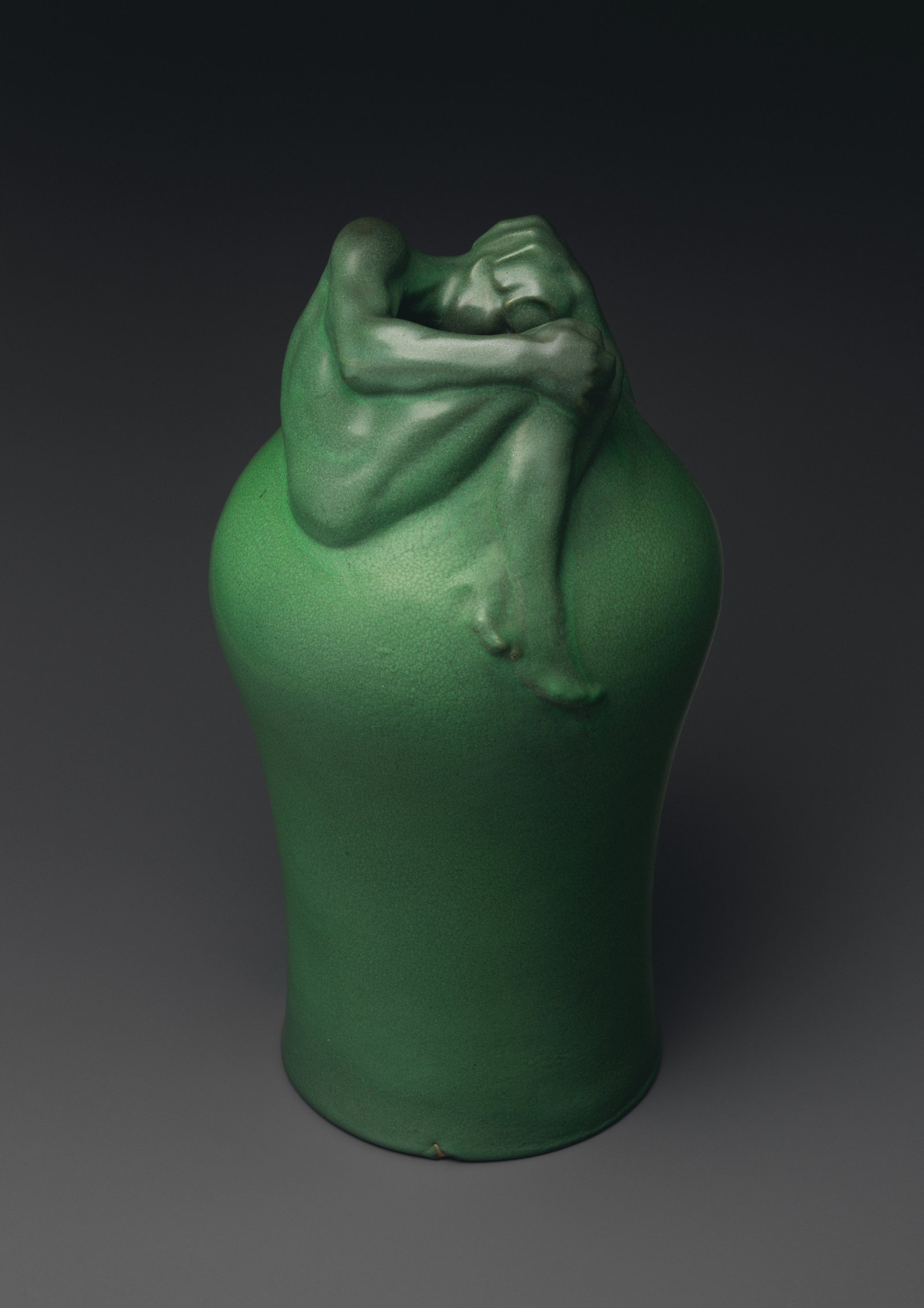
Despondency Vase
1902
Artus Van Briggle's iconic figural design, inspired by Auguste Rodin, depicts a brooding figure draped over the vessel. This design won a gold medal at the 1903 Paris Salon. Earthenware with matte green glaze, 12 3/4 inches tall.
Metropolitan Museum of Art
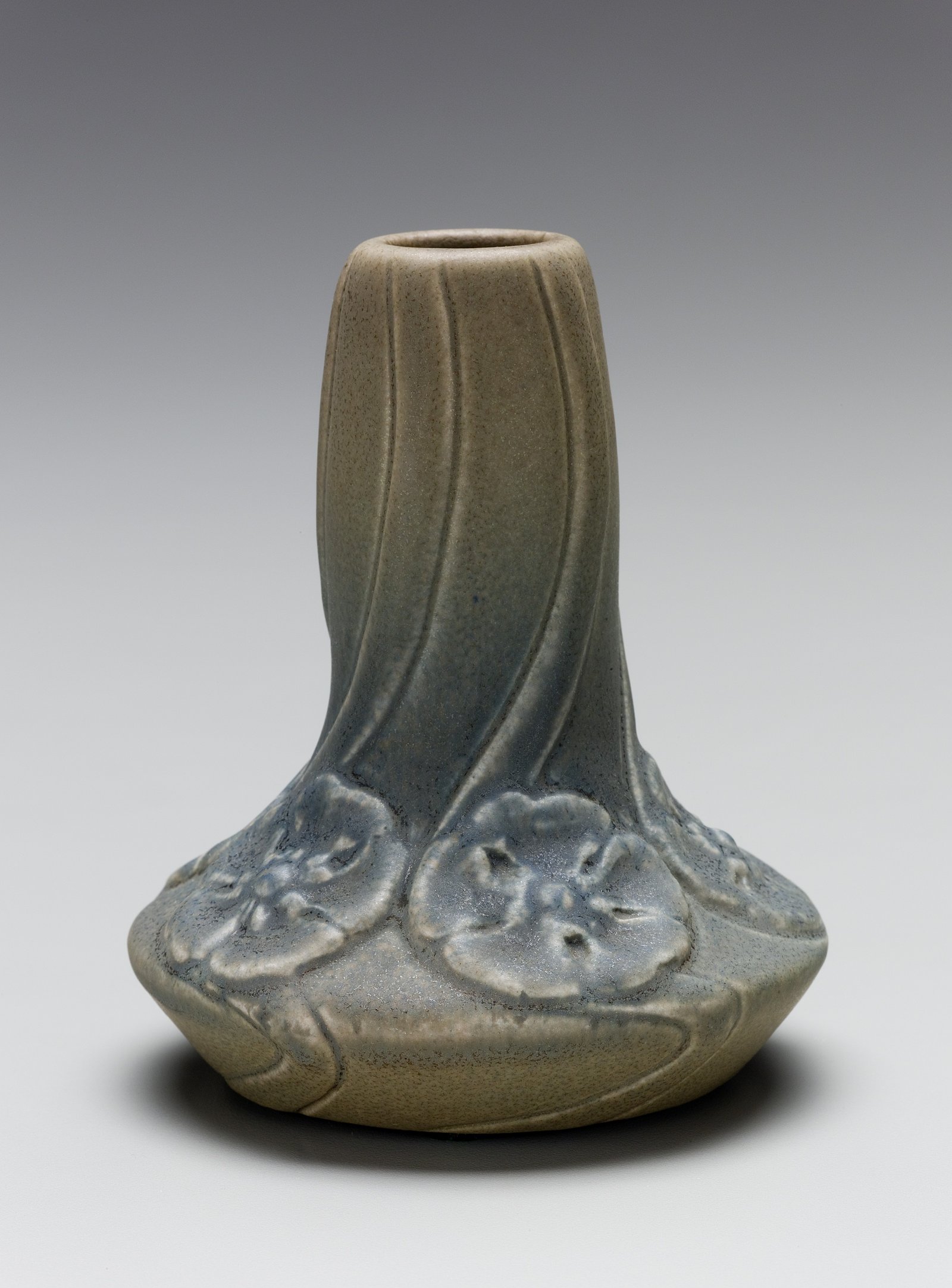
Vase
1902
A distinctive gourd-shaped form with flowers clustered at its wide base and long stems sweeping upward in a blue-green matte glaze. The unusual silhouette shows Van Briggle's experimental approach to vessel form. Earthenware, 3 5/8 inches tall. From the Ellison Collection.
Metropolitan Museum of Art
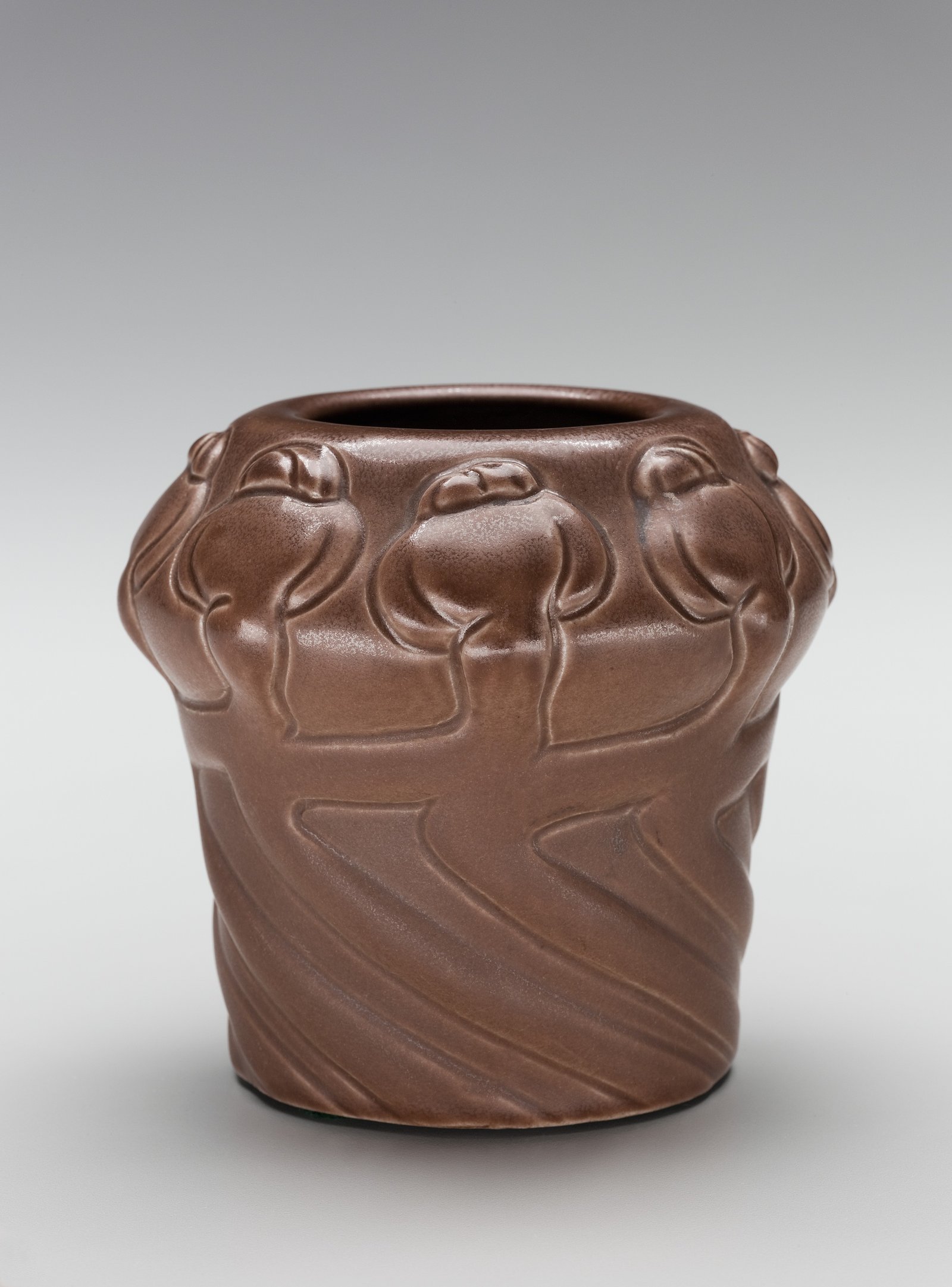
Vase
1902
Graceful calla lily forms emerge from this green matte-glazed earthenware vase. The subtle relief and soft green tones create a quiet elegance typical of Van Briggle's best early work. From the Ellison Collection.
Metropolitan Museum of Art
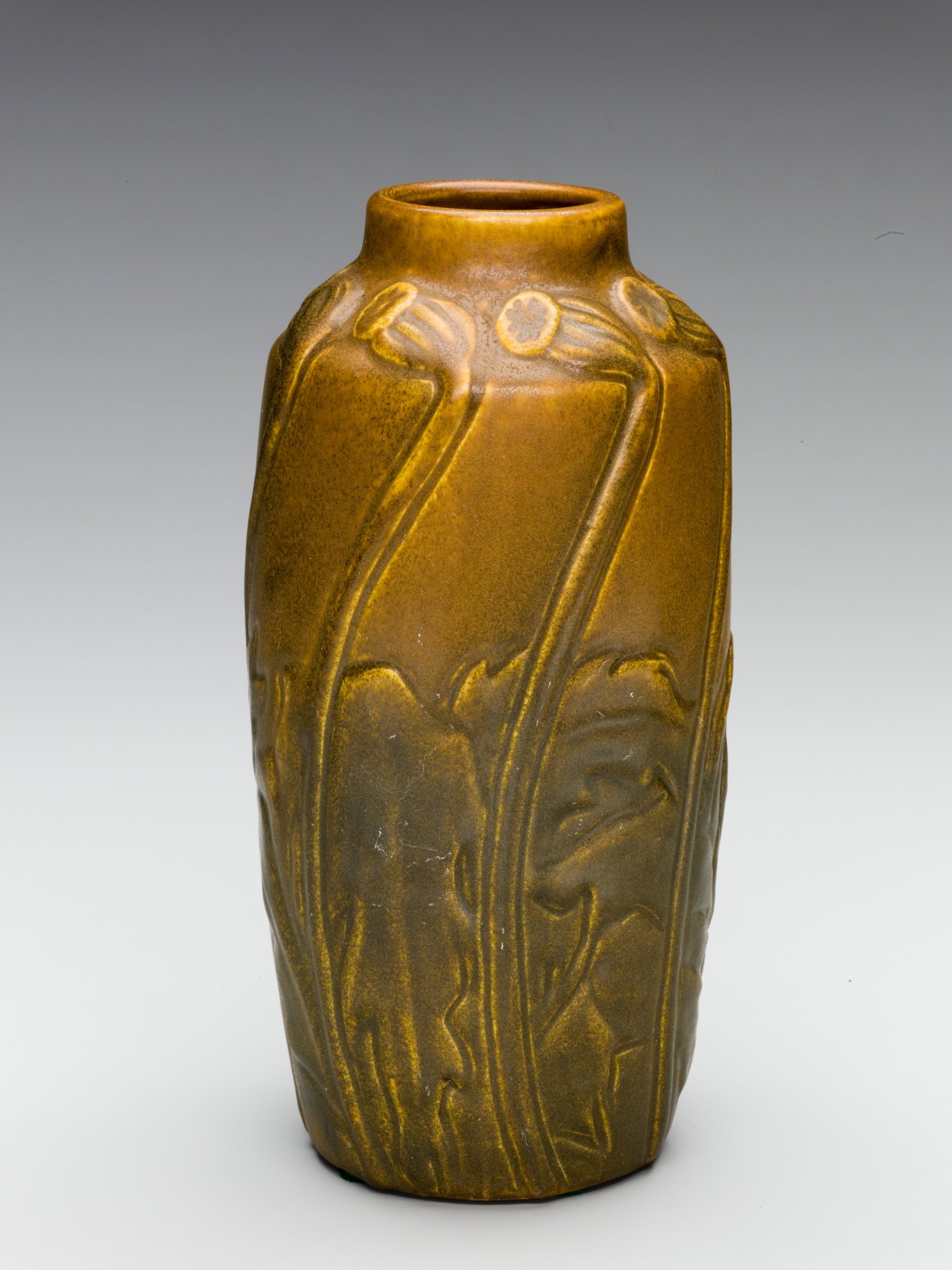
Vase
1902
A compact form encircled by rounded buds and sweeping stems in a warm brown matte glaze. The rhythmic repetition of forms and the rich earth tone give this piece a bold, almost architectural quality. From the Ellison Collection.
Metropolitan Museum of Art
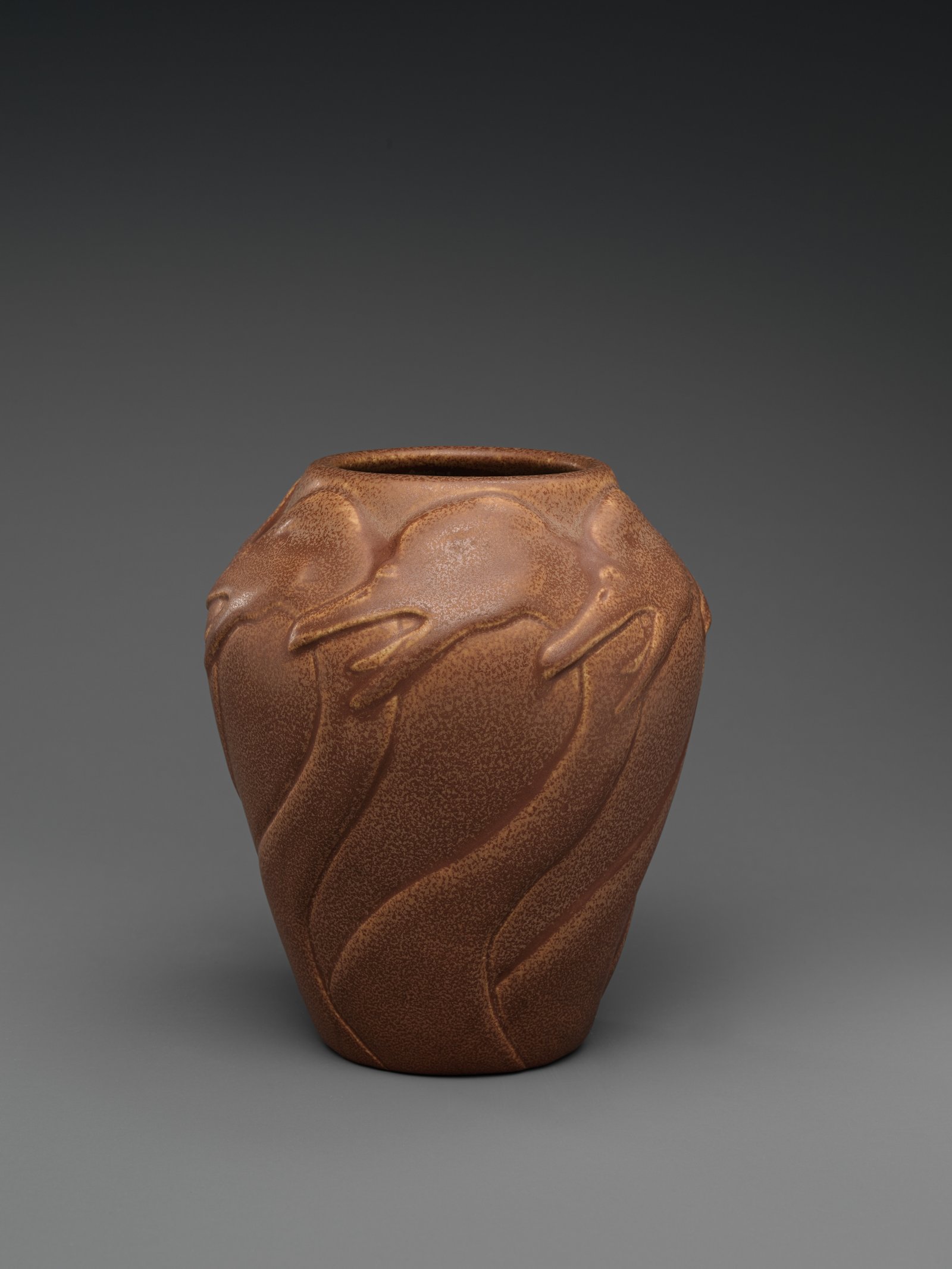
Vase with Geese
1902
An unusual departure from Van Briggle's typical plant forms — goose heads and necks replace blossoms and stems, with the birds' heads serving as flowers in a witty Art Nouveau reinterpretation. Design dates to 1900. Stoneware, 6 1/2 inches tall.
Metropolitan Museum of Art
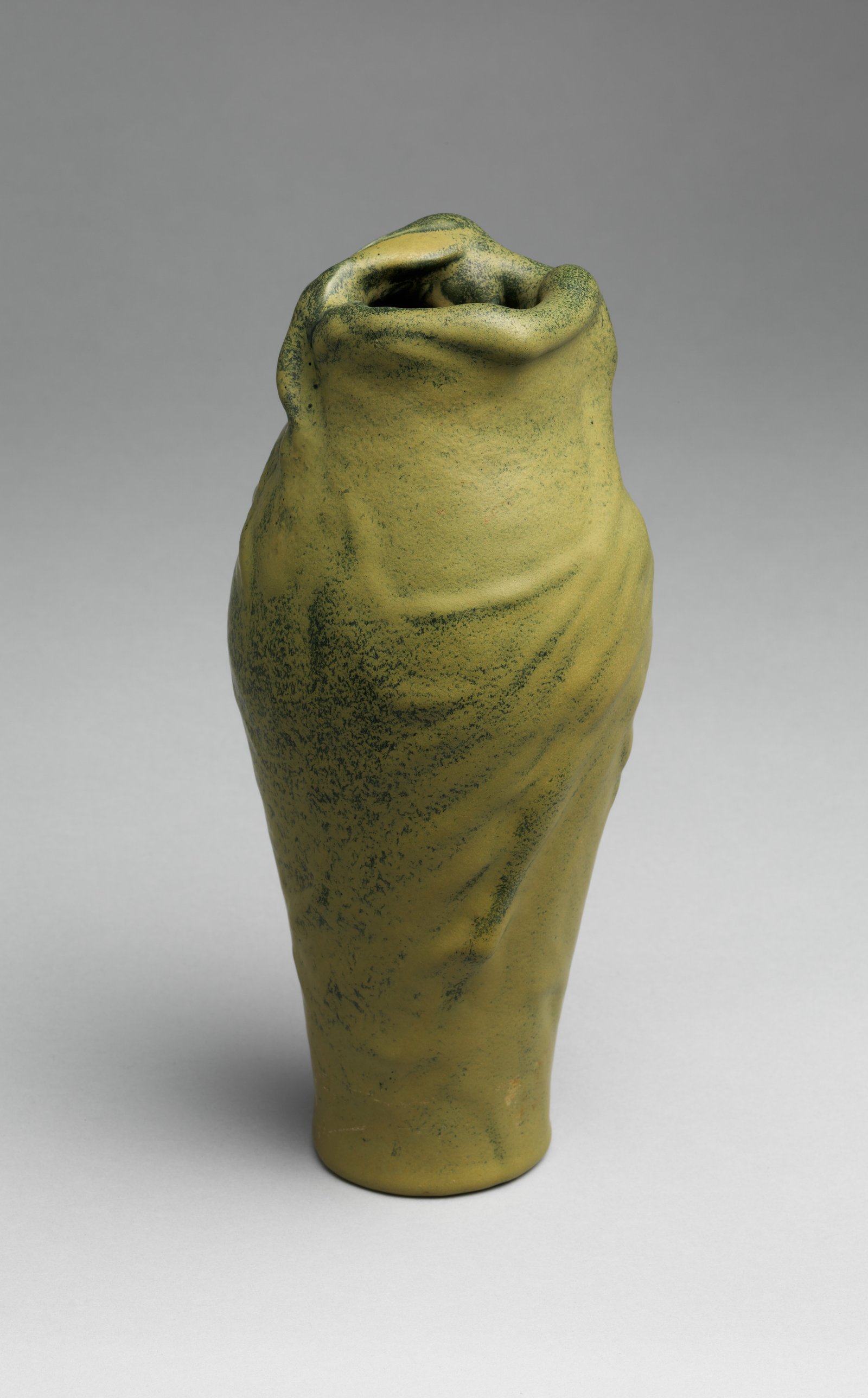
Lorelei Vase
1902
Van Briggle's most celebrated design, featuring the figure of a woman from Germanic legend draped sensuously over the vessel's rim. Artus first conceived this design while working at Rookwood Pottery. Matte green glaze over earthenware.
Metropolitan Museum of Art
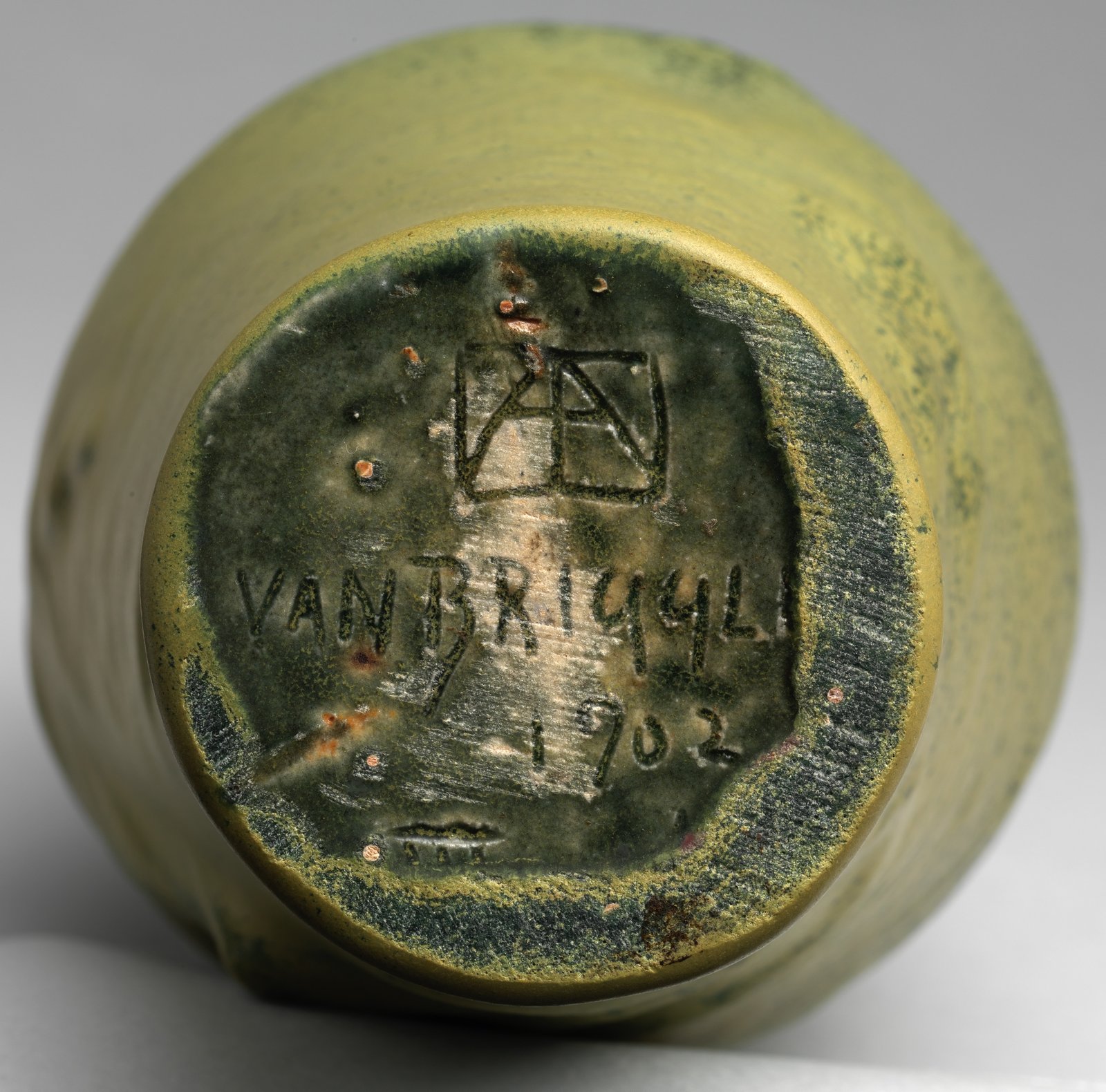
Lorelei Vase — Bottom Mark
1902
The base of the 1902 Lorelei vase reveals the incised conjoined "AA" monogram within a square, "VAN BRIGGLE," and the date "1902" — the earliest form of the pottery's mark. These markings are essential for authenticating and dating Van Briggle pieces.
Metropolitan Museum of Art
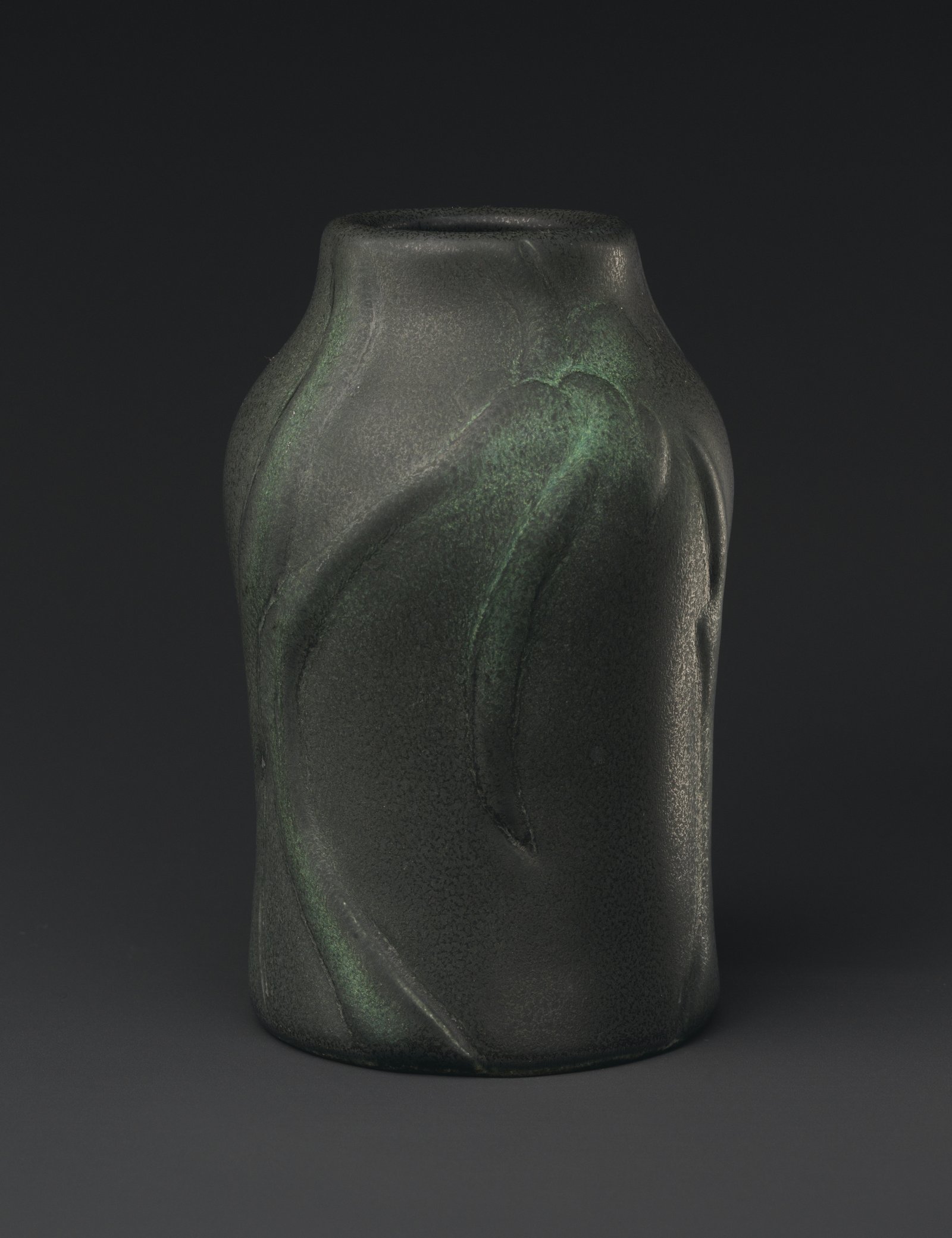
Vase
1902
A stoneware vase in a deep, rich green matte glaze with subtly carved leaf forms flowing across its surface. The dark coloring and organic relief exemplify Van Briggle's mastery of the matte glaze technique he spent years perfecting.
Metropolitan Museum of Art
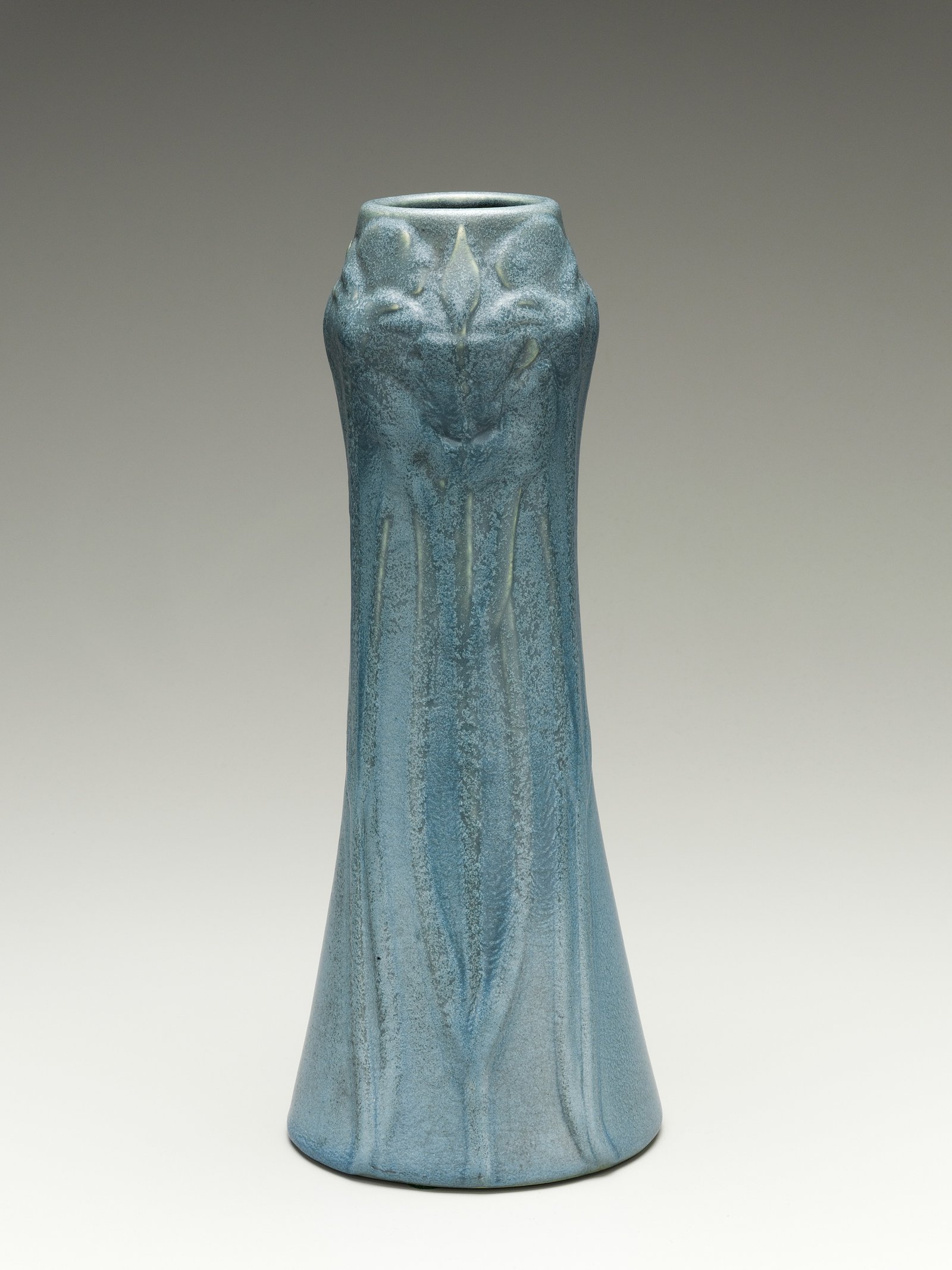
Vase
1903
A tall, elegant form in a luminous blue matte glaze with an abstracted peacock feather design. The tapering silhouette and soft color gradation from light to deep blue demonstrate the remarkable depth Van Briggle achieved with his glazes. Stoneware, 12 1/2 inches tall.
Metropolitan Museum of Art
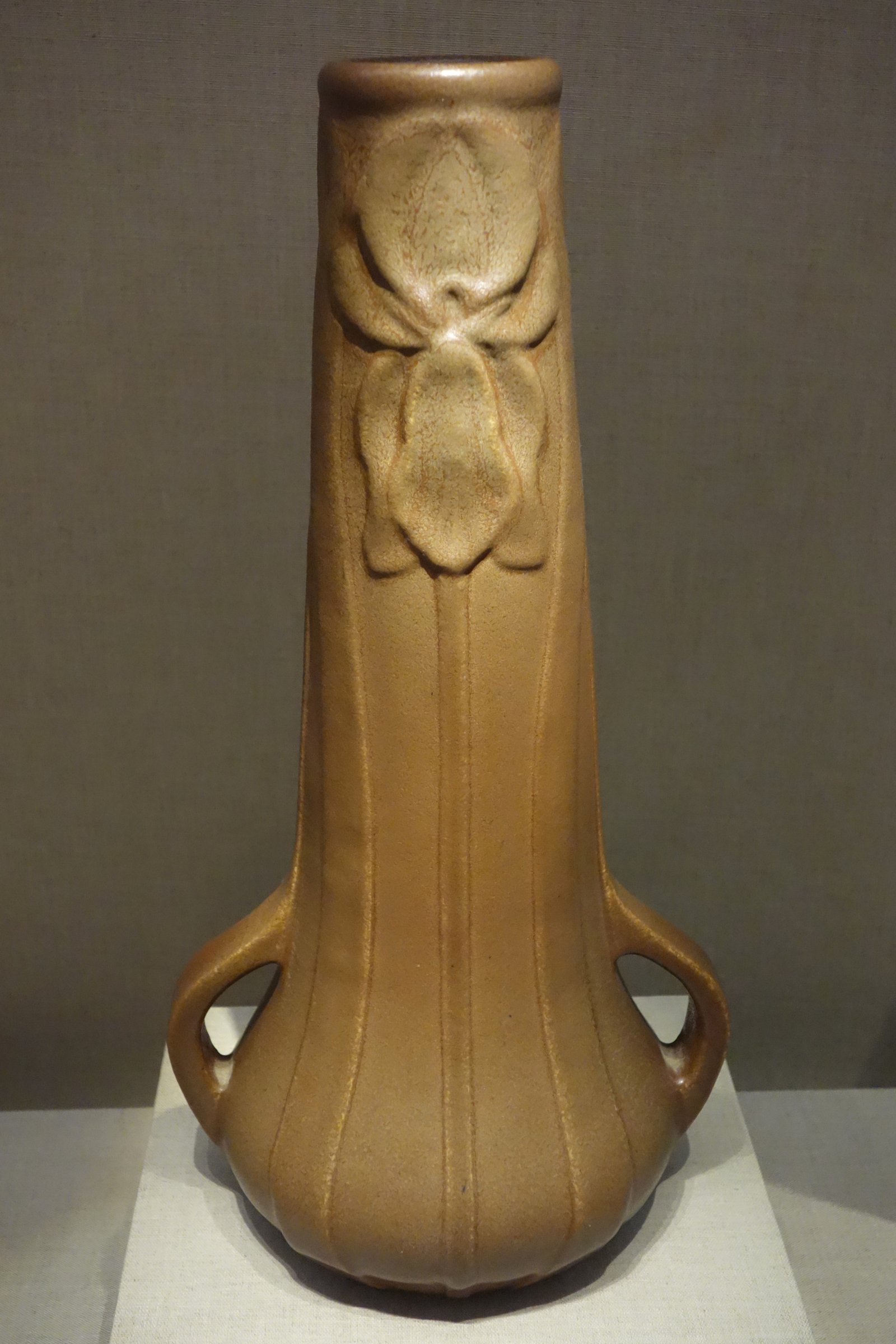
Iris Vase
c. 1903
Tall iris blossoms crown this graceful vase, their petals rendered in soft relief under a matte glaze. Glazed earthenware, now in the collection of the de Young Museum in San Francisco.
De Young Museum
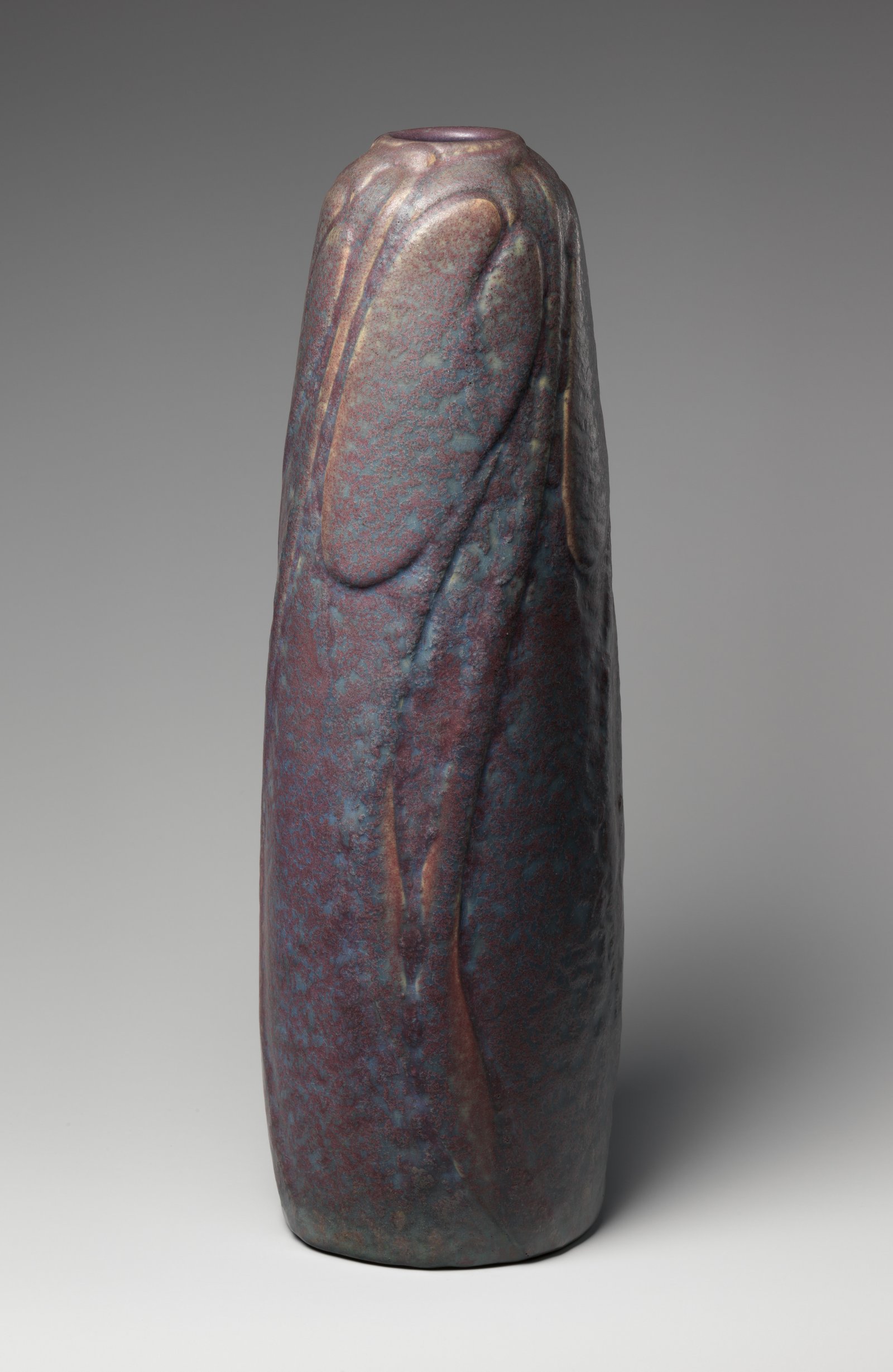
Vase with Leaves
1903
One of Van Briggle's larger pieces at 15 1/2 inches tall, with bold leaf motifs in relief rising the full height of the vessel. The flowing forms and matte glaze create a striking sculptural presence. Stoneware.
Metropolitan Museum of Art
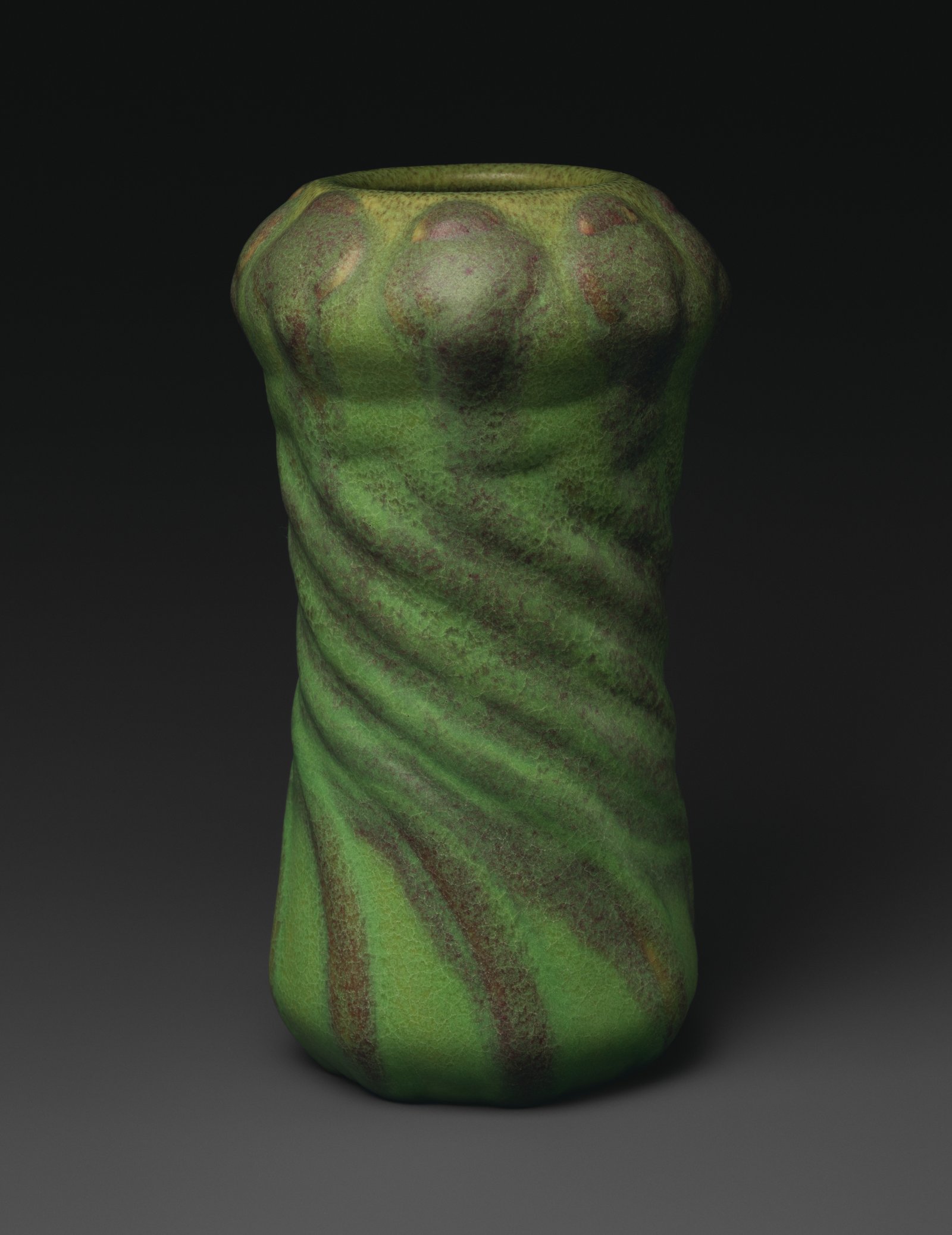
Vase with Poppy Seed Pods
1903
A flared form crowned with a ring of poppy seed pods in two-tone matte glaze — the pods highlighted against the body in contrasting tones. The bold botanical motif reflects the Arts and Crafts emphasis on nature. Stoneware, 6 7/8 inches tall.
Metropolitan Museum of Art
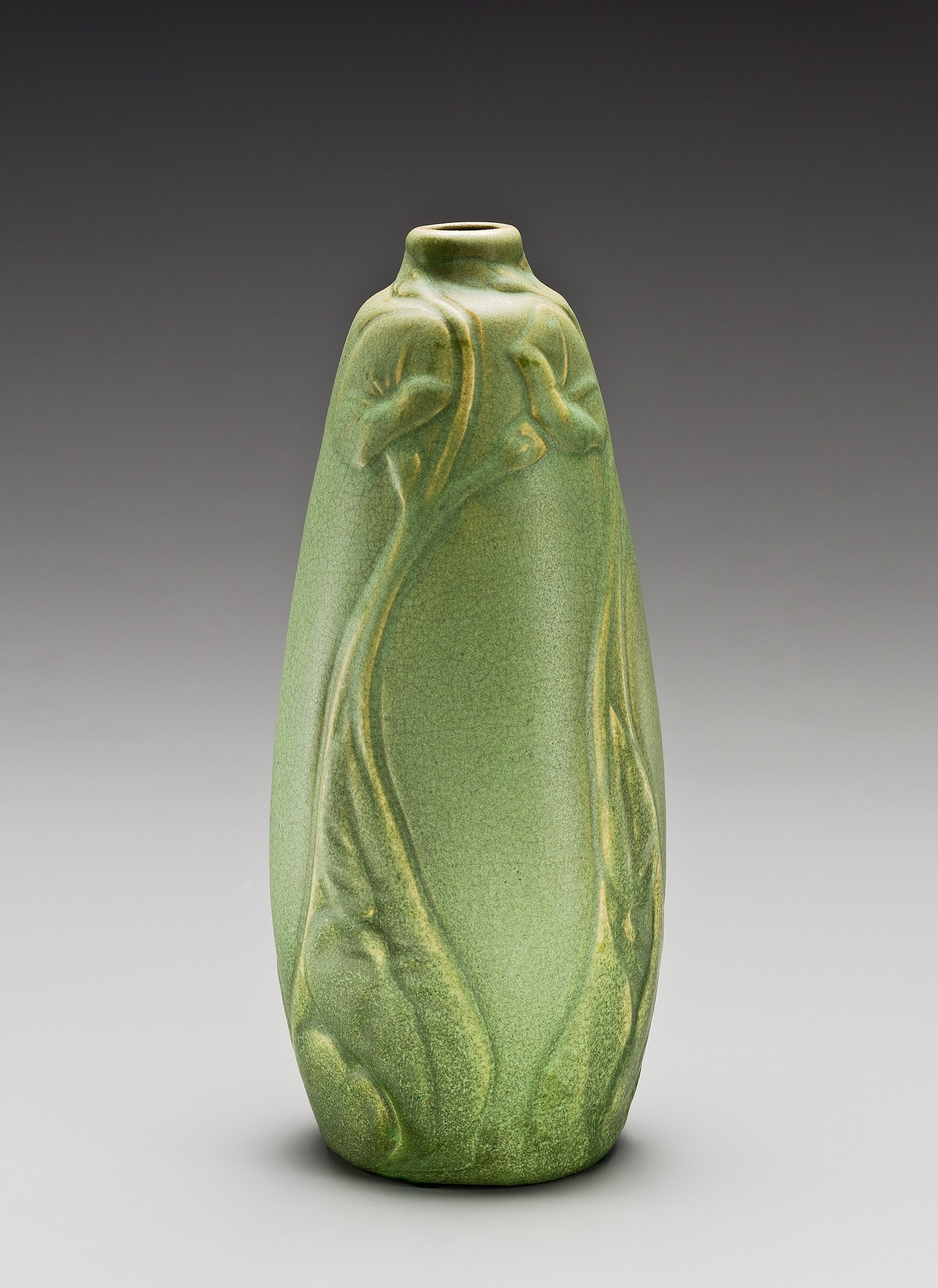
Vase
1904
A tall, tapering vase in amber-to-olive matte glaze with floral stems and leaves in relief. The rich, warm tones and confident carving are characteristic of Van Briggle's final year of production before his death in 1904. Earthenware, 11 7/8 inches tall. From the Ellison Collection.
Metropolitan Museum of Art
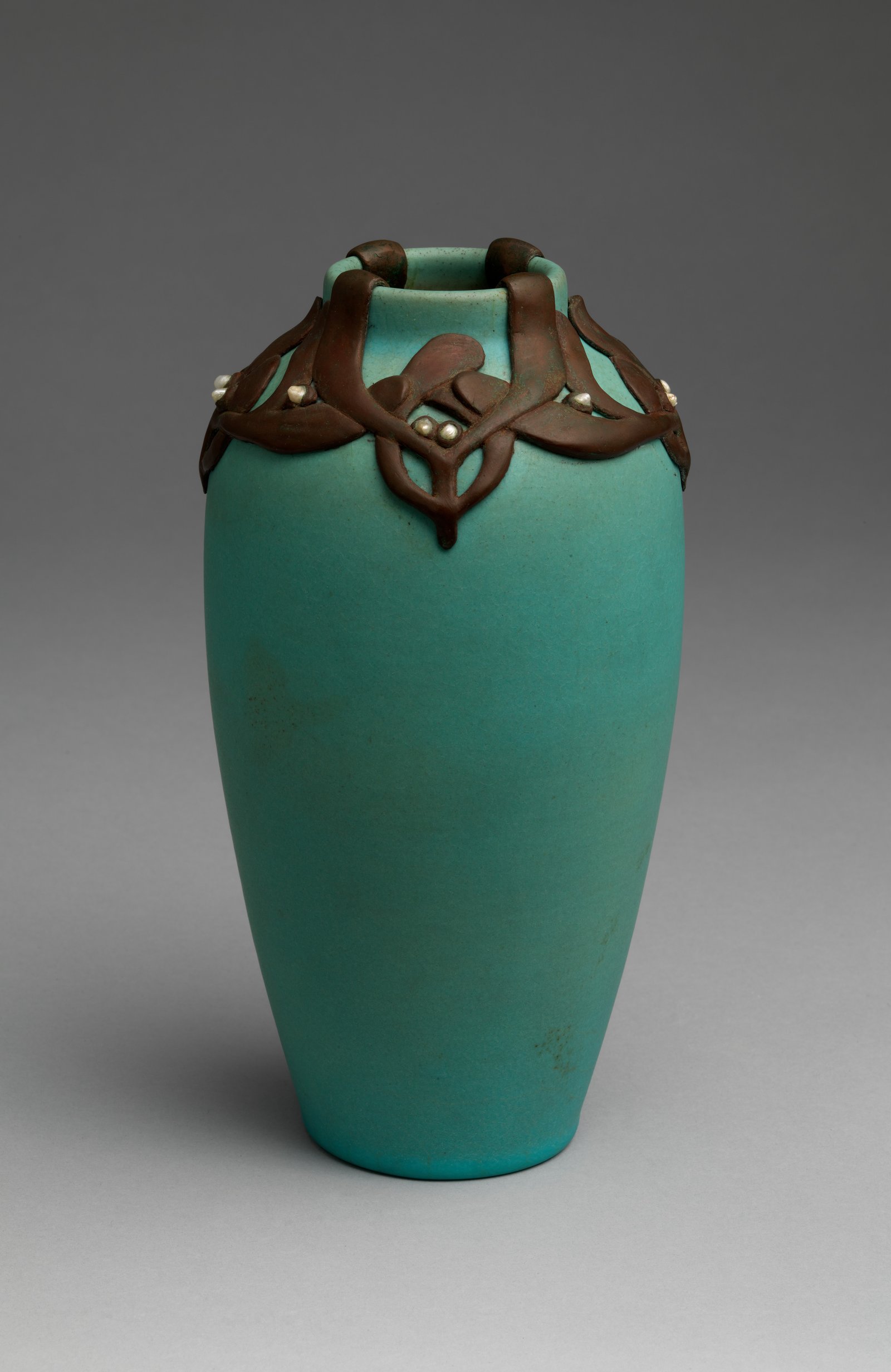
Mistletoe Vase
1904
Mistletoe branches in relief adorn this vase, which features a copper mount at the rim — an unusual detail for Van Briggle. Also displayed at the 1904 Louisiana Purchase Exposition. Artus Van Briggle died in July of 1904, making this among his final production year pieces.
Metropolitan Museum of Art
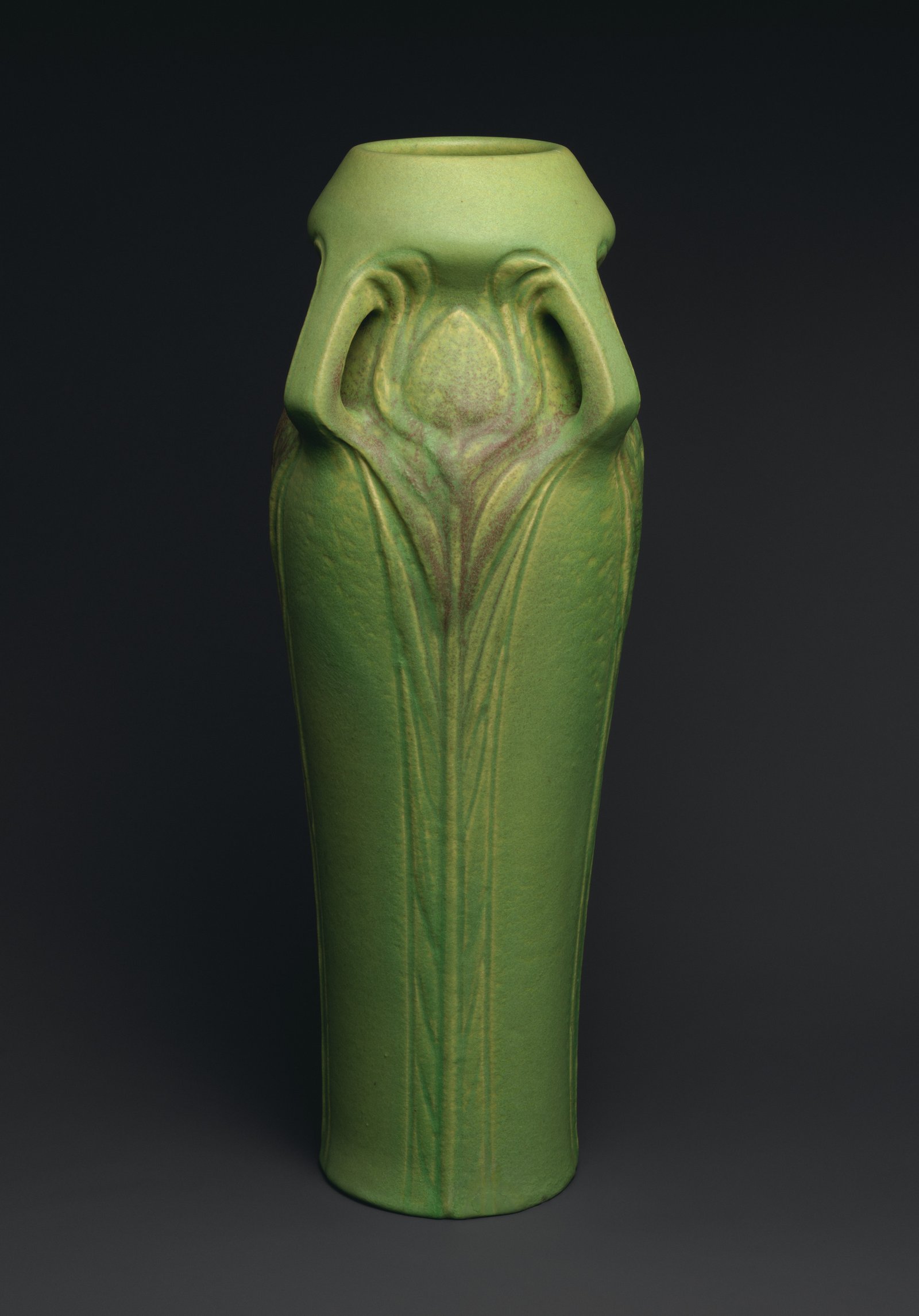
Peacock Feathers Vase
1904
Abstracted peacock feather motifs sweep up the full height of this impressive 17 1/2-inch vase. Displayed at the 1904 Louisiana Purchase Exposition in St. Louis, where Van Briggle pottery was awarded gold, silver, and bronze medals. Stoneware.
Metropolitan Museum of Art
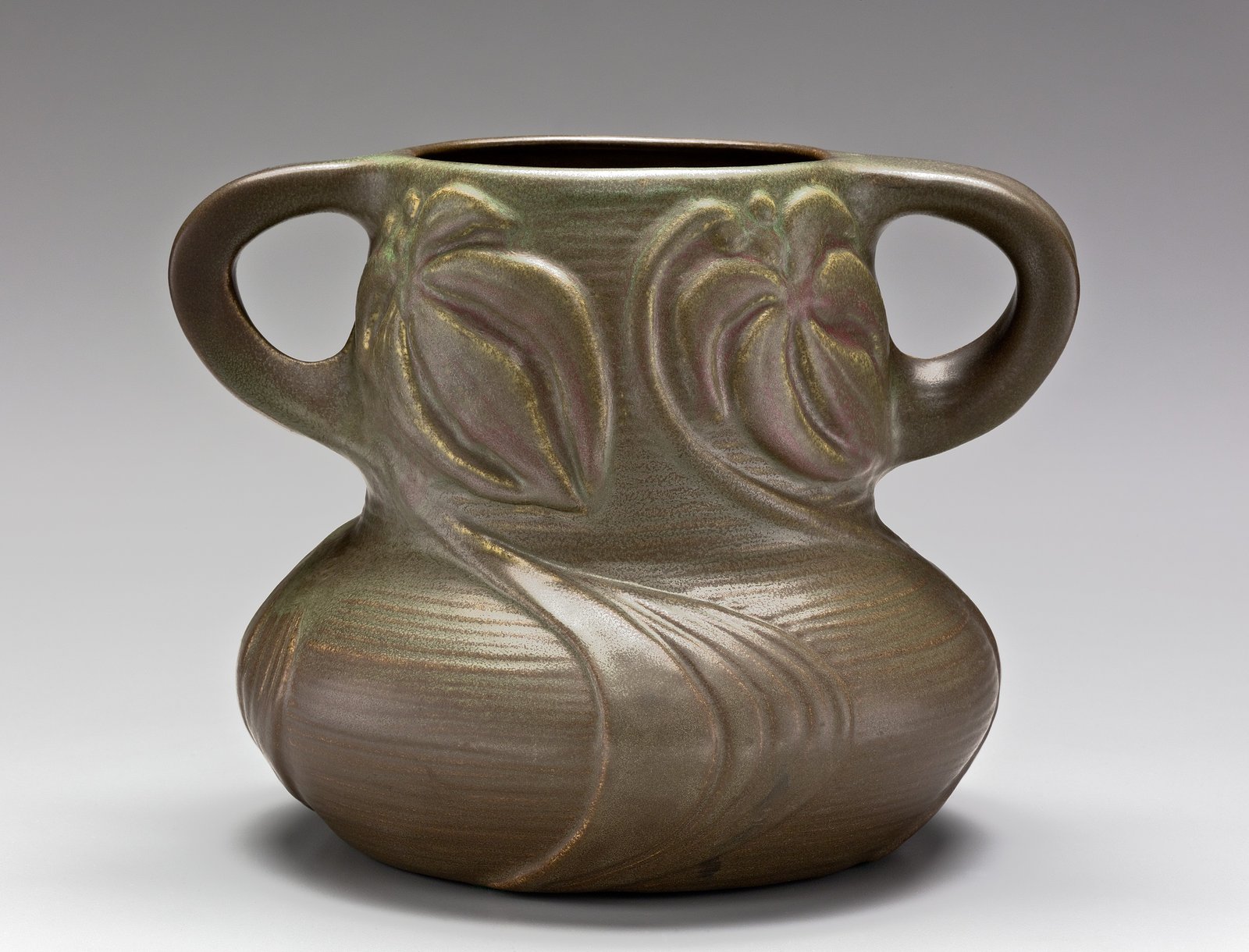
Two-Handled Vase
1904
A striking departure from the typical tall vase form — this wide, squat vessel with twin handles features floral relief and a warm olive-brown matte glaze. At 9 3/4 inches wide and 7 1/2 inches tall, its unusual proportions show the range of Van Briggle's designs. From the Ellison Collection.
Metropolitan Museum of Art
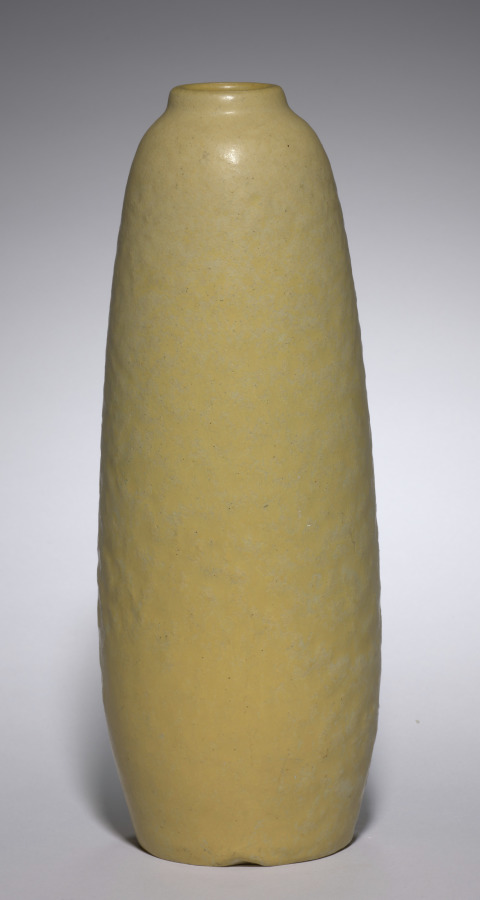
Vase
1905
A simple, elegant form in a warm yellow matte glaze, showing the pottery's continued quality after Artus's death. The smooth surface and subtle texture highlight the glaze itself as the primary decorative element. Earthenware, 11 1/8 inches tall.
Cleveland Museum of Art
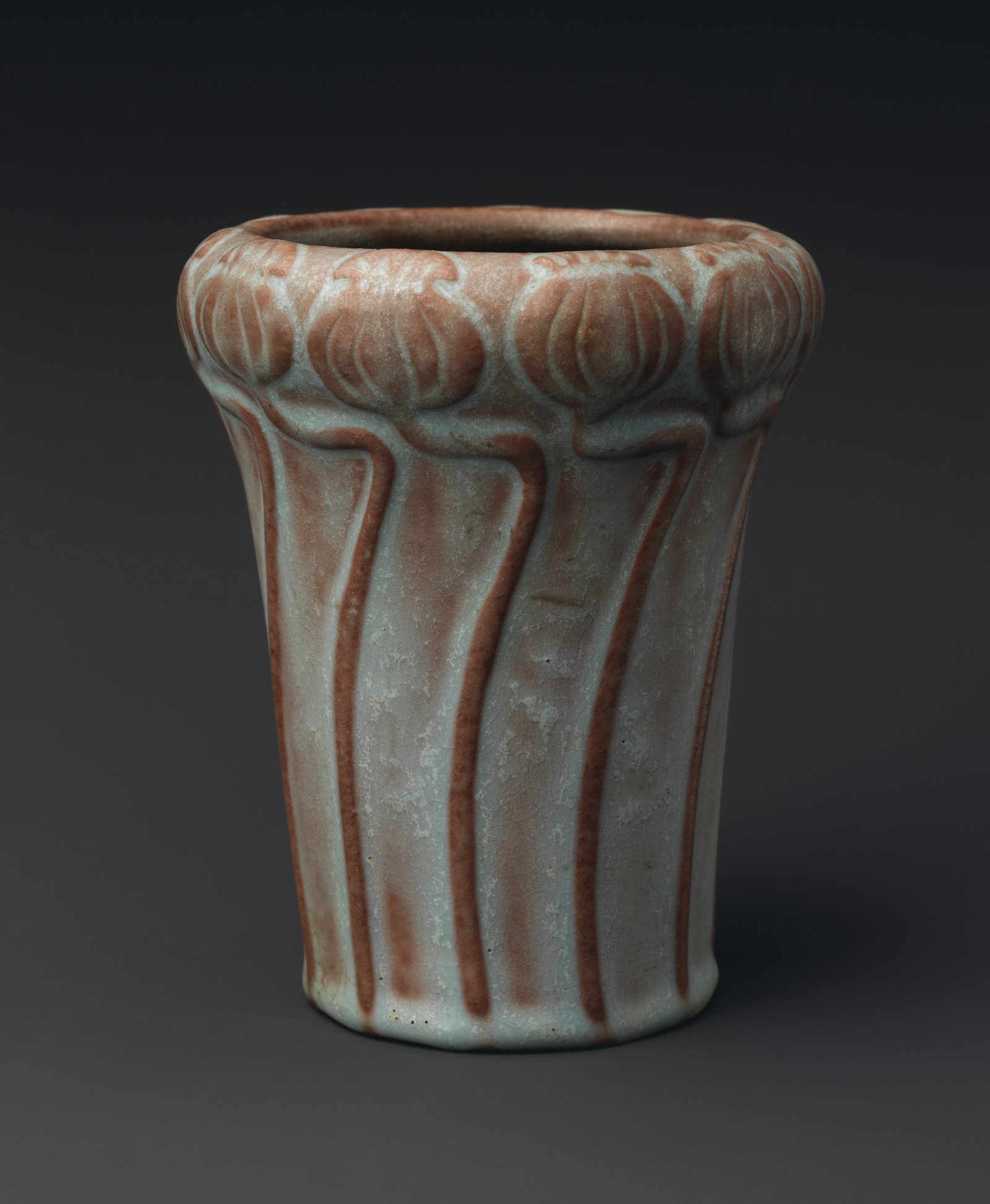
Vase with Poppy Seed Pods
c. 1905–07
A later production example of the poppy seed pod design, made after Artus Van Briggle's death under the continued direction of his wife Anne. The design remained faithful to Artus's original vision. Stoneware, 5 inches tall.
Metropolitan Museum of Art
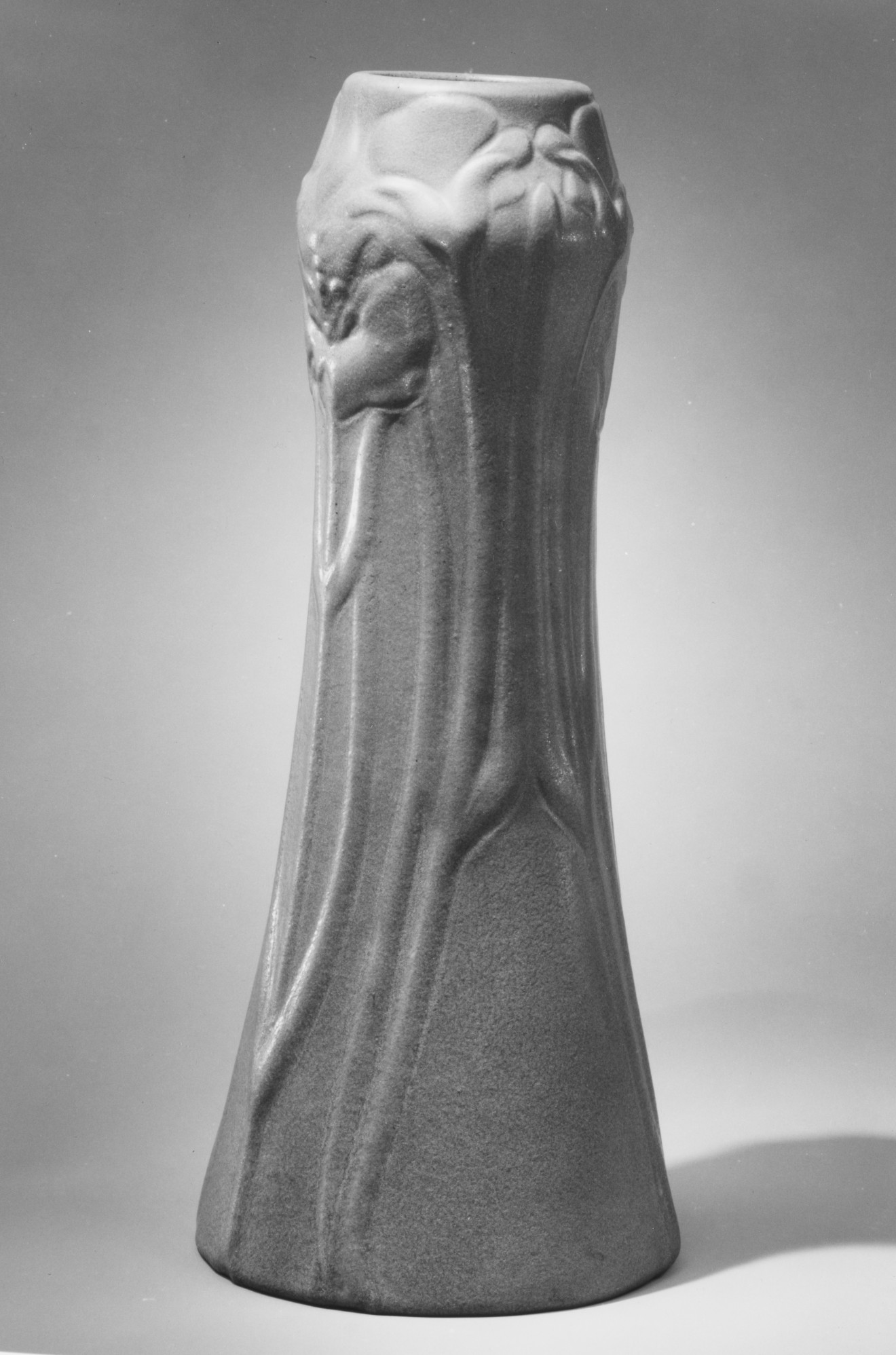
Vase
1906
A tall vase, 13 1/2 inches, with molded irises, made in the years when Anne Van Briggle carried on the pottery. The Met describes its glaze as green-purple, shifting from purple at the bottom to green at the top.
Metropolitan Museum of Art