Novelty Items & Special Commissions
Beyond their celebrated vases and bowls, Van Briggle produced a fascinating range of novelty items, special commissions, and one-of-a-kind pieces throughout their history. Many of these items were made in very limited numbers, making them especially prized by collectors today.
This guide documents the known categories of Van Briggle novelty production, from custom mugs ordered by local organizations to World’s Fair souvenirs, experimental glazes, and pieces that exist in quantities of one. For collectors, these items represent some of the most exciting — and most elusive — finds in the Van Briggle world.
Contents
1. Custom Mugs & Tankards
Commemorative and commissioned drinkware
Van Briggle produced custom mugs and tankards for a range of clients, from college fraternities to military installations and local businesses. These pieces were often made in small quantities, and surviving examples are highly valued both as Van Briggle pottery and as historical artifacts of Colorado Springs life.
Colorado College Fraternity Tankards
Early 1900s
Among the earliest custom commissions. These tankards were produced for fraternities at Colorado College in Colorado Springs. Their scarcity is due to the inherently limited production runs — each order served a single fraternity chapter.
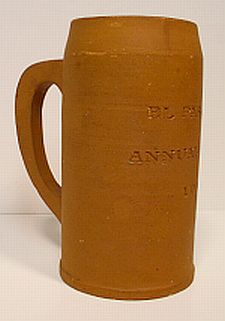
El Paso Club Picnic Mug
1909
Made for a picnic event hosted by the El Paso Club, one of Colorado Springs’ most prominent social organizations. Described as scarce, this mug represents the kind of one-off commission that makes novelty collecting so rewarding when a piece surfaces.
Named Mug Sets
In later years, the pottery sold mug sets with individual names applied to each piece. These personalized sets were likely intended as gifts or party favors.
Local Organization Mugs
Various local organizations ordered small runs of commemorative mugs from the pottery. The quantities were modest, reflecting the size of the commissioning groups.
Picadilly Bar Mugs
White or russet glaze
Made for the Picadilly Bar, these mugs were produced in white or russet glaze. Unlike many novelty items, quite a few of these were made, making them more accessible to collectors than most custom commissions.

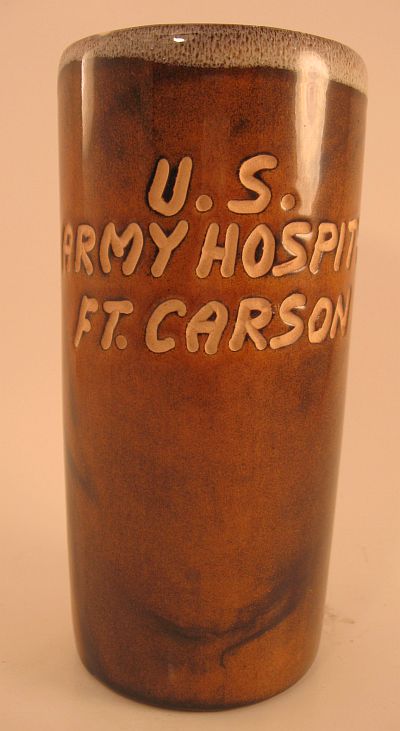
US Army Hospital Mug — Fort Carson
1967
A cup made specifically for the US Army Hospital at Fort Carson, the major military installation south of Colorado Springs. Military commissions like this one connect Van Briggle’s history to the broader story of the Pikes Peak region.
Custom Mugs
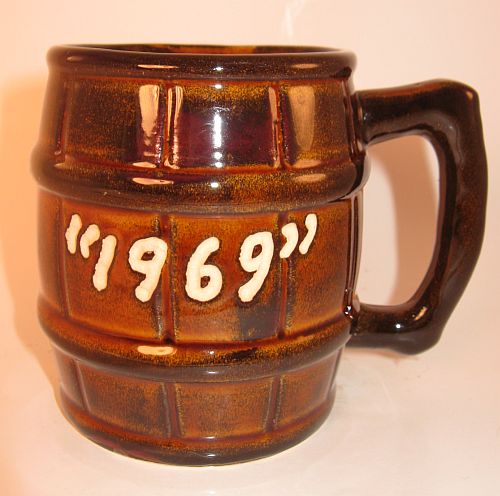
1969 and 1980s variants
A 1969 custom mug is documented, along with multiple custom mug variants from the 1980s. These later commissions show that the pottery continued accepting custom orders well into the modern era.
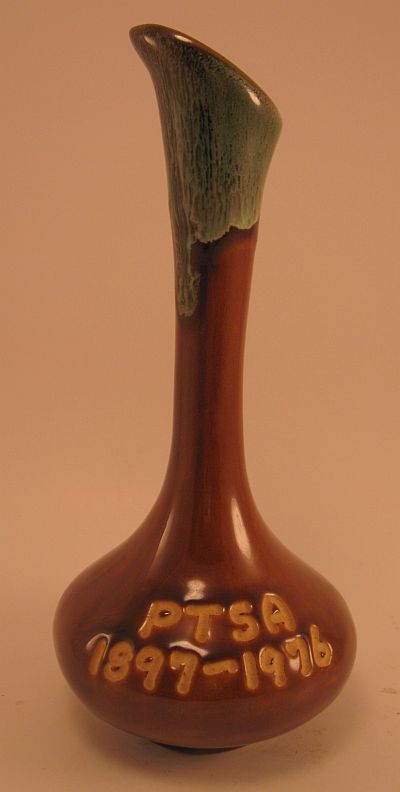
PTSA Anniversary Vase
1976
A commemorative vase produced for a PTSA anniversary, spanning the years 1897–1976. This piece bridges the category between mugs and commemorative pottery, representing an organization’s nearly eight decades of history rendered in Van Briggle clay.
2. Paperweights
Small-scale sculptural pieces from the teens era
Van Briggle paperweights from the teens era are among the most collectible novelty items. Their small size and sculptural detail make them appealing display pieces, while their rarity ensures strong collector interest whenever an example appears.
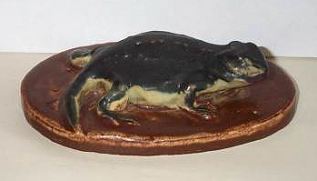
Horned Toad Paperweight
Teens era — rather rare
A naturalistic rendering of the horned toad (horned lizard), a creature native to the Colorado Springs area and a fitting subject for a regional pottery. Described as rather rare, this paperweight captures the local fauna that would have been familiar to the pottery’s workers and customers alike.
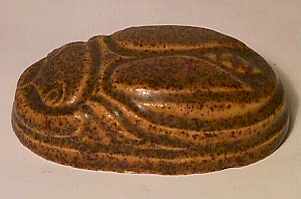
Scarab Paperweight
Teens era — most unmarked
The scarab motif reflects the Arts and Crafts movement’s interest in ancient Egyptian symbolism. Most examples are unmarked, but the distinctive design is recognizable to experienced collectors. The absence of marks makes provenance documentation especially important for these pieces.
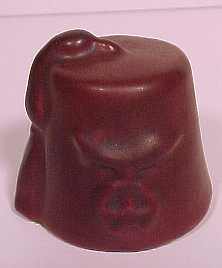
FEZ Paperweight
Shriners convention souvenir
Produced for a Shriners convention, this paperweight takes the form of a fez, the organization’s distinctive headwear. Convention souvenirs like this one are collectible both within the Van Briggle world and among fraternal organization memorabilia enthusiasts.
3. Flower Frogs
Sculptural inserts for floral arrangements — rare survivors
Flower frogs — the weighted or pierced inserts placed inside bowls and vases to hold flower stems in position — were a common pottery product in the early twentieth century. Van Briggle’s versions are distinguished by their sculptural quality, transforming a utilitarian object into a small work of art. All three known Van Briggle flower frog designs are scarce today.
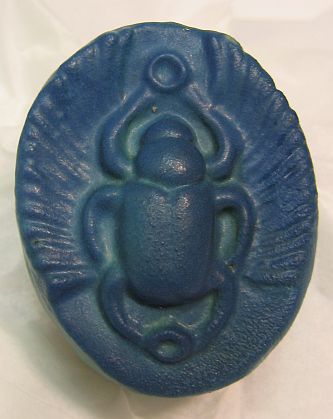
Scarab Flower Frog
Circa 1920s — rare
The scarab motif appears again here, adapted from the paperweight form into a functional flower frog. Described as rare, this piece combines the Egyptian-inspired design sensibility of the Arts and Crafts period with everyday utility.
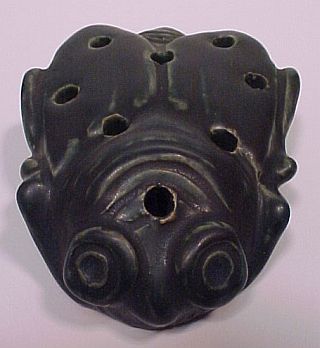
Fly Flower Frog
1914 era — unusual and rare, quite scarce
An unusual choice of subject — a fly rendered as a flower frog. Dating to the 1914 era, this piece is described in collector literature as both unusual and rare, and quite scarce. The unconventional subject matter makes it a particularly interesting example of Van Briggle’s willingness to experiment with unexpected forms.
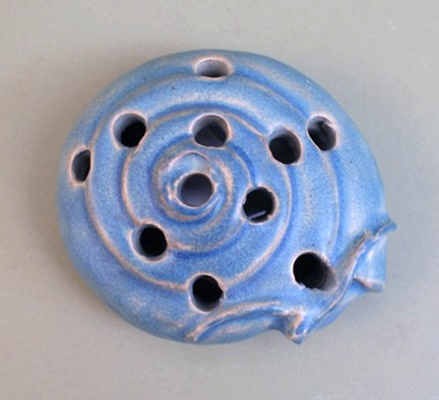
Snail Flower Frog
Scarce
A snail-form flower frog, continuing the pottery’s interest in natural subjects rendered at small scale. Like the other flower frogs, this piece is scarce and commands collector attention when it appears.
4. Bookends
Sculptural pairs from the teens through the 1930s
Van Briggle bookends are among the more substantial novelty items the pottery produced. Their sculptural subjects — bears, wolves, owls — draw from the natural world of the Rocky Mountain West, and their heft and presence make them impressive display pieces even apart from their function.
Bear Bookends
1922–1926 — USA mark
Finished in an unusual mustard yellow glaze with mulberry overspray. The USA mark places these firmly in the 1922–1926 production window. The combination of mustard yellow and mulberry is uncommon in the Van Briggle catalog and gives these bookends a distinctive warmth.

Wolf Bookends
1915 era
Dating to the teens production period, these wolf-form bookends reflect the regional wildlife themes that Van Briggle returned to repeatedly in their sculptural work.

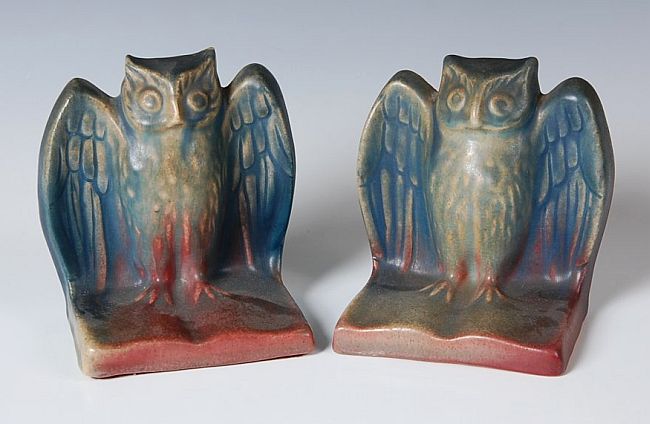
Owl Bookends
Early style
An early-style owl design that demonstrates Van Briggle’s ability to render animal subjects with both naturalistic detail and the flowing lines characteristic of Art Nouveau.
1920s–1930s Bookends
Additional bookend designs from the 1920s and 1930s are documented, described as unusual. The specific forms vary, but all reflect the pottery’s commitment to producing functional objects with genuine artistic merit.
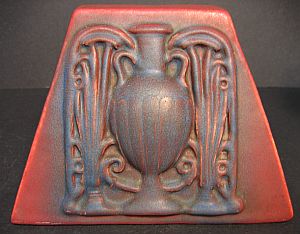
1915 Bookends
Further bookend production from 1915, a prolific year for novelty items at the pottery. The teens era saw Van Briggle at its most experimental in terms of the range of objects produced.
5. Incense Burners
From gnomes to log cabins — functional novelties
Incense burners represent one of the more whimsical categories of Van Briggle novelty production. The forms range from figurative (gnomes) to architectural (log cabins and fireplaces), and several were produced for specific organizations or events, making them doubly collectible.
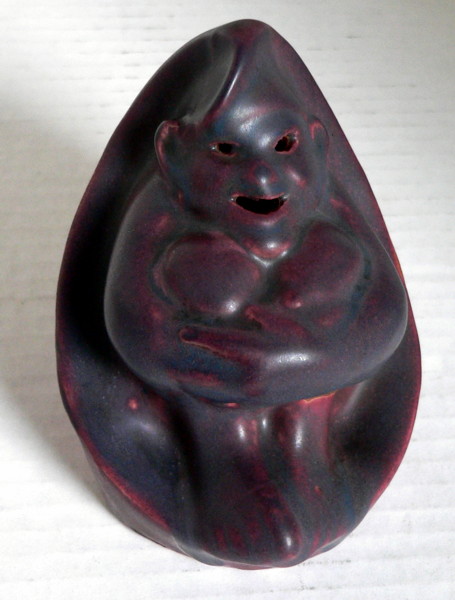
Gnome Incense Burner
Teens era
A figurative incense burner in the form of a gnome, produced during the teens. The whimsical subject matter aligns with the broader Arts and Crafts interest in folklore and fantasy imagery.
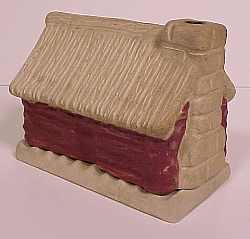
Log Cabin Incense Burner
1920s
An architectural form that echoes the rustic aesthetic of the Colorado mountain region. Smoke rising from the chimney of a miniature log cabin would have created a charming domestic scene.
Colorado College Sorority Incense Burner
Early 1920s
Made for a local dance hosted by a Colorado College sorority. Like the fraternity tankards, this piece connects Van Briggle to the social life of the college that shared its hometown. The extremely limited production run — enough for a single event — ensures great scarcity.
Big Tree Club Convention Incense Burner
June 1926 — Colorado Springs
Produced in small numbers for the 1926 Big Tree Club Convention held in Colorado Springs. The base was available separately. Convention souvenirs like this one served double duty as promotional items for the pottery and keepsakes for attendees.
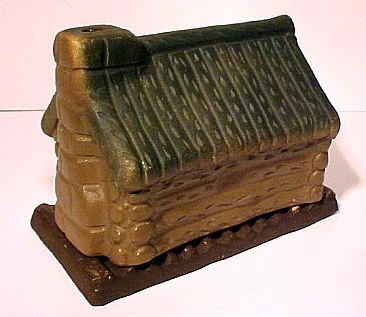
Fort Vancouver Block House Log Cabin
1925 — only one known to exist
Made for the Block House in Vancouver, Washington, this log cabin incense burner is described as the only known example in existence. If accurate, this makes it one of the rarest Van Briggle pieces of any type — a true one-of-a-kind artifact connecting the Colorado Springs pottery to the Pacific Northwest.

Fireplace Incense Burner
1960s
A later novelty item in the form of a fireplace. This 1960s piece shows that the pottery continued producing imaginative incense burner forms well beyond the teens and twenties heyday of the category.
6. Lighting
Candleholders, sconces, and electric lights
Van Briggle lighting pieces span the transition from candle to electric illumination in American homes. Some pieces were designed for candles, others were electrified, and a few could serve either purpose. These functional art objects brought the pottery’s Art Nouveau aesthetic into everyday domestic use.
1917 Candleholder / Sconce
Produced in both electrified and candle-holding versions. This dual-purpose design reflects the transitional period in American lighting when electricity was available but not yet universal in all homes.
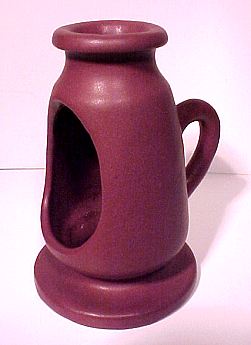
1915 Candleholder
Matte green glaze — found in attic on Nevada Avenue
A matte green candleholder discovered in an attic on Nevada Avenue in Colorado Springs. The provenance story adds to its appeal — Nevada Avenue runs through the heart of the city’s historic district, close to the original pottery location. Attic finds like this one occasionally bring forgotten pieces back into collector circulation.
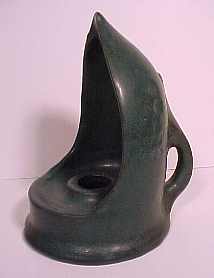
Hooded Electric Light
Teens era — with original bulb
A hooded electric light from the teens era, notable for retaining its original light bulb. The survival of the original bulb alongside the pottery fixture is unusual and adds both historical interest and completeness to the piece.

Wall Sconce
Rumored Van Briggle Memorial Pottery provenance
A wall sconce rumored to have been installed inside the Van Briggle Memorial Pottery building itself. If this provenance is accurate, the piece would represent the pottery using its own work to decorate its own facility — a direct expression of the company’s belief in the artistic value of its production.
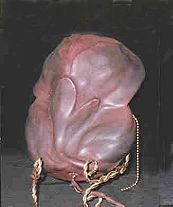
Owl Night Light / Candle Holder
Teens era
An owl-form piece that could function as either a night light or candle holder. The owl subject — a creature of the night — is an apt choice for a lighting device, and the design reflects the Art Nouveau tendency to draw meaning from natural forms.
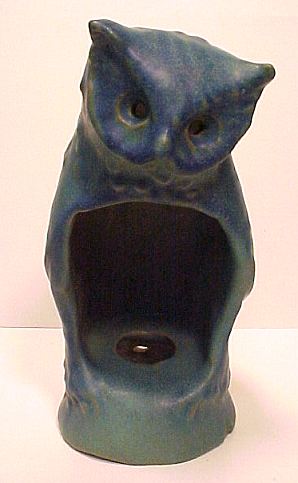
7. World’s Fair & Exhibition Pieces
International recognition and souvenir production
Van Briggle’s participation in world’s fairs and major exhibitions was both a marketing opportunity and a point of pride. The 1904 gold medal at St. Louis established the pottery’s reputation on the national stage, while the 1933 World’s Fair in Chicago produced a line of souvenir pieces that collectors still seek today.
1933 World’s Fair Vase
Century of Progress, Chicago — scarce
Described as scarce, this vase features bark covering on one side and is branded with “Worlds Fair” and the 1933 date. The company sold wares at the fair, and most of the pieces offered were smaller items suitable as souvenirs. This vase, with its distinctive bark treatment, stands out among the fair’s souvenir production.
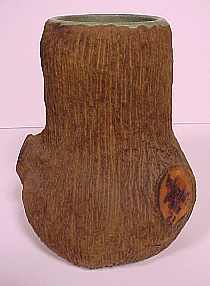
1904 World’s Fair — St. Louis
Louisiana Purchase Exposition — gold medal awarded
Van Briggle was awarded a gold medal at the 1904 Louisiana Purchase Exposition in St. Louis, a major international exhibition. A display photograph documents the pottery’s presentation at the fair. This recognition came in the same year that Artus Van Briggle died, lending the achievement a bittersweet significance — the highest honor arrived alongside the deepest loss.
8. Decorative & Unusual Pieces
Experimental, sculptural, and one-of-a-kind works
This category encompasses pieces that do not fit neatly into any functional group — experimental glaze tests, sculptures by guest artists, and items that were produced as curiosities or special projects. These are among the most fascinating Van Briggle pieces for collectors who value rarity and historical context above all else.
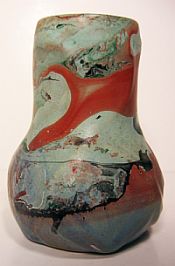
Swirl Glaze Vase
1930s — Eric Hellman connection
Glazed in the style of Eric Hellman’s Garden of the Gods Pottery. Hellman worked for Van Briggle during this period and may have created this piece himself. The swirl glaze technique is characteristic of Hellman’s individual work, making this vase a potential crossover piece between two Colorado Springs pottery traditions.
Experimental Yellow High-Glaze Vase
Late 1920s — black ink glaze test marks
An experimental piece bearing black ink marks that indicate it was used as a glaze test. The high-glaze yellow finish is unusual for Van Briggle production of this period, when matte glazes dominated the catalog. Test pieces like this one offer a window into the pottery’s ongoing experimentation with new formulas and finishes.
1920s Box
A decorative box from the 1920s featuring a raised logo and flowers on the sides. Boxes are an unusual form in the Van Briggle catalog, making this piece notable for its shape alone.
Indian Sculptures
A pair of Indian sculptures. Figurative sculpture was always a secondary focus for the pottery, making paired sets especially uncommon in the Van Briggle production record.

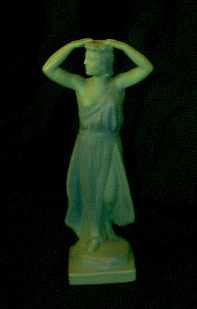
Greek Goddess Sculpture
Designed by sculptor Nellie Walker — rather scarce
A sculptural piece designed by Nellie Walker, a professional sculptor. Described as rather scarce, this collaboration between a visiting artist and the Van Briggle pottery represents the kind of creative cross-pollination that produced some of the most distinctive pieces in the company’s history.
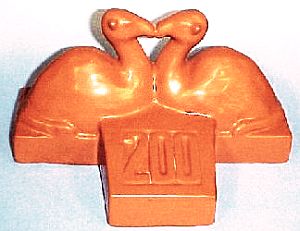
Kissing Camels Novelty Item
Early 1980s — large size
A large novelty piece depicting the Kissing Camels, a famous rock formation in the Garden of the Gods park near Colorado Springs. This piece connects the pottery directly to one of the region’s most recognizable natural landmarks.
9. Unglazed & Bisque Items
Factory blanks, bisque pieces, and miniatures
Not every piece that left the Van Briggle factory received a glaze. The pottery sold unglazed blanks to the public, and some pieces survive in bisque (fired but unglazed) condition either intentionally or because they never completed the production process. These unfinished pieces offer collectors a rare look at the raw clay and form beneath the glaze.
Unglazed Blanks
Late 1920s — tough to find
The factory sold unglazed blanks directly to the public. Local artists then decorated these blanks with cold paint (unfired paint applied at room temperature). These pieces are described as tough to find, likely because many were treated as craft projects rather than collectibles and did not survive with the same care given to finished pottery.
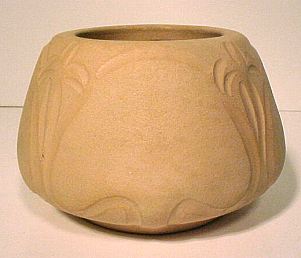
Unglazed Vase #645
1930s period
A documented example of an unglazed vase from the 1930s. The shape number (#645) identifies this as a known Van Briggle form, even without the glaze that would normally help with attribution.
Mini Pottery Scarabs
Circa 1920s or earlier — unmarked, possibly for jewelry
Miniature scarabs that may have been produced for use in jewelry. These tiny pieces are unmarked, making definitive Van Briggle attribution a matter of context and connoisseurship rather than mark identification. Their possible connection to the jewelry trade adds an intriguing dimension to Van Briggle’s production history.

10. Trays, Ashtrays & Other
Functional novelties, promotional items, and curiosities
This catch-all category includes functional items, promotional pieces, and objects that resist easy classification. From ashtrays branded with Pikes Peak to brochure holders placed at tourist stops across Colorado, these pieces document the pottery’s role as both an art producer and a regional business.
Novelty Tray
Teens era
A tray from the teens era featuring an inset decoration. The specific nature of the inset varies, but the form itself is uncommon in Van Briggle production.
Pikes Peak Ashtray
1960s — rather large
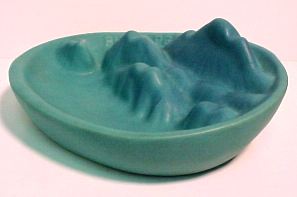
A rather large ashtray featuring Pikes Peak, the 14,115-foot mountain that dominates the Colorado Springs skyline. Souvenir ashtrays were common mid-century products, and this oversized example speaks to Van Briggle’s participation in the regional tourist trade.
Brochure Holder (Box Style)
Mountain Crag brown glaze
A box-style brochure holder finished in the Mountain Crag brown glaze. These holders were placed at tourist stops to promote the pottery, serving as both advertising and a demonstration of the product itself.
Brochure Holder (Factory-Made)
1940s — plaster-weighted with plastic panels
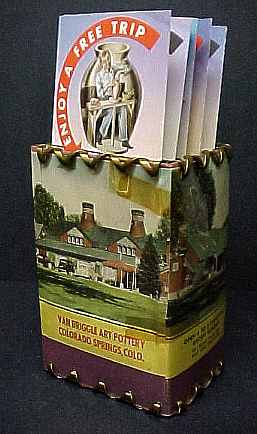
A factory-produced brochure holder from the 1940s with plaster in the bottom for weight and plastic panels displaying the company brochure. These were placed at tourist stops throughout Colorado. The combination of pottery, plaster, and plastic makes these utilitarian objects a curious hybrid of materials and purposes.
Toothpick Holders
Including seal variant — scarce
Small toothpick holders, including a variant featuring a seal. These diminutive pieces are scarce and easily overlooked, but they demonstrate the pottery’s willingness to apply its Art Nouveau sensibility to even the most modest household objects.
1916 Novelty Item
A documented novelty piece from 1916. The specific form is recorded but details are limited in available references.
Oil Painting of the Pottery Plant
Circa 1915 — artist-signed
An early oil painting depicting the Van Briggle Memorial pottery plant, circa 1915. The painting is artist-signed and may be the work of a member of the Broadmoor Art Academy. While not pottery per se, this painting is a significant piece of Van Briggle ephemera that documents the physical plant during an important period in the company’s history.
11. Tiles
Often unmarked architectural pieces
Van Briggle tiles occupy an unusual position in the company’s production history. Unlike most Van Briggle pottery, tiles are often unmarked or carry only minimal identification. This makes authentication a challenge, but several diagnostic features can help collectors identify genuine Van Briggle tiles.
Identification Features
Tiles are often unmarked or have “toast points” on the underside corners — small raised bumps left from the firing process where the tile rested on supports in the kiln. These toast points are a useful indicator of genuine production, though they are not exclusive to Van Briggle.
VBPCO Die Stamp
A small “VBPCO” die stamp was used on some tiles. This stamp, abbreviating “Van Briggle Pottery Company,” provides definitive attribution when present, though many tiles lack it entirely.
8-Inch Square Tile
Early example — marked VBPCo
An 8-inch square tile bearing the VBPCo mark, documented among the earliest known Van Briggle tile examples. The combination of generous size and clear marking makes this piece an important reference point for tile identification.
Early Tile with AA Logo
Rectangular — very rare
A rectangular tile featuring the AA logo and “Van Briggle” in raised letters. Described as very rare, this tile carries the same markings found on the pottery’s standard production, making it one of the most clearly attributable tile examples known.
Notes for Collectors
Many novelty items were produced in very limited quantities, making them among the rarest Van Briggle pieces in existence. A single convention souvenir or custom mug order might have numbered only a few dozen pieces, and survival rates over a century have reduced those numbers further still.
Provenance and documentation significantly affect value for these items. A novelty piece with a clear history — who commissioned it, when, and why — is worth considerably more than the same piece without context. Original receipts, photographs, correspondence, and family histories all contribute to establishing a piece’s story.
Some pieces were made for specific events or organizations, adding historical significance that extends beyond the pottery itself. A mug made for a 1909 El Paso Club picnic or a 1926 Big Tree Club Convention tells a story about Colorado Springs social life as much as it does about Van Briggle production. This dual significance can attract interest from local history collectors as well as pottery specialists.
Further Resources
Identifying and dating novelty items requires the same skills used for standard Van Briggle production — reading marks, evaluating glazes, and understanding clay bodies. These companion guides provide the necessary foundation.
- Markings & Identification — How to read and date Van Briggle bottom markings, with museum-quality reference photos.
- Dating Guide — A comprehensive timeline for placing your piece in the right era.
- Glaze Reference Guide — Comprehensive guide to Van Briggle glaze colors, formulations, and their evolution.
- Artist & Maker Mark Directory — Individual potter and finisher marks found on Van Briggle pieces.
- Contact Us — Have a novelty piece you need help identifying? Send us photos and we will do our best to help.