A tape measure across the front of a vase tells you one number. A digital caliper tells you four or five, and each one carries information a photograph never will. We started measuring every piece we picked up a few years ago, partly out of habit and partly because measurements saved us from two bad purchases in one month. Once you get in the routine, it adds about sixty seconds to handling a piece and sticks with you for as long as the piece is in your collection.
Why we measure every piece
Three reasons, in order of how often they matter.
Catalog confirmation. Every major Van Briggle reference book includes dimensions alongside photos. When we pick up a piece at an estate sale or antique mall, a quick height-and-widest-diameter check against the Sasicki encyclopedia tells us whether we’re looking at the form we think we are. Van Briggle produced dozens of variations of some molds, and photos alone can be deceiving about scale.
Spotting later reproductions. Modern Van Briggle reproductions copy the design but often miss the proportions. A Lorelei vase should fall in the 8 to 11 inch range depending on the edition. Pieces outside that range, or ones where the ratio of height to widest diameter is noticeably off, deserve a second look. The difference between an early piece and a 1980s reproduction can be three figures, and proportion is one of the cleanest tells.
Documentation. Measurements are part of the record. When we photograph a piece for our collection log, the dimensions go in the filename. If you ever need to document a piece for insurance or want to back up a value claim, written measurements are the kind of detail that holds up. The measurement took a minute. The record is permanent.
What to measure, and why each
Four numbers cover most Van Briggle pieces:
- Overall height. Top of the highest point (including handles or sculpture) to the bottom of the foot. Measure with the piece sitting on a flat surface.
- Widest diameter. On a Van Briggle vase this is often mid-body, not at the rim. A Lorelei’s widest point is well below the opening. This is the measurement that catches the most reproductions because it’s the one most people don’t check.
- Rim opening. The inside diameter of the opening at the top. Useful for confirming the piece matches book specs and for anyone planning to use the vase with flowers.
- Foot diameter. The outside diameter of the foot where the piece rests. Occasionally pieces are documented by foot size in older catalogs, and it’s a useful secondary check.
For smaller pieces like flower frogs or bud vases, substitute “widest point” for widest diameter. The same logic applies.
The tool that actually works
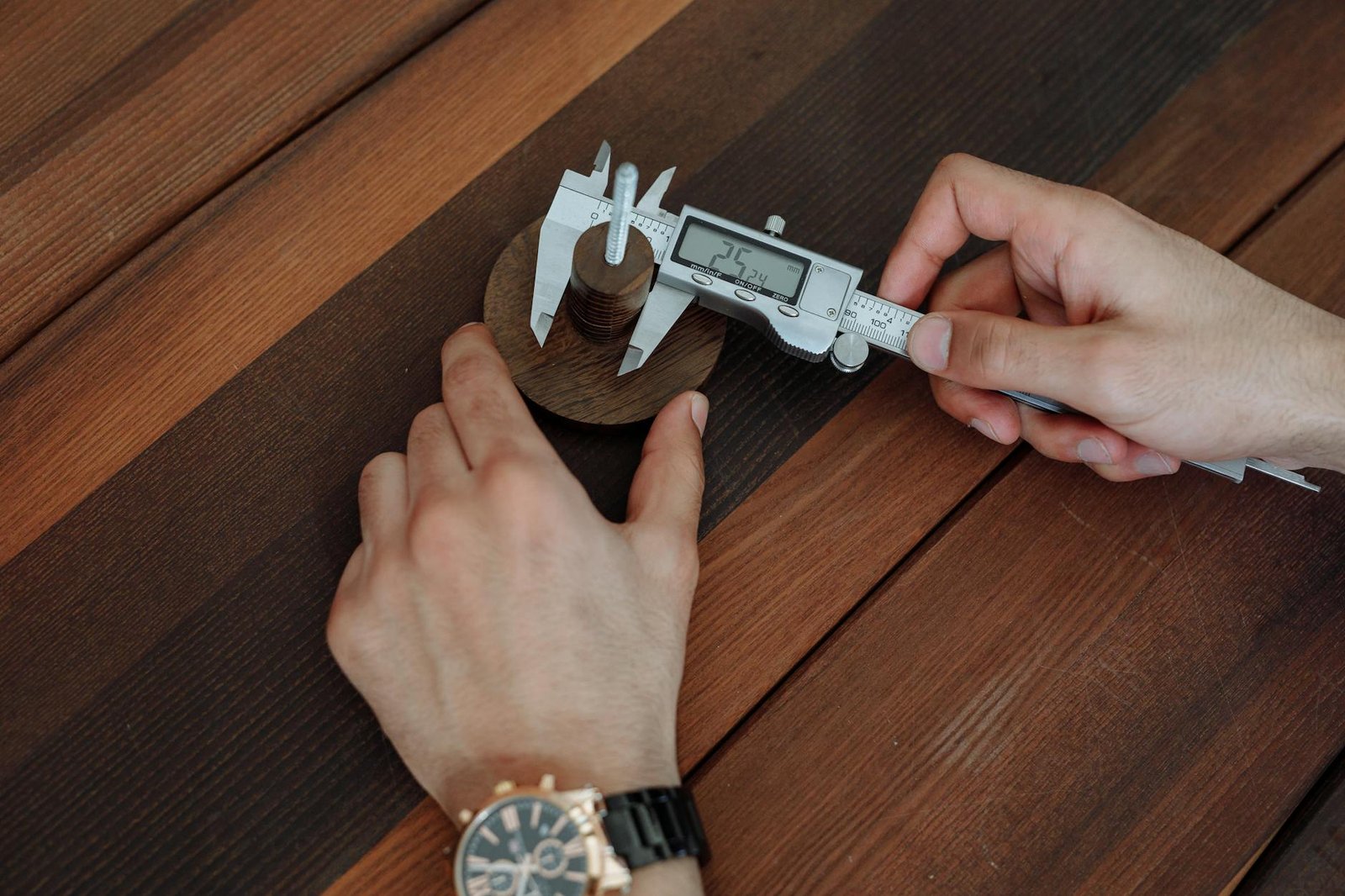
A flexible tape measure is fine for height, but it falls apart when you try to measure the widest diameter of a bulbous shape. You can’t get a straight line across the outside of a vase with tape because the tape sags or slides. We use a 6-inch digital caliper for every measurement under six inches, and a regular ruler held across the piece for anything larger. The caliper reads to a hundredth of an inch, switches between inches and millimeters at a button press, and costs less than most pottery books. For pieces larger than six inches wide, we hold a small straight edge across the widest point and read the span with the caliper jaws against the edge.
Digital is worth the small extra cost over dial calipers. The LCD is easier to read in dim antique mall lighting, and the zero-at-any-position feature lets you quickly check proportional ratios without doing subtraction in your head.
Recording what you measure
Our convention is simple. For each piece we keep a folder with photos and a plain text file named with the dimensions: lorelei_8.5x4.25.txt. Inside the file we write the four measurements, the date we acquired the piece, the source, and the mark details. When paired with our markings reference and photos of the bottom, that’s enough to settle almost any identification question later. On pieces where the mark has worn faint with age, dimensions often help narrow the date even when the mark alone cannot.
If you’re documenting a larger collection, a spreadsheet with columns for height, widest diameter, rim, foot, mark, color, and source will do the same job. The important part is that the measurements are actually written down somewhere other than your memory.
Proportion as an identification clue
Once you’ve measured a few dozen Van Briggle pieces, you start to notice pattern. Authentic Lorelei vases have a specific relationship between the figure’s height and the body diameter. Bud vases of a given form have characteristic rim-to-height ratios. When something sits outside the normal range, it doesn’t automatically mean the piece is a reproduction, but it does mean it deserves a closer look before money changes hands.
We’ve caught two reproductions this way that looked completely authentic in photographs. In both cases, the height and mark were right, but the widest diameter was more than half an inch off from the published dimensions. That’s a clue you’ll never get without a caliper.
A small investment that pays for itself
The calipers live in the display cabinet drawer next to a small flashlight and a soft cloth. They come out for every new piece and for any piece we’re thinking of selling or insuring. If you’re putting together a broader collecting kit, we’ve written about the rest of it in our Van Briggle collector’s toolkit post. Of everything in that kit, the calipers have paid for themselves the most times over, both in bad purchases avoided and in value documented. Worth every penny of the twenty-something dollars it cost.