Van Briggle Lorelei Vase: History, Value & Where to Buy
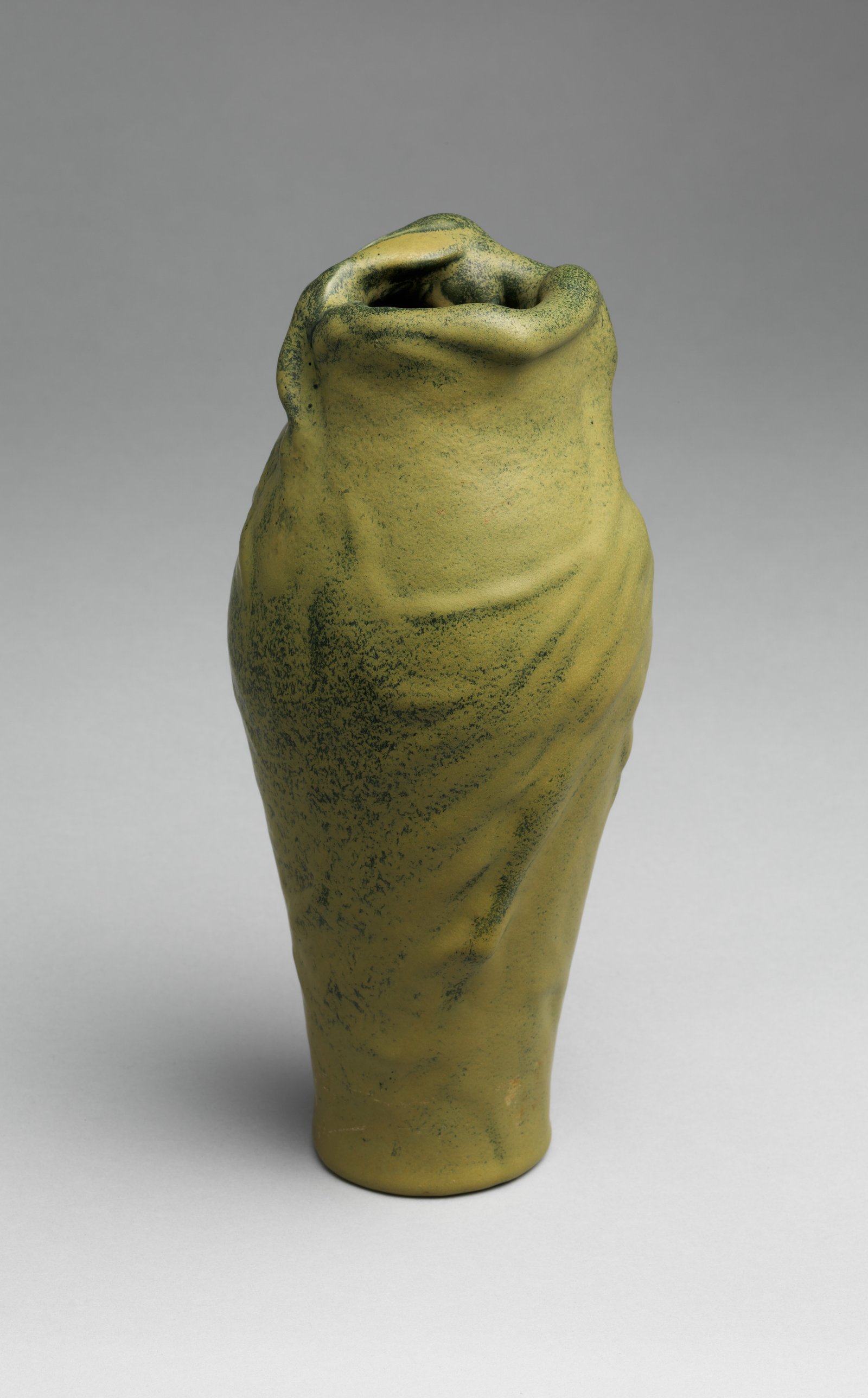
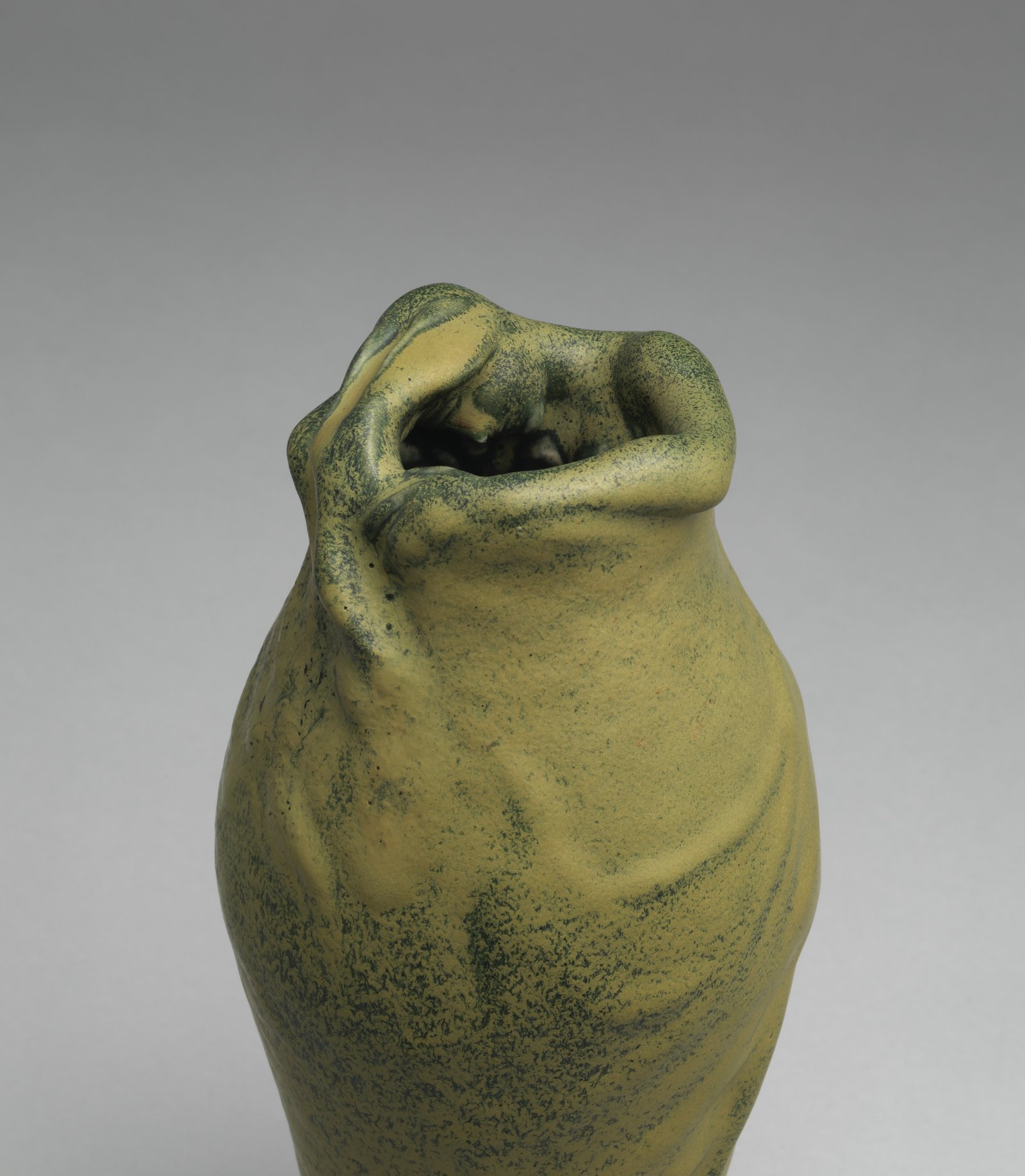
The Lorelei vase is Van Briggle’s most iconic and celebrated design. Named for the siren of Germanic legend, it features a woman draped sensuously over the vessel’s rim, her flowing hair cascading down the sides of the form. The figure and the vase are one — decoration and structure inseparable, the very essence of Art Nouveau.
Artus Van Briggle first conceived the design while working at Rookwood Pottery in Cincinnati in 1898, and it became one of the first pieces produced when he opened his own pottery in Colorado Springs in 1901. From that point forward, the Lorelei has never gone out of production — it was made continuously from 1902 through the pottery’s closure in 2012, making it the longest-continuously-produced Van Briggle design and one of the most enduring forms in American art pottery.
Whether you are hunting for a rare Artus-era original or a beautiful mid-century example for your mantel, this guide covers everything you need to know: the design’s remarkable history, how to identify and date your piece, current market values across every era, and where to find a Lorelei vase today.
History & Significance
Artus Van Briggle drew inspiration from the Lorelei legend — the story of a beautiful maiden who sat atop a cliff on the Rhine River near St. Goarshausen, luring sailors to their doom with her enchanting singing. The legend, popularized by Heinrich Heine’s 1824 poem, had become one of the most recognizable stories in European Romantic culture by the time Artus encountered it during his studies in Paris from 1893 to 1896.
In Paris, Artus immersed himself in the Art Nouveau movement that was transforming European decorative arts. He merged the Lorelei legend with Art Nouveau aesthetics, creating a piece where the human figure flows organically into the vessel form — the woman’s body becomes the vase’s contour, her hair becomes its surface decoration. This integration of figure and form was radical for American ceramics at the time, and it remains the design’s most striking quality.
Albert Valentien, head of Rookwood’s decorating department, later confirmed that Artus “introduced mat glazing to Rookwood and was responsible for the very first objects with such glazes executed there.” It was at Rookwood in 1898 that Artus created the first Lorelei, experimenting with the matte glazes that would become Van Briggle’s hallmark. When he left Rookwood for Colorado Springs, the Lorelei came with him.
The original 1902 Lorelei won critical acclaim at the Paris Salon, establishing Van Briggle’s international reputation in its very first years of operation. It was a remarkable achievement for a small pottery operating out of a rented building in what was then a modest resort town.
After Artus’s death from tuberculosis in 1904 at the age of 35, his wife Anne continued production of the Lorelei and the pottery’s other designs. The Lorelei proved so popular that it was produced in various sizes and glazes across every subsequent era of the pottery’s history, from the Anna era through the mid-century decades and into modern production.
Notable examples of the Lorelei are held by some of the world’s most prestigious museums: the Metropolitan Museum of Art in New York, the Victoria & Albert Museum in London, and the Brooklyn Museum. The Two Red Roses Foundation purchased a 1902 example for $275,000 — the record price for any Van Briggle piece ever sold, and a testament to the design’s place at the pinnacle of American art pottery.
Identifying Authentic Lorelei Vases
The Lorelei was produced across every era of Van Briggle’s history, which means examples span an enormous range of quality, size, and value. The bottom marks are your primary tool for determining when a Lorelei was made, and the era determines the value.
Bottom Marks by Era
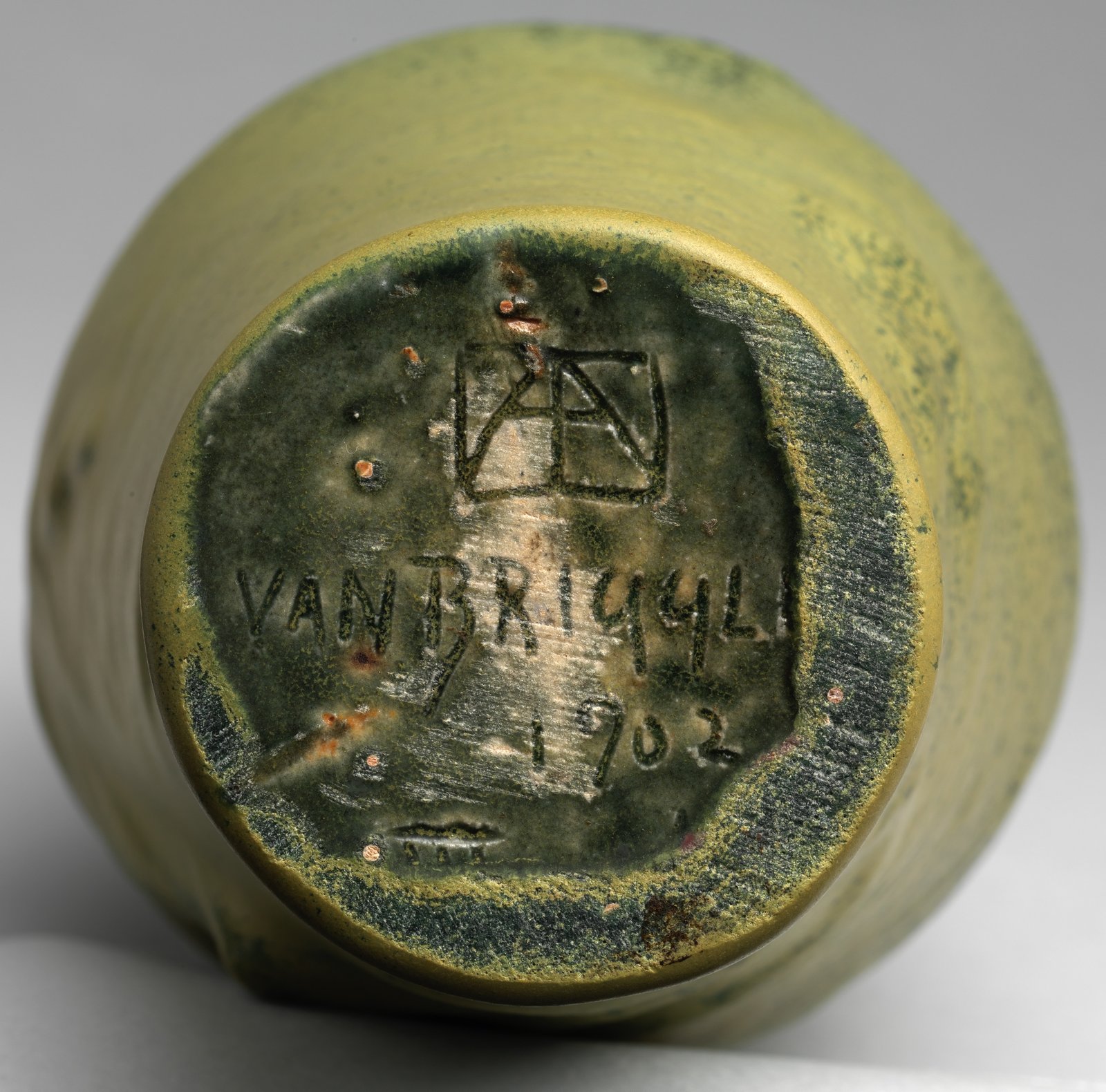
- Artus era (1902–1904): Hand-incised “VAN BRIGGLE” with a date (e.g., “1902” or “1903”), the conjoined “AA” monogram, and often a Roman numeral indicating the clay or glaze formulation. These marks are scratched into the wet clay by hand, never stamped.
- 1920s: Adds “COLO. SPGS.” below the standard marks. The lettering may be incised or impressed depending on the specific period.
- Mid-century (1955–1968): May bear the distinctive “Anna Van Briggle” script mark, a cursive signature that was used during this specific period.
- Modern production (1970s–2012): Simplified marks, typically just the “AA” monogram and “Van Briggle” or “VB” with “Colo. Spgs.”
Figure Quality & Proportions
Beyond the bottom marks, the figure itself tells a story about when the piece was made. Earlier Lorelei vases show finer modeling and more delicate features — the woman’s face, hands, and flowing hair are rendered with greater detail and subtlety. As molds were used and reused over the decades, some definition was inevitably lost. A mid-century Lorelei will typically show softer, less crisp features than an early example.
Common sizes range from 8 to 11 inches tall, though some special editions were produced in larger formats. The proportions of the figure relative to the vessel also shifted slightly across eras, which experienced collectors learn to recognize at a glance.
For a comprehensive guide to reading Van Briggle bottom marks across all eras, see our Markings & Identification Guide. For help pinpointing the exact decade your piece was made, consult our Dating Your Pottery guide. For Lorelei-specific photos and variant documentation, The Collector’s Encyclopedia of Van Briggle Art Pottery by Sasicki and the Collector’s Guide to Van Briggle Pottery by Nelson are the two standard references.
Current Market Value
Lorelei vases span a wide price range depending on era, condition, and glaze. The following values reflect actual recent sales and current dealer asking prices, not inflated estimates.
| Era | Price Range | Notable Sales |
|---|---|---|
| Artus Era (1902–1904) | $10,000–$100,000+ | 2024 Rago sale of a 1902 Lorelei brought $25,200 (est. $10K–$15K). A 1905 Lorelei sold for $6,300. All-time record: $275,000 (Two Red Roses Foundation). |
| Anna Era (1904–1912) | $2,000–$8,000 | Production continued under Anne’s direction. These pieces retain strong hand-finishing and are increasingly sought after. |
| 1920s–1940s | $500–$2,000 | The Brooklyn Museum holds a circa 1925 example. Pieces from this era show the “COLO. SPGS.” mark. |
| Mid-Century (1950s–1960s) | $200–$600 | Often found with the “Anna Van Briggle” script mark. Good display pieces at accessible prices. |
| Modern Production (1970s–2012) | $75–$250 | JustArtPottery lists 1980s Lorelei vases at $382–$425. The most affordable entry point for collectors. |
Condition caveat: A chipped rim can cut the value of a Lorelei vase by 50% or more. Because the figure drapes over the rim, this is also one of the most vulnerable areas on the piece. Always examine the rim carefully and ask sellers for close-up photographs of the figure’s extremities — the hands, hair tips, and any protruding elements are where chips most commonly occur.
Where to Find a Lorelei Vase
The Lorelei is one of the most recognizable Van Briggle designs, and because it was produced for over a century, examples are readily available across multiple marketplaces. Here is where to look.
eBay
eBay typically has 10 to 20 Lorelei vases listed at any given time, spanning modern production pieces under $100 to mid-century examples at $300–$600. Occasionally an early piece surfaces, though serious collectors should set up saved searches with alerts. Use the “Sold Items” filter to see what Lorelei vases actually sell for rather than what sellers are asking.
LiveAuctioneers & Invaluable
These auction aggregators are the best source for tracking Lorelei sale results and finding early examples when they come to market. The 2024 Rago sale of a 1902 Lorelei at $25,200 was transacted through these platforms. Set alerts for “Van Briggle Lorelei” across all participating auction houses to catch pieces as they are listed.
Specialist Dealers
JMW Gallery in Cambridge, Massachusetts and JustArtPottery occasionally stock early Lorelei examples. Specialist dealers are worth their premium because they authenticate pieces, provide accurate dating, and stand behind their attributions.
1stDibs
For premium examples with detailed provenance, 1stDibs features curated Lorelei listings from vetted dealers. Expect to pay a premium over auction prices, but the authentication standards and buyer protections are excellent. This is a good option if you want a display-quality piece with confidence in its attribution and condition.
Photo Gallery
Related Buying Guides
Explore our other Van Briggle buying guides for specific forms and the complete buying resource.
Complete Buying Guide
Where to buy, what to look for, values by era, and tips for building a collection.
← Back to guideTulip Vase
One of the most recognizable Van Briggle forms, produced across every era of the pottery’s history.
Buying guide →Bud Vase
Elegant small vases in Van Briggle’s signature matte glazes. Perfect starter pieces for new collectors.
Buying guide →Flower Frog
Decorative flower holders in scarab, fly, and snail designs. Charming and affordable collectibles.
Buying guide →Pitcher
Utilitarian pieces with Van Briggle’s Art Nouveau styling. Found across all eras of production.
Buying guide →Bookends
Early collectible bears, wolves, and owls plus late commercial squirrels, eagles, dolphins, and conquistadors.
Buying guide →Reference Books
Price guides, marks references, and histories for Van Briggle and the major American art potteries.
Browse the books →