Van Briggle Tulip Vase: History, Value & Where to Buy
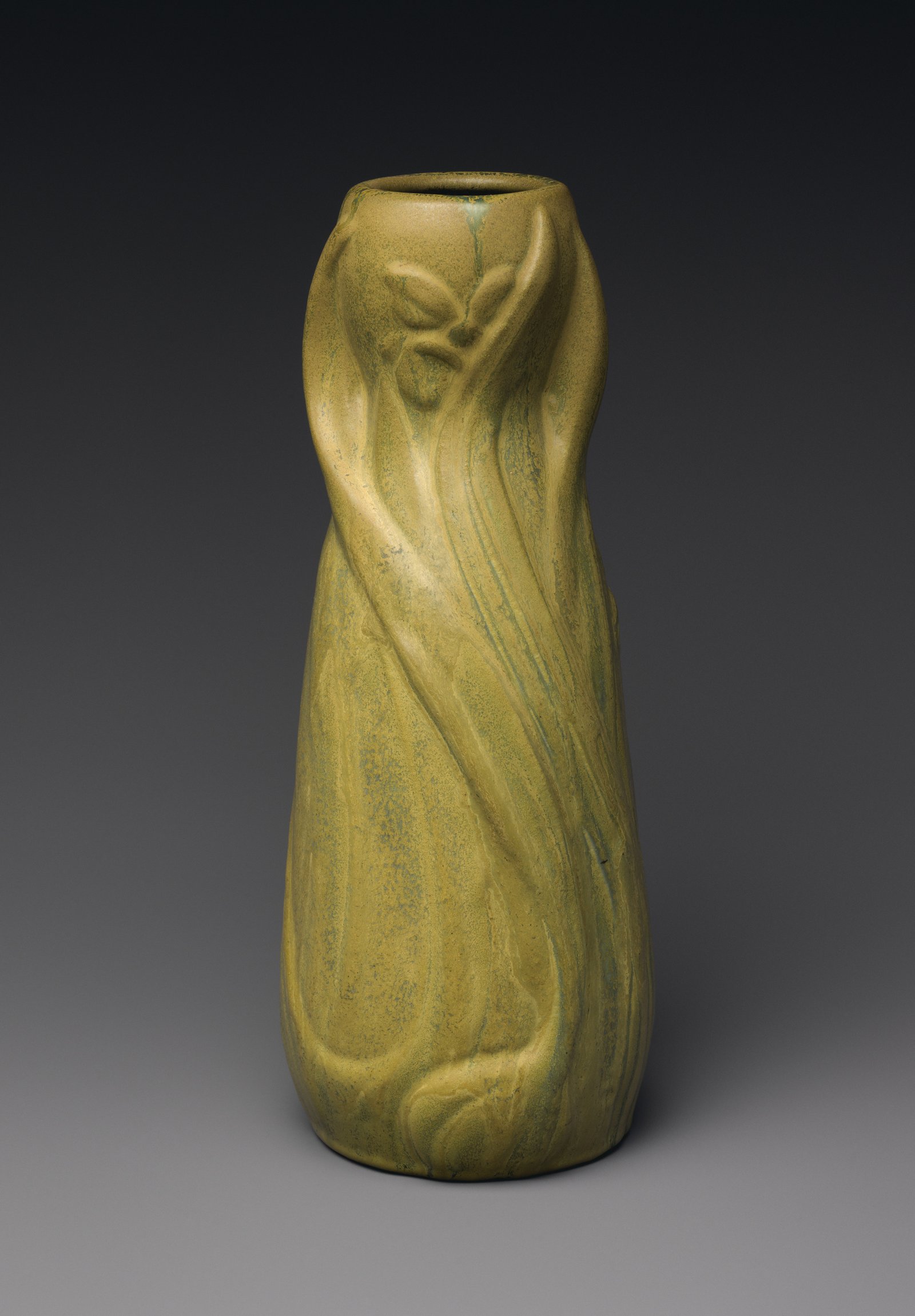
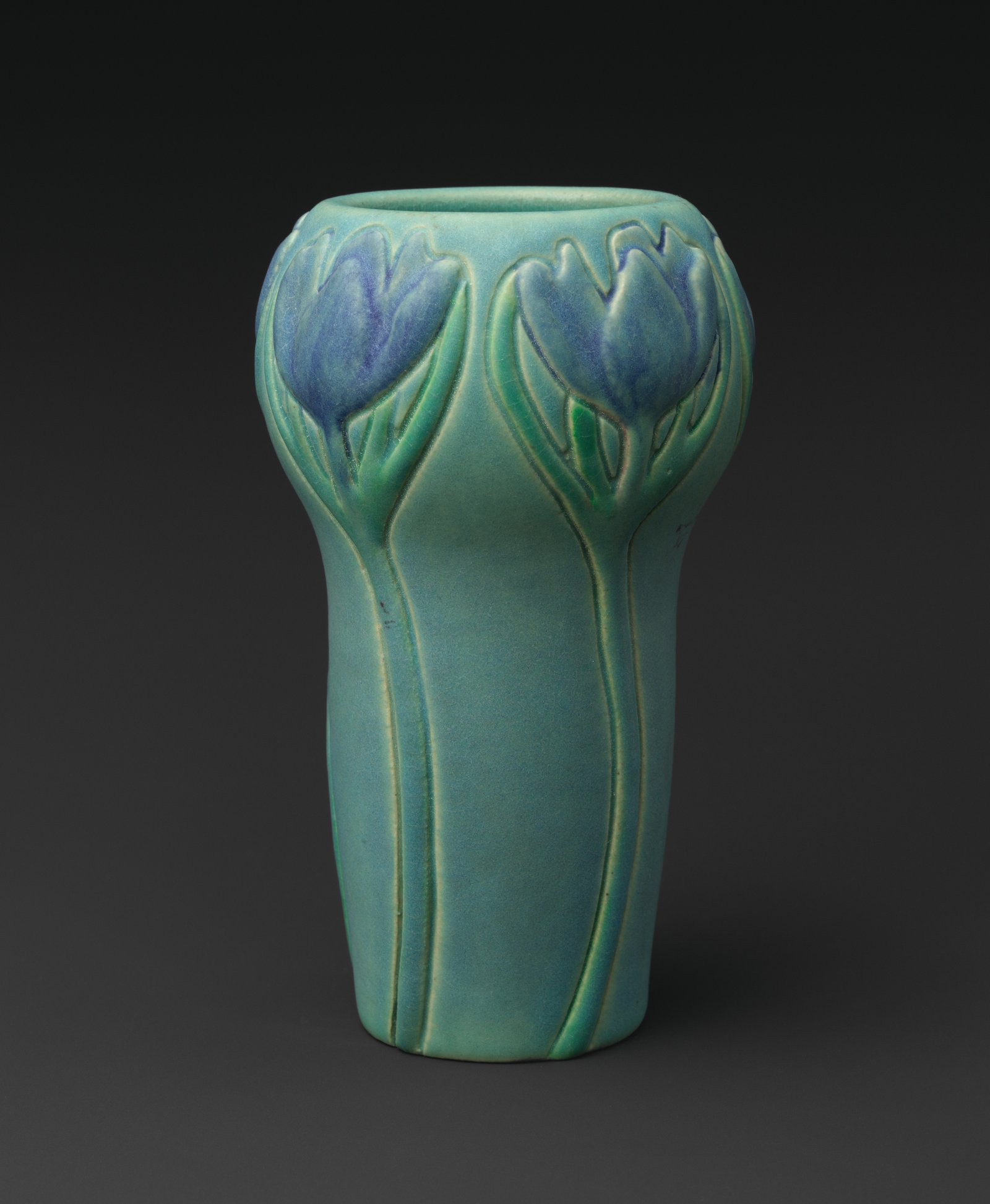
The tulip is one of Van Briggle’s most enduring and recognizable motifs. The flowing petals and stems translated naturally into Art Nouveau style, making tulip designs among the pottery’s most aesthetically successful forms. Tulip designs appeared in everything from small bud vases to tall decorative forms, and the motif was produced across virtually every era of the pottery’s history.
Whether you are searching for a rare early example or a beautiful mid-century piece for your collection, this guide covers the tulip vase’s history, how to identify authentic pieces, current market values, and where to find one today.
History & Significance
Artus Van Briggle’s training at the École des Beaux-Arts in Paris from 1893 to 1896 emphasized nature as a primary design source. The Art Nouveau movement that surrounded him in Paris celebrated organic forms — flowing stems, unfurling petals, and the graceful curves of plant life. When Artus established his pottery in Colorado Springs, tulips appeared among his earliest designs, their natural geometry lending itself perfectly to the Art Nouveau aesthetic he had absorbed in Europe.
Several distinct tulip variations emerged over the pottery’s history. The classic “Tulip Bud” shape features a single, partially opened bud rising from a slender stem — an elegant, restrained form that became one of Van Briggle’s most recognizable silhouettes. The “Parrot Tulip” vase showcases ruffled, undulating petals in a more dramatic interpretation. Standard forms with tulip relief decoration round out the range, with petals and leaves carved into the vessel’s surface in low relief.
Tulip designs were produced in virtually every glaze Van Briggle offered. Early examples feature the rich mulberry glazes of the Artus and Anne Van Briggle years. Mid-century production shifted to the pottery’s signature Persian Rose and Ming Blue (also sold as Turquoise Ming) — the glazes most collectors encounter today. A pair of Van Briggle “Tulip” candlestick holders in glazed green-blue recently appeared at auction, demonstrating how the tulip motif extended beyond vases into other functional forms.
The tulip’s enduring popularity speaks to the strength of the original design. Unlike more complex figural pieces that lost definition as molds wore over time, the tulip’s bold, sculptural forms held up well across decades of production, making even later examples visually striking.
Identifying Authentic Tulip Vases
Tulip vases were produced across all eras of Van Briggle’s history, which means examples span a wide range of quality, glaze, and value. The bottom marks are your primary tool for determining when a tulip vase was made, and the era determines the value.
What to Look For
The most common tulip vases found on the market today are mid-century Tulip Bud forms, typically 6 to 8 inches tall, in Persian Rose or Ming Blue (turquoise) glazes. These are attractive, well-made pieces that represent the most affordable entry point into tulip collecting.
Earlier tulip vases stand apart through more detailed petal modeling and richer, more complex glazes. On an early example, individual petals show crisp edges and subtle surface variation; the glaze pools and shifts in color across the form. Later production pieces tend toward smoother, less articulated petal forms and more uniform glaze application.
Bottom Marks
Check the bottom of any tulip vase for the marks that identify its era. Early pieces bear hand-incised “VAN BRIGGLE” with a date and the conjoined “AA” monogram. Mid-century pieces may show the “Anna Van Briggle” script mark. Later production uses simplified marks.
For a comprehensive guide to reading Van Briggle bottom marks across all eras, see our Markings & Identification Guide. For help pinpointing the exact decade your piece was made, consult our Dating Your Pottery guide. Tulip-form and petal-rim vases are documented across eras in The Collector’s Encyclopedia of Van Briggle Art Pottery, which helps distinguish authentic examples from similar forms by other potteries.
A small iron display easel works well behind a tulip vase, tilting it slightly forward so the sculpted rim becomes the focal point rather than the silhouette.
Current Market Value
Tulip vases span a wide price range depending on era, condition, glaze, and specific form. The following values reflect actual recent sales and current dealer asking prices.
| Era | Price Range | Notes |
|---|---|---|
| Early (pre-1920) | $300–$2,000+ | Hand-incised marks, rich matte glazes. Rare examples with exceptional glaze or form command the highest prices. |
| 1920s–1940s | $100–$500 | Good quality with “COLO. SPGS.” mark. Detailed petal modeling still present in most examples. |
| Mid-Century (1950s–1960s) | $50–$200 | The most commonly found era. Persian Rose and Ming Blue (turquoise) glazes. Attractive display pieces at accessible prices. |
| Modern Production (1970s–2012) | $30–$100 | The most affordable entry point. Simplified marks, uniform glazes. Good starter pieces for new collectors. |
Condition matters: Chips to the petal tips are the most common form of damage on tulip vases, since the petals often extend above the vessel rim. Always examine the petal edges carefully and ask sellers for close-up photographs of the top of the vase where chips most commonly occur. A chipped petal can reduce value by 30–50%.
Where to Find a Tulip Vase
The tulip vase is among the most commonly available Van Briggle forms, making it an excellent choice for collectors at any level. Because tulip designs were produced across every era, there is almost always something on the market.
eBay
eBay typically has 20 or more tulip vase listings at any given time, spanning modern production pieces under $50 to mid-century examples in the $100–$200 range. Use the “Sold Items” filter to see what tulip vases actually sell for rather than what sellers are asking. Set up a saved search with alerts for “Van Briggle tulip” to catch new listings as they appear.
Etsy
Etsy often has curated tulip vase examples from vintage sellers who specialize in art pottery. Prices tend to run slightly higher than eBay, but the listings often include better photography and more detailed descriptions. Etsy is a good source for mid-century pieces in desirable glazes.
Antique Shops & Shows
Because tulip vases are so widely produced, they turn up regularly at antique malls, estate sales, and pottery shows. This is often where the best deals are found — sellers at general antique shops may not recognize or fully price a Van Briggle tulip vase, especially mid-century examples in common glazes.
A More Affordable Entry Point
Compared to figural designs like the Lorelei, tulip vases offer a significantly more affordable entry point into Van Briggle collecting. A beautiful mid-century Tulip Bud vase in Persian Rose can often be found for under $100 — a fraction of what comparable-era figural pieces command.
Photo Gallery
Related Buying Guides
Explore our other Van Briggle buying guides for specific forms and the complete buying resource.
Complete Buying Guide
Where to buy, what to look for, values by era, and tips for building a collection.
← Back to guideLorelei Vase
Van Briggle’s most iconic design, the siren draped over the vessel rim. History, values, and where to find one.
Buying guide →Flower Frog
Scarab, fly, and snail figurals plus standard production. Some of Van Briggle’s most charming small pieces.
Buying guide →Bud Vase
Elegant small vases in Van Briggle’s signature matte glazes. Perfect starter pieces for new collectors.
Buying guide →Pitcher
Utilitarian pieces with Van Briggle’s Art Nouveau styling. Found across all eras of production.
Buying guide →Bookends
Early collectible bears, wolves, and owls plus late commercial squirrels, eagles, dolphins, and conquistadors.
Buying guide →Blue Vases
Turquoise Ming and the other Van Briggle blues, how the blue changed by decade, and sold prices.
Buying guide →Mulberry Vases
The deep red-purple used until 1946, and how to tell it from Persian Rose and later roses.
Buying guide →Lamps
Brass-shade art lamps, mid-century figurals with butterfly shades, and converted vases. How to tell them apart and what they sell for.
Buying guide →Animal Figurines
Kinkead’s 1916 bunny, mid-century elephants and donkeys, tall standing cats, and the Chimney Cat.
Buying guide →Bowls
Dragonfly bowls and their three-frog frogs, Siren of the Sea and Lady of the Lake centerpieces, console and rose bowls.
Buying guide →Candle Holders
From J. Emma Kinkead’s 1911 lizard candlestick to mid-century tulip pairs. Designs, marks, and sold prices.
Buying guide →Indian Maiden & Indian Head
The three-face “Indian Head” vase, corn grinder figures, and the “Little Star” plaque.
Buying guide →Reference Books
Price guides, marks references, and histories for Van Briggle and the major American art potteries.
Browse the books →