When collectors think of Van Briggle, they think of vases. The Lorelei, the Despondency, the matte-glazed botanicals. But Van Briggle also produced decorative tile — field tile, trim tile, and elaborately hand-decorated art tile — and that side of the business has a fascinating history that most collectors don’t know.
How It Started
Artus Van Briggle developed a process for making tiles just before his death in 1904, but he didn’t live to put it into production. That fell to Anne.
Anne Van Briggle sketched out many of the initial tile designs based on Artus’s process, and by 1907 the company was actively producing art tiles. The timing was smart — Colorado Springs was growing, and local builders wanted decorative tile for new homes. Van Briggle was the only maker of art tiles between Chicago and Los Angeles, which gave them a regional monopoly.
The tile line became significant enough that in 1910, the company formally renamed itself the Van Briggle Pottery and Tile Company.
The Memorial Building: A Tile Masterpiece
The most spectacular display of Van Briggle tile isn’t in someone’s kitchen — it’s the Memorial Pottery Building itself.
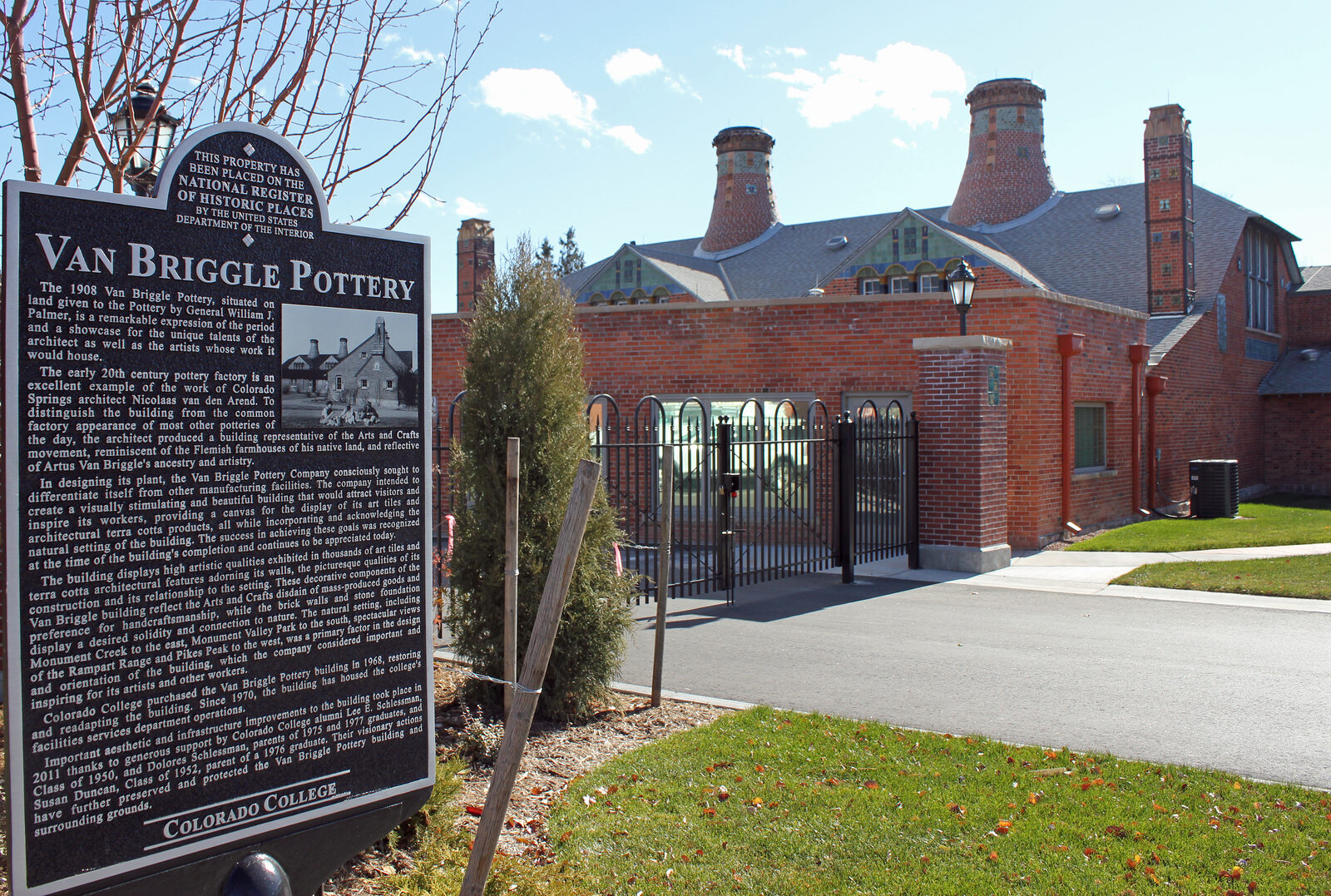
When Anne commissioned architect Nicolaas van den Arend to design the new pottery building in 1907, she didn’t just want a factory. She wanted a showcase. Working with her assistant Emma Kinkead for more than a year, Anne personally designed and fabricated over 5,500 tiles and terra cotta components for the building.
Three types of tile were produced:
Machine-pressed, hand-glazed tiles in single colors with matte finishes. These were produced using dry-press tile machines, often glazed with leftover glaze from pottery production.
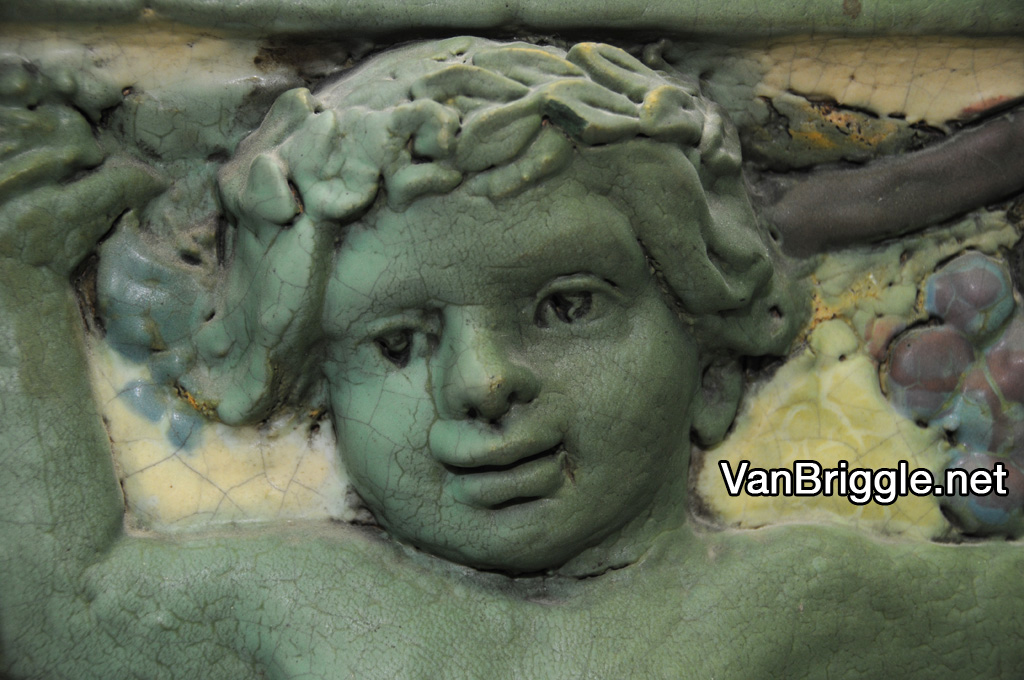
Hand-pressed polychrome tiles with multiple colors. These used the cuenca technique — a traditional Spanish method where the design is molded onto the tile before firing, creating raised outline lines that keep different colored glazes separated. The result is vivid, multi-color decorative tiles.
Molded, three-dimensional tiles — sculptural in nature, with significant relief. These are the most dramatic pieces, including decorative panels, chimney caps, window features, a sculptural cat, and a gargoyle.
The building features five projecting square brick chimneys with flower-shaped tile insets, two massive bottle-shaped kiln smokestacks with the “AA” logo in tile, tile fireplaces in the salesroom and in Anne’s personal studio, tile floors, tile wall panels, and relief-carved scenes of Colorado landscapes including Pikes Peak and the Garden of the Gods.
Tile scholar Richard Mohr judged it in 2007 to be one of America’s four or five most important art tile installations. The building was listed on the National Register of Historic Places in 2009. It still stands on Glen Avenue in Colorado Springs, now owned by Colorado College.
Beyond the Building
Van Briggle tiles weren’t just for the pottery building. The company marketed them for porches, laundry rooms, kitchens, fireplace mantels, and wall coverings in residential construction. Architect van den Arend used Van Briggle tiles in all of his Colorado Springs commissions, including designs for the YWCA building on East Kiowa Street.
Estimates of how many private homes in Colorado Springs received Van Briggle tile fireplaces range from two dozen to two hundred. The Colorado Springs Pioneers Museum has a Van Briggle tile fireplace example on display.
For Collectors
Van Briggle tile is a niche within a niche, and that creates both challenges and opportunities.
Identification is difficult. Few tiles were ever marked. When marks are present, they include “V.B.” or “VBPCo.” — but most tiles carry no marks at all. (For pottery marks, see our markings identification guide.) Visual identification requires experience: the signature matte glazes, the characteristic color palette (turquoise, green, yellow, plum), and a distinctive back pattern that experienced dealers recognize.
Dating matters. The bulk of decorative tiles were produced from approximately 1907 through the 1930s. The most desirable are hand-pressed polychrome pieces and three-dimensional molded tiles from this early period.
Watch for misidentification. Real estate brokers in Colorado Springs have been known to label period tile in pre-1940 buildings as “Van Briggle” when it isn’t. If a home was built before 1902, it definitely doesn’t contain Van Briggle tile.
Values. Older, pre-1930s decorative tiles can command up to $600 per tile, and exceptional examples have sold for over $2,000 at auction. Tiles were historically considered an economical entry point for beginning a Van Briggle collection, and many collectors started by purchasing them as trivets or display pieces.
Arts & Crafts connection. Van Briggle tile sits squarely in the American Arts & Crafts tradition, alongside Batchelder, Grueby, Rookwood, and Moravian Pottery. If you collect Arts & Crafts tile, Van Briggle deserves a place on your radar. For background on the broader tile tradition, Fireworks: New England Art Pottery of the Arts and Crafts Movement covers the movement’s ceramic legacy including tile production.
The pottery studio closed in 2012 and tile production has ceased, making the remaining pieces purely collectible. For more on Van Briggle tile values, see our values and pricing guide. The Memorial Pottery Building remains the best place to see Van Briggle tile in its original context — if you’re in Colorado Springs, it’s worth the visit.